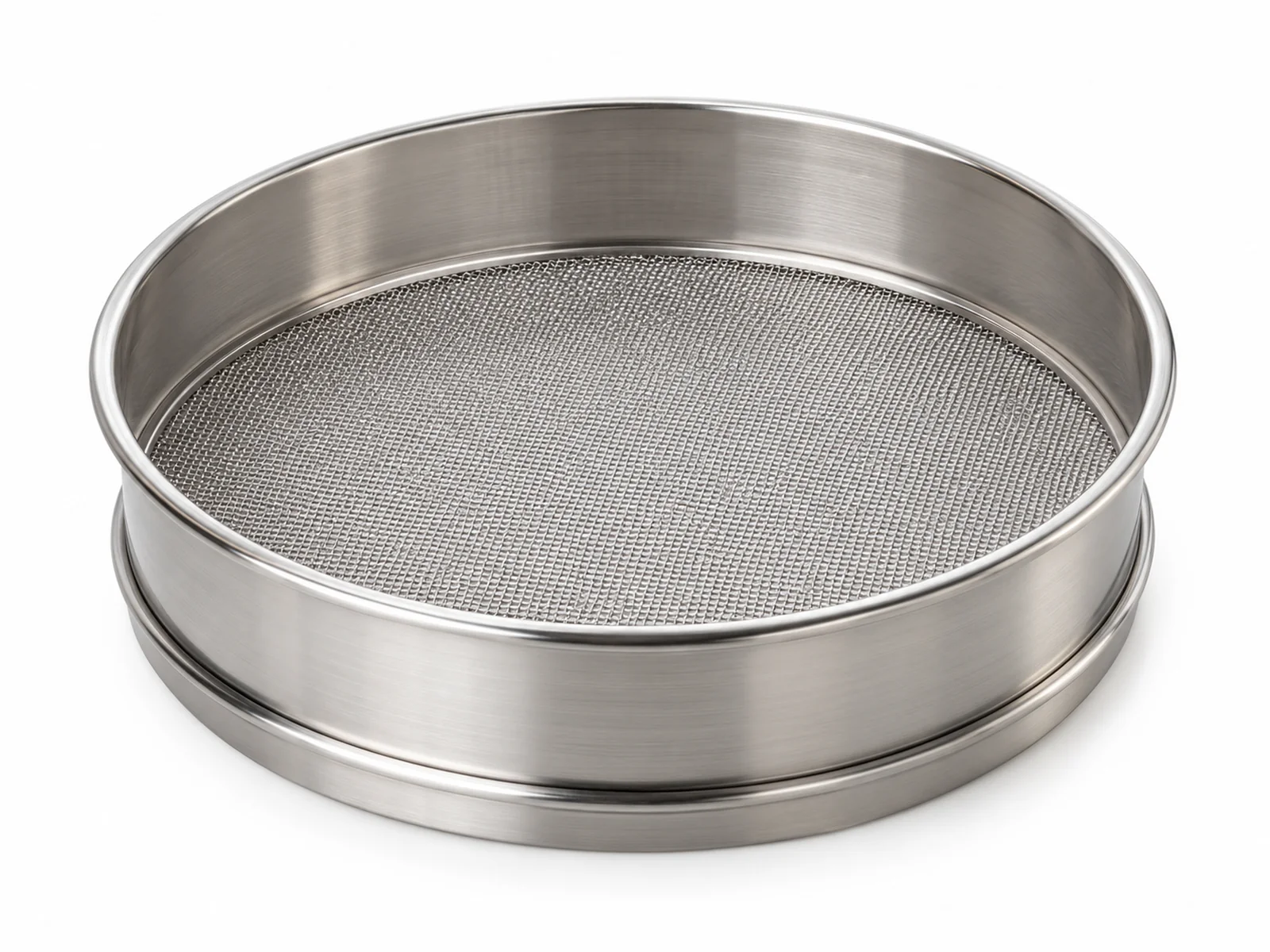
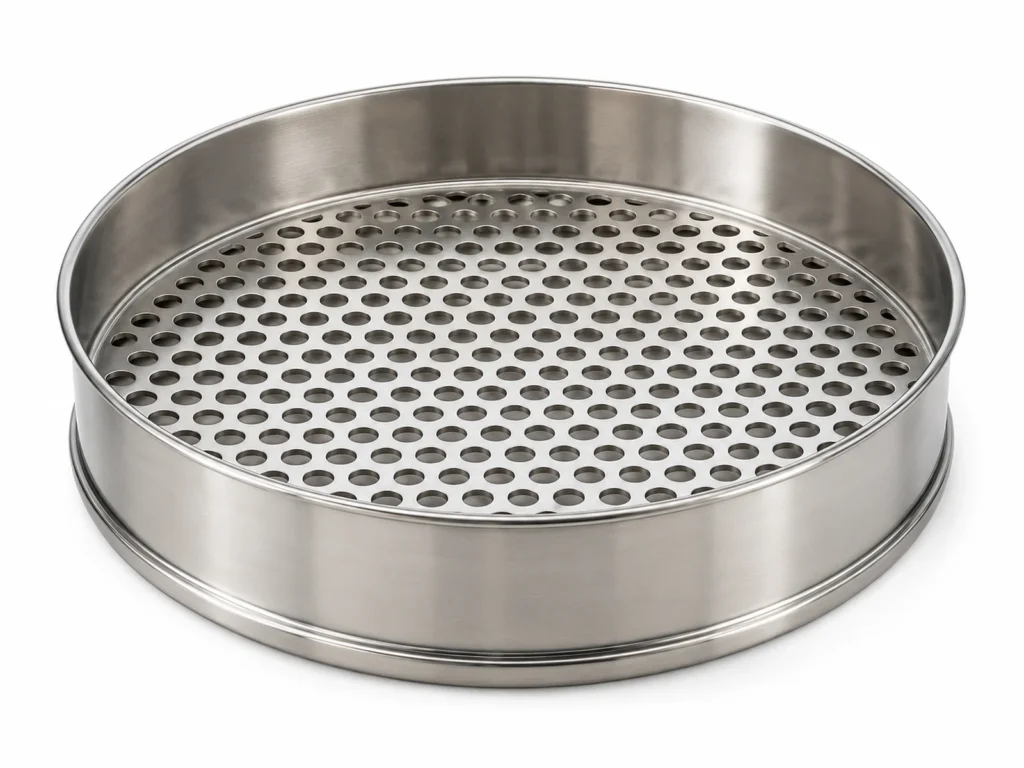
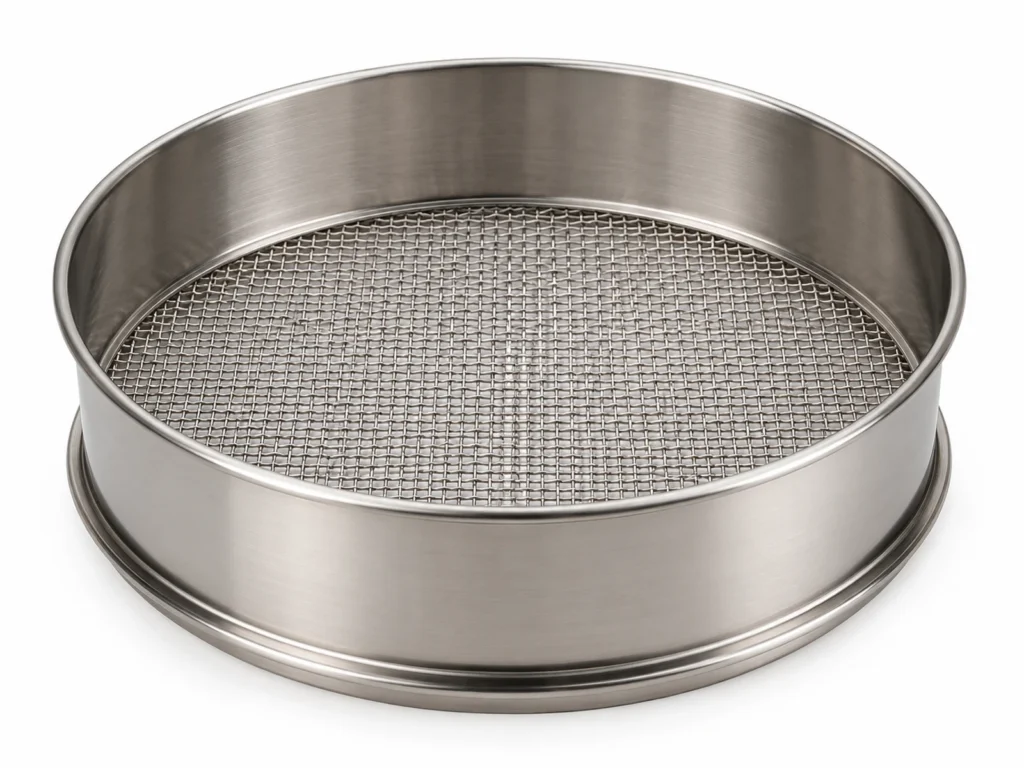
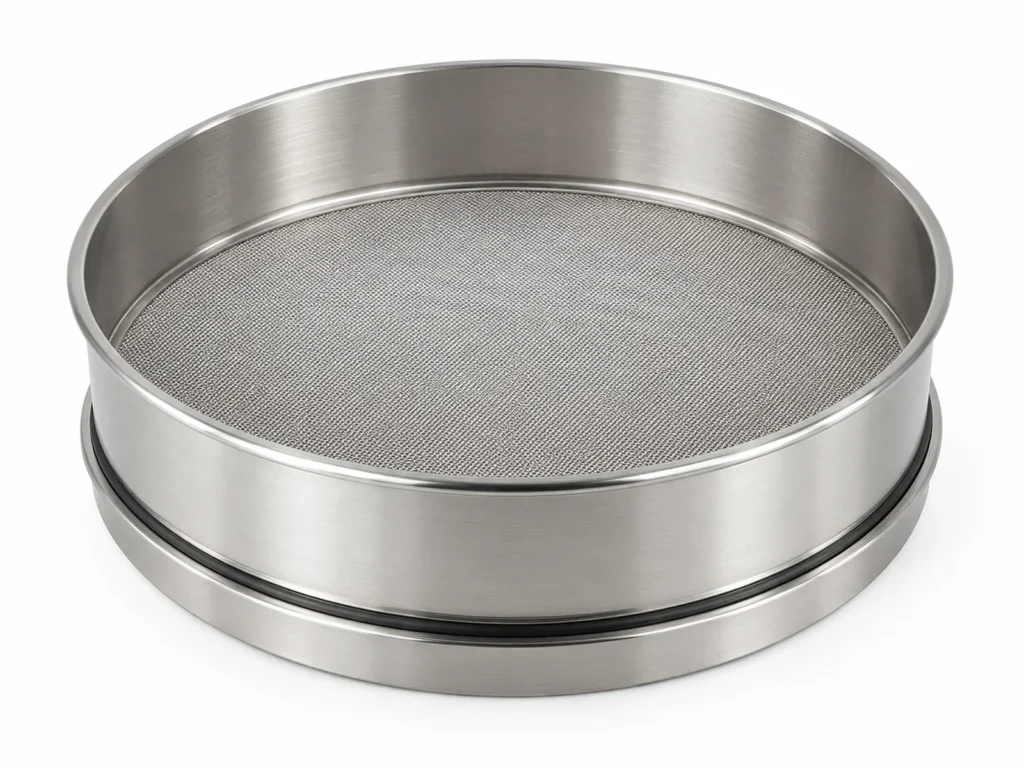
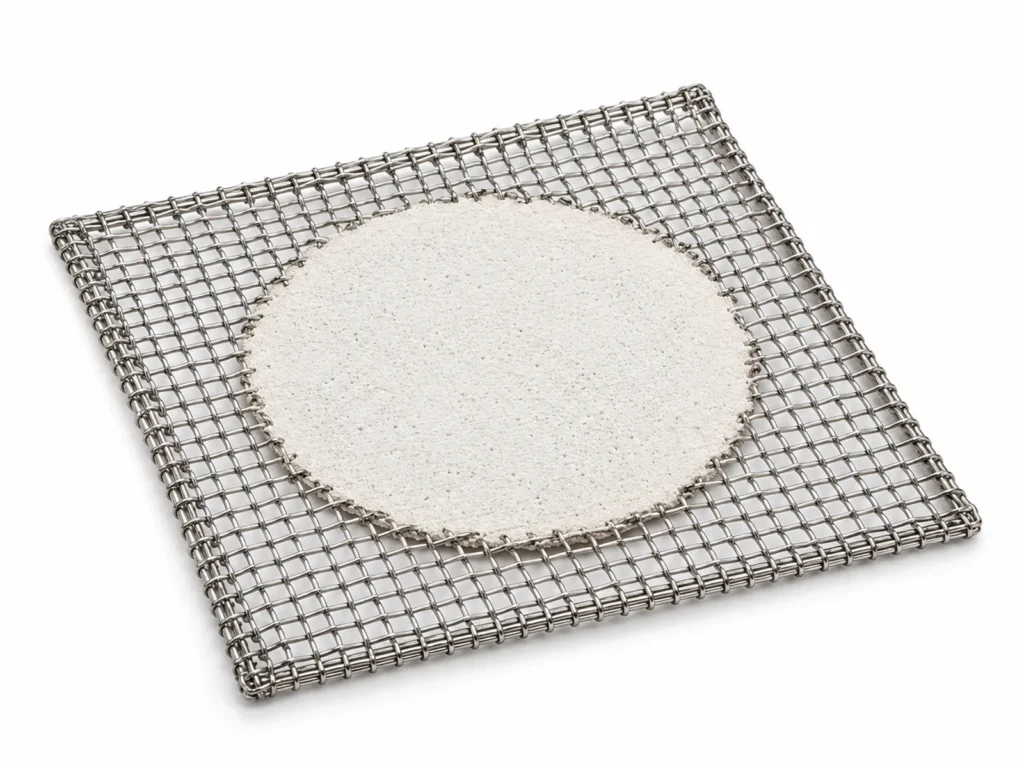
ISO 3310-1 Woven Wire Test Sieve in 304 Stainless Steel (AISI 304 (1.4301)) is used for particle-size analysis by sieving, using woven wire cloth whose aperture is certified to ISO 3310-1 tolerances. The alloy gives good general corrosion resistance in atmosphere and fresh water and is essentially non-magnetic (annealed), with a practical service limit of approx. +450 °C continuous.
Alloy Properties
| Grade designation | AISI 304 (1.4301) |
|---|
| Magnetic response | Essentially non-magnetic (annealed) |
|---|
| Service temperature | approx. +450 °C continuous |
|---|
| Corrosion characteristic | Good general corrosion resistance in atmosphere and fresh water |
|---|
Specifications of ISO 3310-1 Woven Wire Test Sieve Available in 304 Stainless Steel
| Aperture (mm) | Frame diameter (mm) | Frame height (mm) | Wire diameter (mm) | Mesh count | Certificate |
|---|
| 0.020 | 200 | 50 | 0.020 | 635-Mesh | Inspection |
| 0.045 | 200 | 50 | 0.032 | 325-Mesh | Inspection |
| 0.075 | 200 | 50 | 0.050 | 200-Mesh | Inspection / calibration |
| 0.150 | 200 | 50 | 0.100 | 100-Mesh | Inspection / calibration |
| 0.500 | 200 | 50 | 0.315 | 30-Mesh | Inspection |
| 2.000 | 300 | 75 | 0.900 | 9-Mesh | Inspection |
Where 304 Stainless Steel ISO 3310-1 Woven Wire Test Sieve Is Used
- Quality control labs: grading powders, aggregates and granules against specification.
- Pharmaceutical & food labs: particle-size distribution of excipients, flour and sugar.
- Mining & mineral processing: ore and concentrate sizing.
- Universities & research: teaching and research sieve stacks.
Ordering ISO 3310-1 Woven Wire Test Sieve in 304 Stainless Steel
- Aperture series: Choose apertures from the ISO 565 R20/3 or R40/3 series to match your test method.
- Frame: 200 mm for routine work; 300 mm for larger samples.
- Certification: Inspection grade for routine; calibration grade with statistical measurement for audited labs.
Mistakes to Avoid with ISO 3310-1 Woven Wire Test Sieve
- Overloading the sieve, which blinds the cloth and skews results.
- Using a damaged sieve without re-certification.