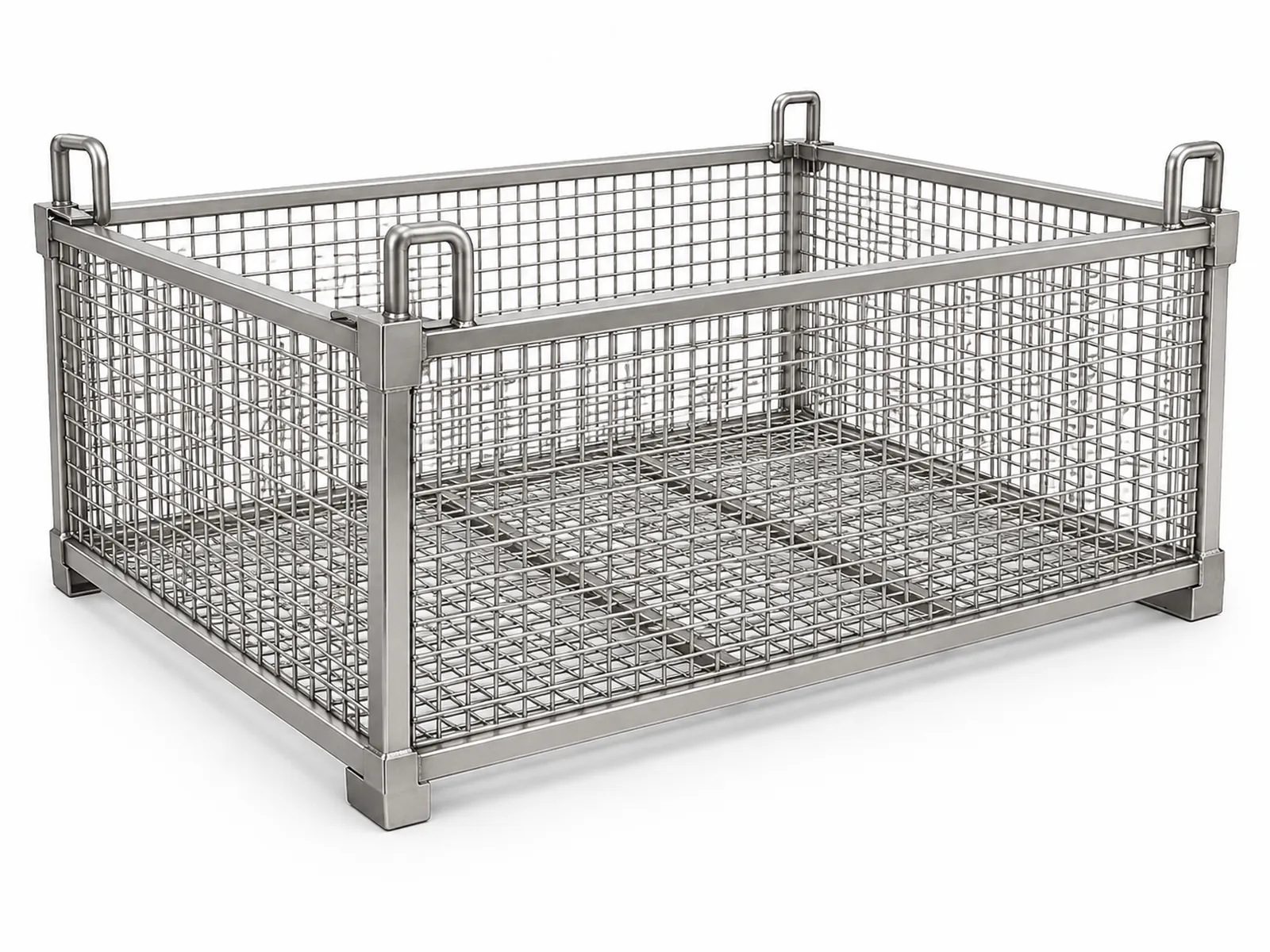
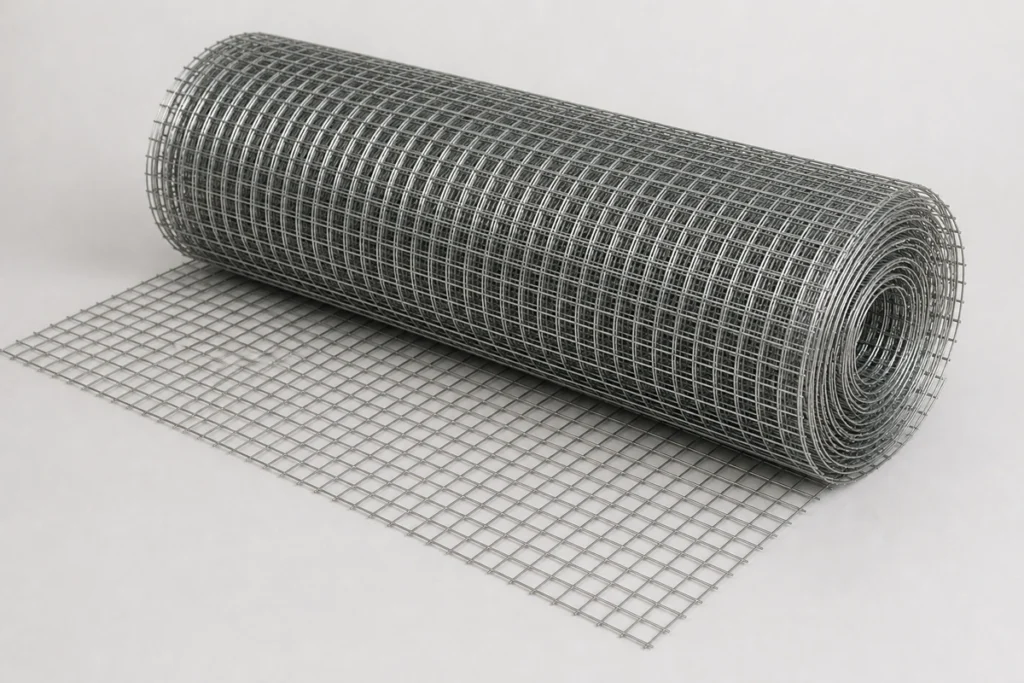
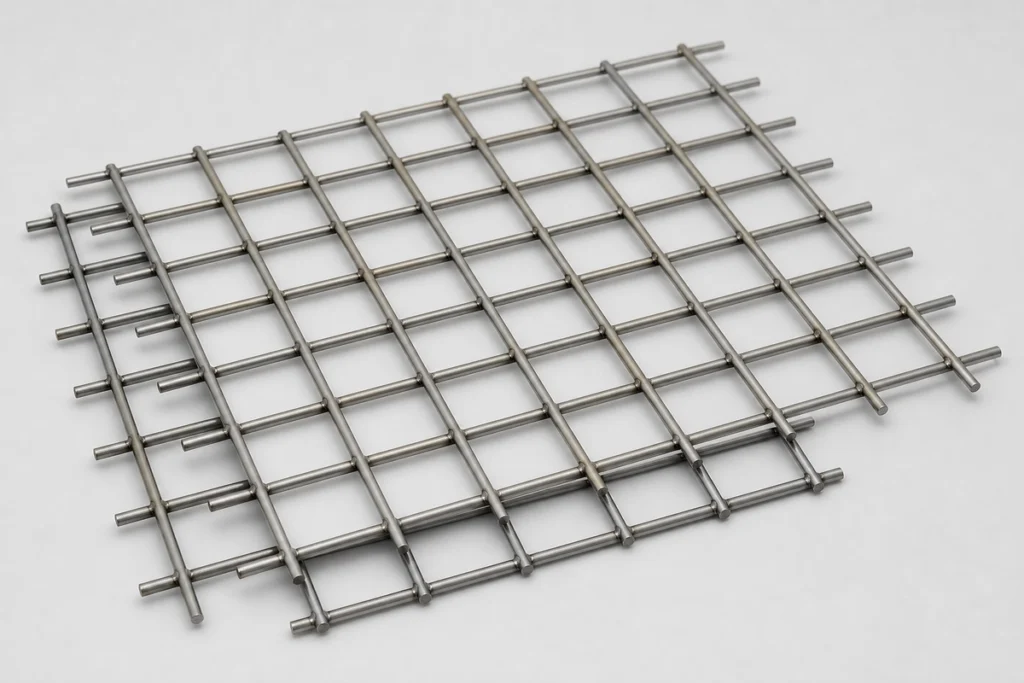
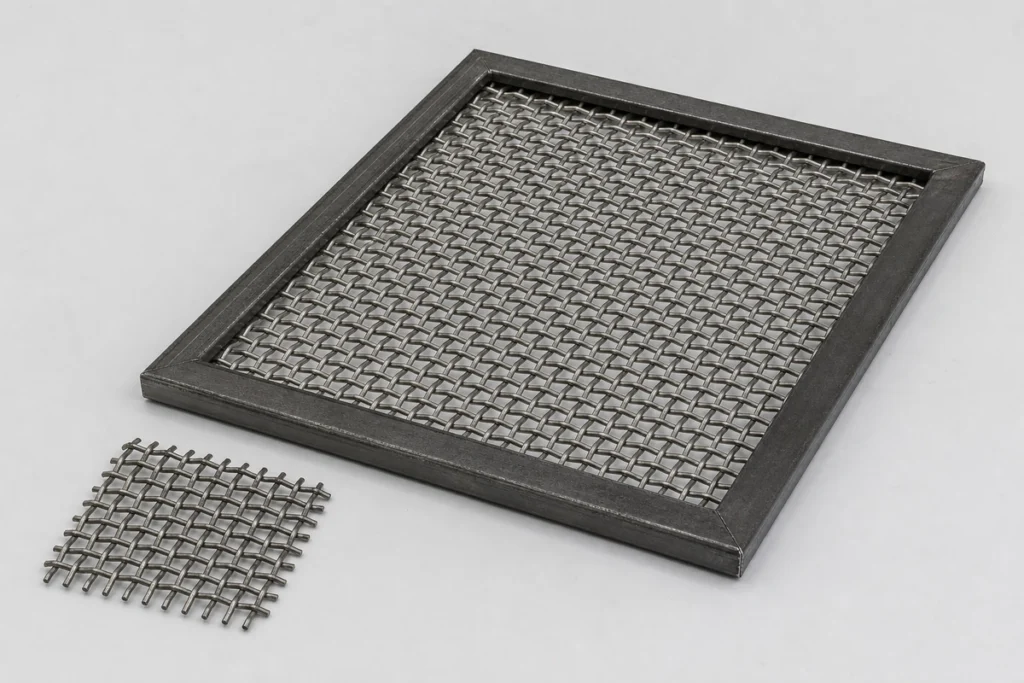
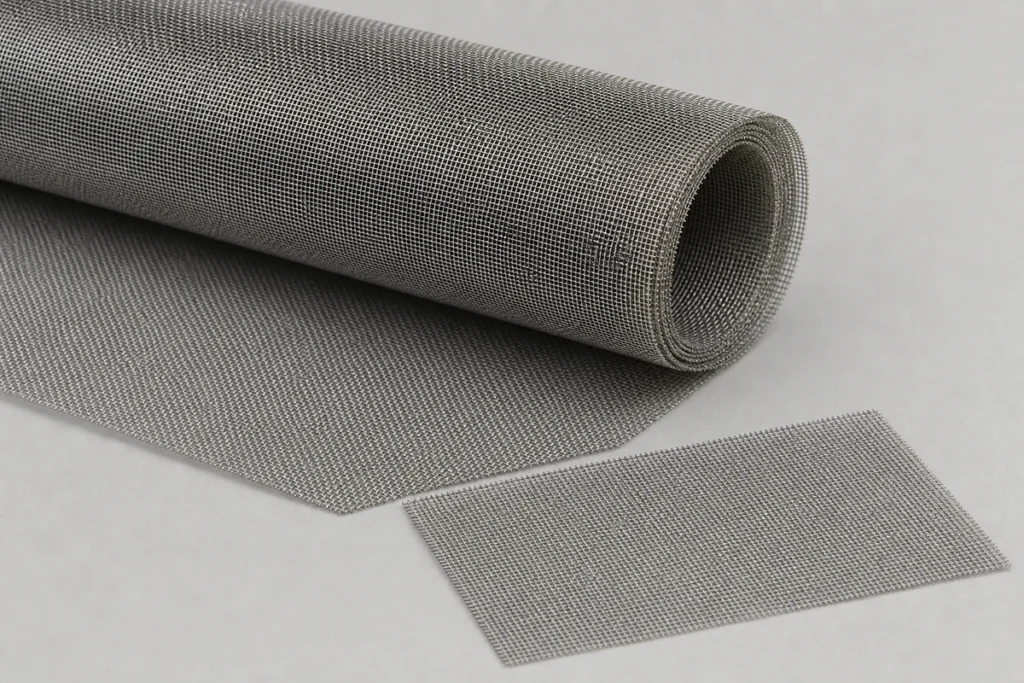
Industrial Wire Mesh Basket in 304 Stainless Steel (AISI 304 (1.4301)) is used for holding machined, stamped and cast parts through washing, degreasing, heat treatment, dip coating and storage in welded wire or expanded metal baskets built to the line. The alloy gives good general corrosion resistance in atmosphere and fresh water and is essentially non-magnetic (annealed), with a practical service limit of approx. +450 °C continuous.
Alloy Properties
| Grade designation | AISI 304 (1.4301) |
|---|
| Magnetic response | Essentially non-magnetic (annealed) |
|---|
| Service temperature | approx. +450 °C continuous |
|---|
| Corrosion characteristic | Good general corrosion resistance in atmosphere and fresh water |
|---|
Specifications of Industrial Wire Mesh Basket Available in 304 Stainless Steel
| Size | Length (mm) | Width (mm) | Height (mm) | Mesh opening (mm) | Wire diameter (mm) |
|---|
| Parts washing 600 | 600 | 400 | 200 | 6 | 1.6 |
| Heat treat 500 | 500 | 500 | 300 | 12 | 3.0 |
| Ultrasonic 300 | 300 | 200 | 100 | 3 | 1.0 |
| Expanded metal 600 | 600 | 400 | 150 | 10 | 1.5 |
| Dip / coating 400 | 400 | 300 | 250 | 8 | 2.0 |
Where 304 Stainless Steel Industrial Wire Mesh Basket Is Used
- Automotive & machining: parts-washing and degreasing baskets that fit washer chambers.
- Heat treatment shops: baskets for hardening, carburizing and annealing furnaces.
- Surface finishing: pickling, passivation, dip coating and plating baskets.
- Warehousing & logistics: stackable wire mesh baskets for small parts.
Ordering Industrial Wire Mesh Basket in 304 Stainless Steel
- Size & load: Give inner dimensions, stacking height and maximum payload at operating temperature.
- Mesh & wire: Opening smaller than the smallest part; heavier wire and frame rods for furnace work.
- Alloy: SS304 for washing to 800 °C; 310S or Inconel 600 for furnaces above 900 °C.
Mistakes to Avoid with Industrial Wire Mesh Basket
- Choosing a mesh opening larger than small fasteners or pins, which fall through.
- Running SS304 baskets above 900 °C, where they scale and distort quickly.