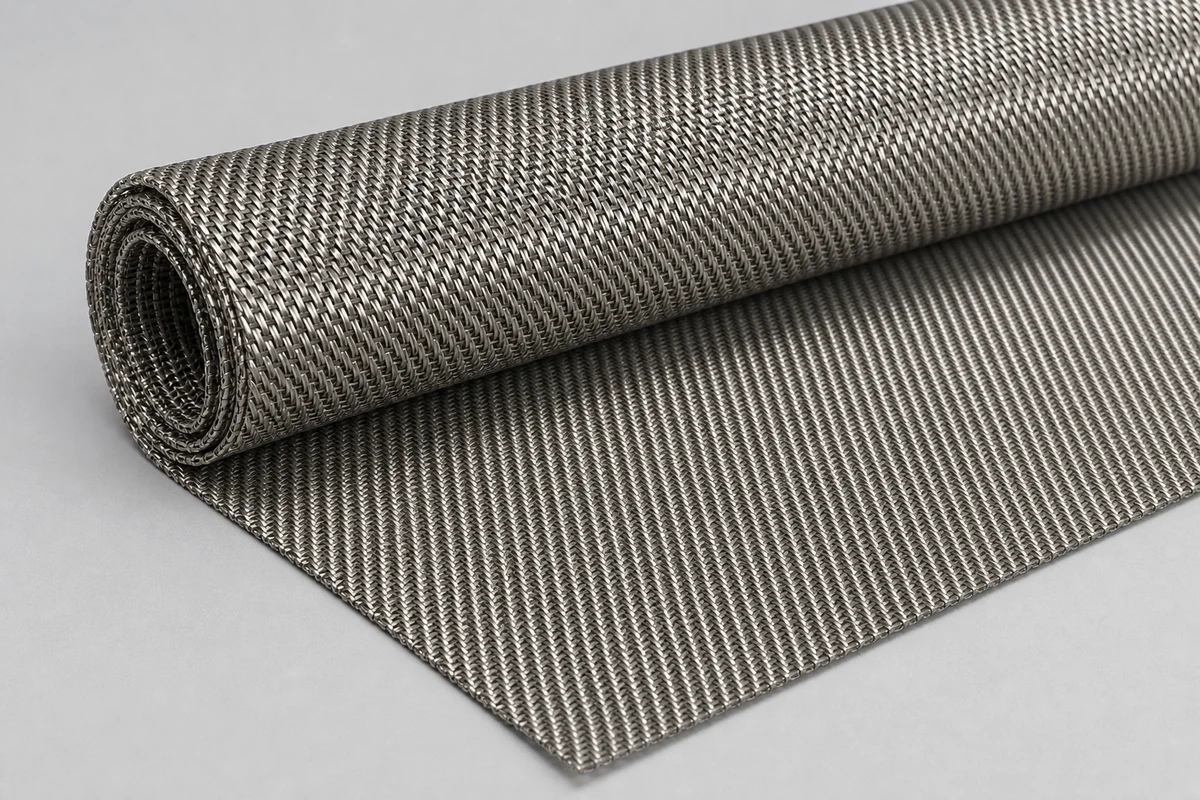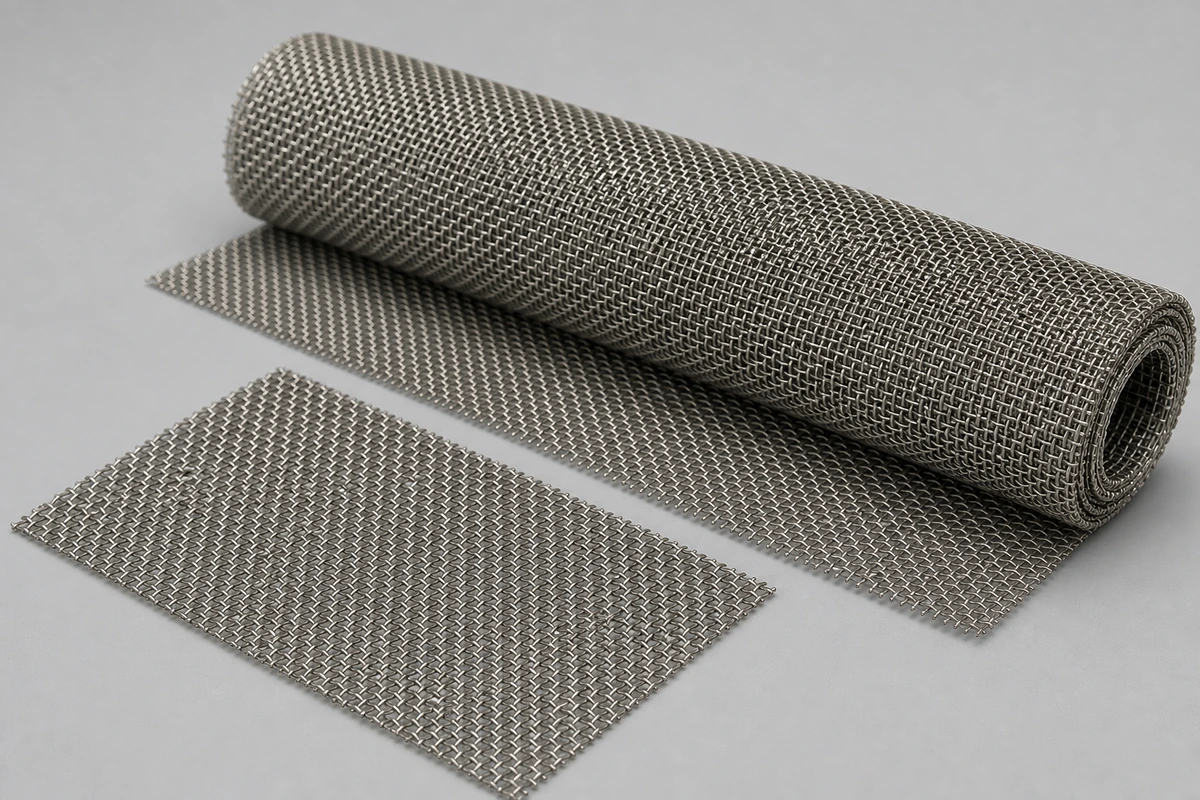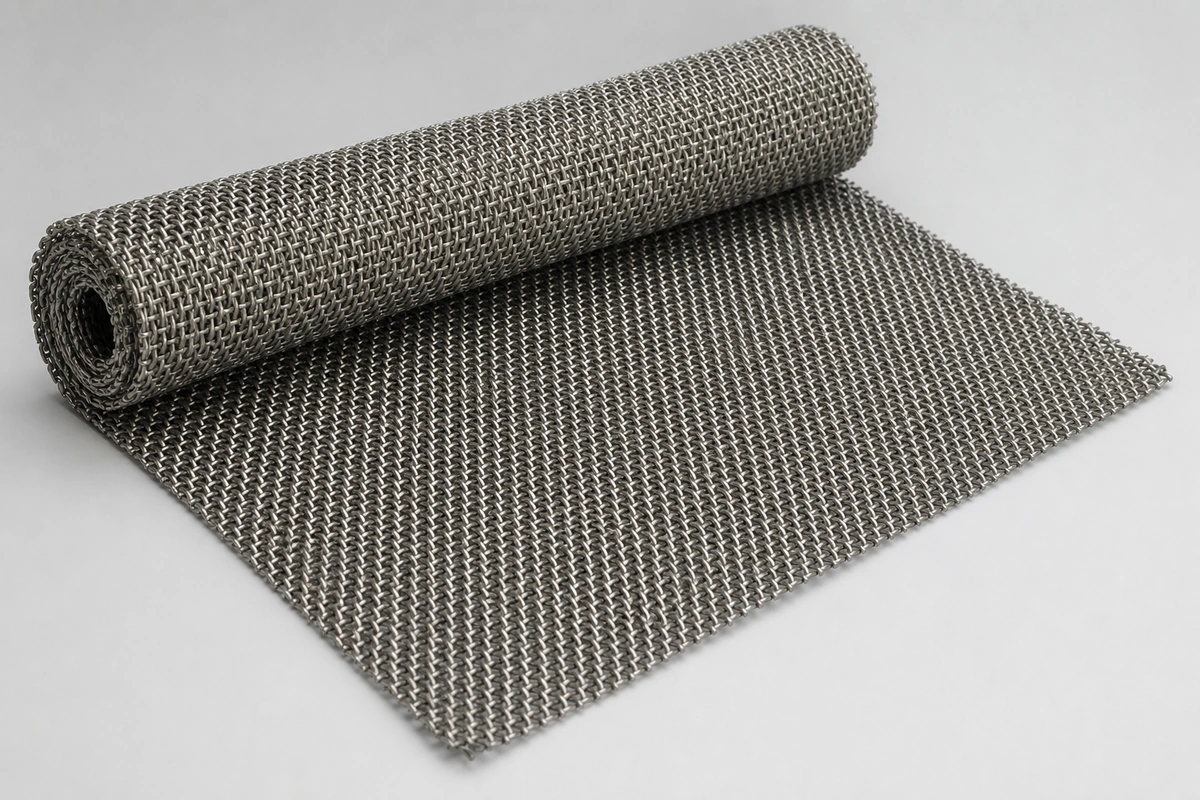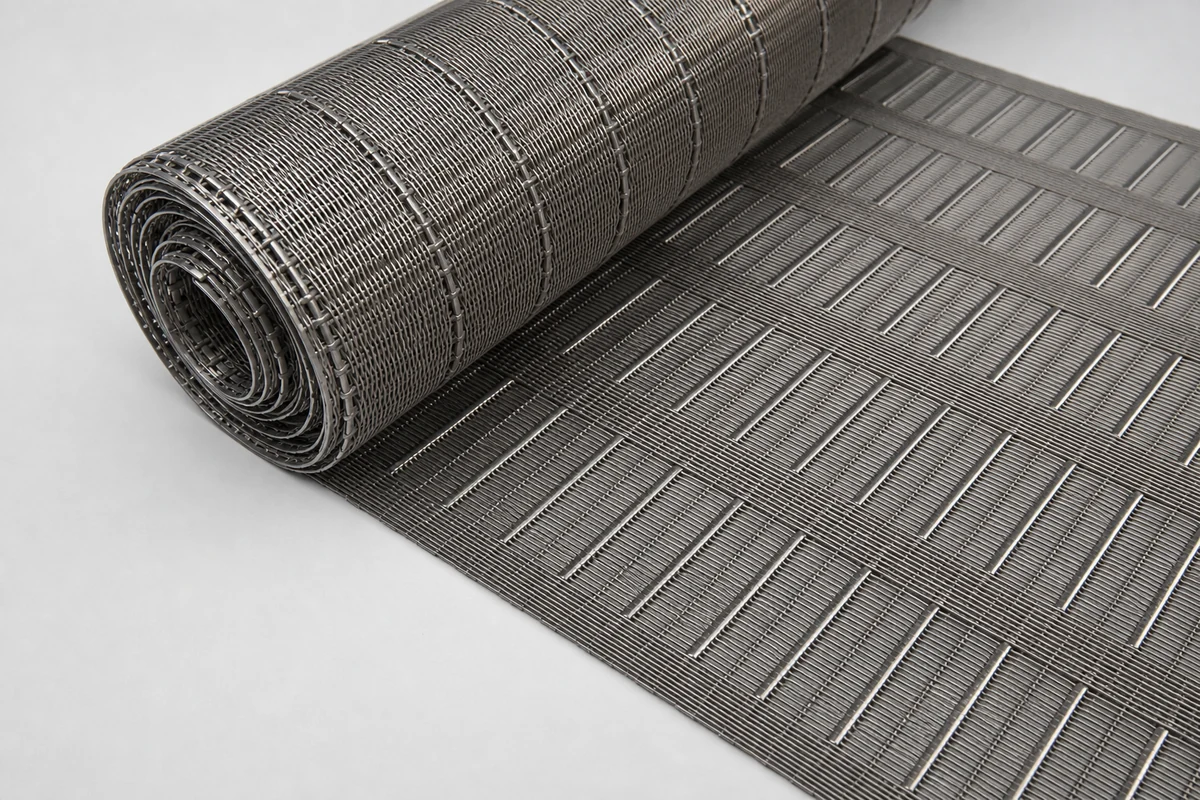
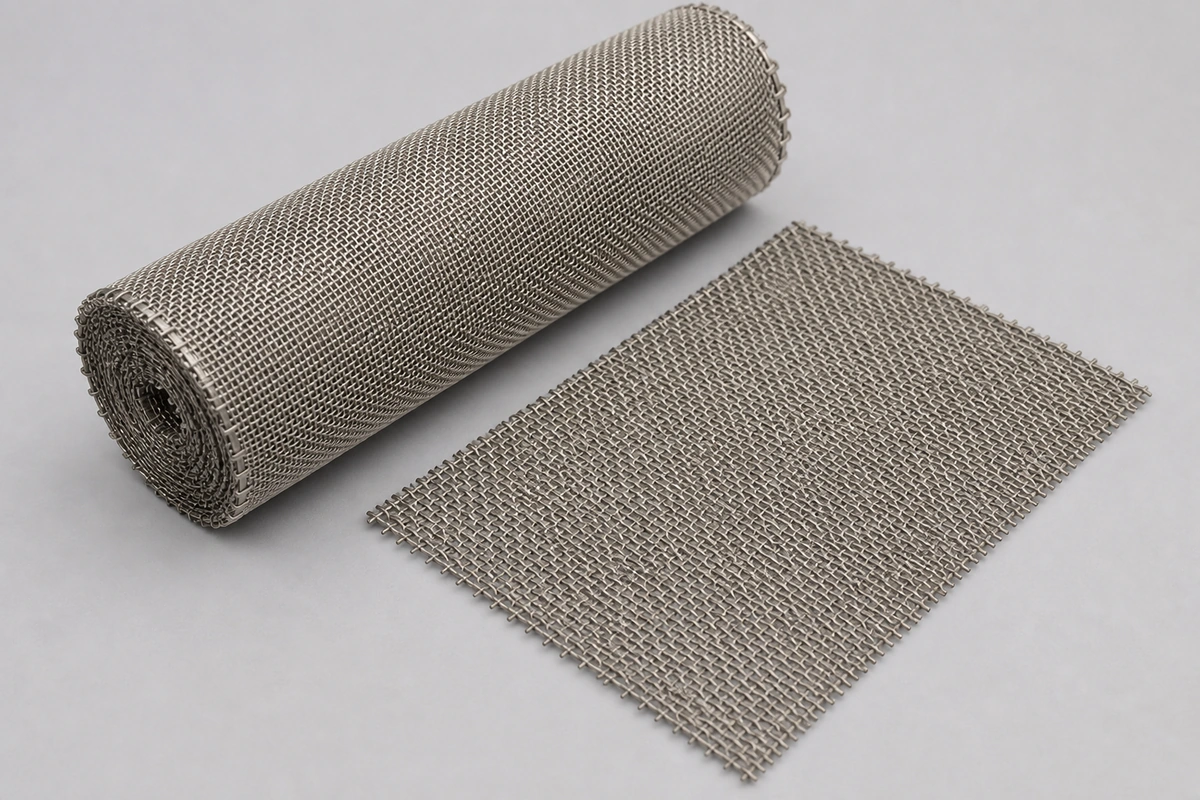
Plain Dutch Weave Mesh woven or fabricated in Brass (H65 / CuZn35) keeps its dimensional specification to ISO 9044; the alloy determines corrosion behavior (good atmospheric and fresh-water resistance; unsuitable for ammonia service) and the service temperature limit (approx. +200 °C). Both are covered below with the full specification table.
Why Choose Brass for Plain Dutch Weave Mesh
The decorative and spark-resistant screening alloy. For plain dutch weave mesh, this matters when good atmospheric and fresh-water resistance; unsuitable for ammonia service is the controlling requirement.
Alloy Properties
| Grade designation | H65 / CuZn35 |
|---|---|
| Magnetic response | Non-magnetic |
| Service temperature | approx. +200 °C |
| Corrosion characteristic | Good atmospheric and fresh-water resistance; unsuitable for ammonia service |
Corrosion Behavior in Filtration Service
Copper and brass plain dutch weave mesh resist atmospheric corrosion and fresh water well, tarnishing to a stable patina. Avoid ammonia and ammonium compounds (stress-corrosion cracking of brass) and strong oxidizing acids. In marine service, phosphor bronze outperforms plain brass.
Cleaning & Compatibility
Clean copper-alloy mesh with mild detergent or dilute citric acid; avoid ammonia-based cleaners entirely. In contact with more noble metals in wet service the copper alloy becomes the sacrificial partner — isolate or accept the loss rate.
Specifications of Plain Dutch Weave Mesh Available in Brass
| Mesh (warp x weft) | Warp wire (mm) | Weft wire (mm) | Nominal filtration (u00b5m) | Weight SS (kg/mu00b2) | Reference standard |
|---|---|---|---|---|---|
| 8x85 | 0.70 | 0.56 | 225 | 2.90 | ISO 9044 |
| 12x64 | 0.58 | 0.45 | 200 | 2.45 | ISO 9044 |
| 14x88 | 0.50 | 0.36 | 180 | 1.95 | ISO 9044 |
| 24x110 | 0.36 | 0.25 | 115 | 1.40 | ISO 9044 |
| 30x150 | 0.23 | 0.18 | 95 | 1.00 | ISO 9044 |
| 40x200 | 0.18 | 0.14 | 75 | 0.85 | ISO 9044 |
| 50x250 | 0.14 | 0.11 | 60 | 0.65 | ISO 9044 |
| 165x800 | 0.07 | 0.04 | 20 | 0.45 | ISO 9044 |