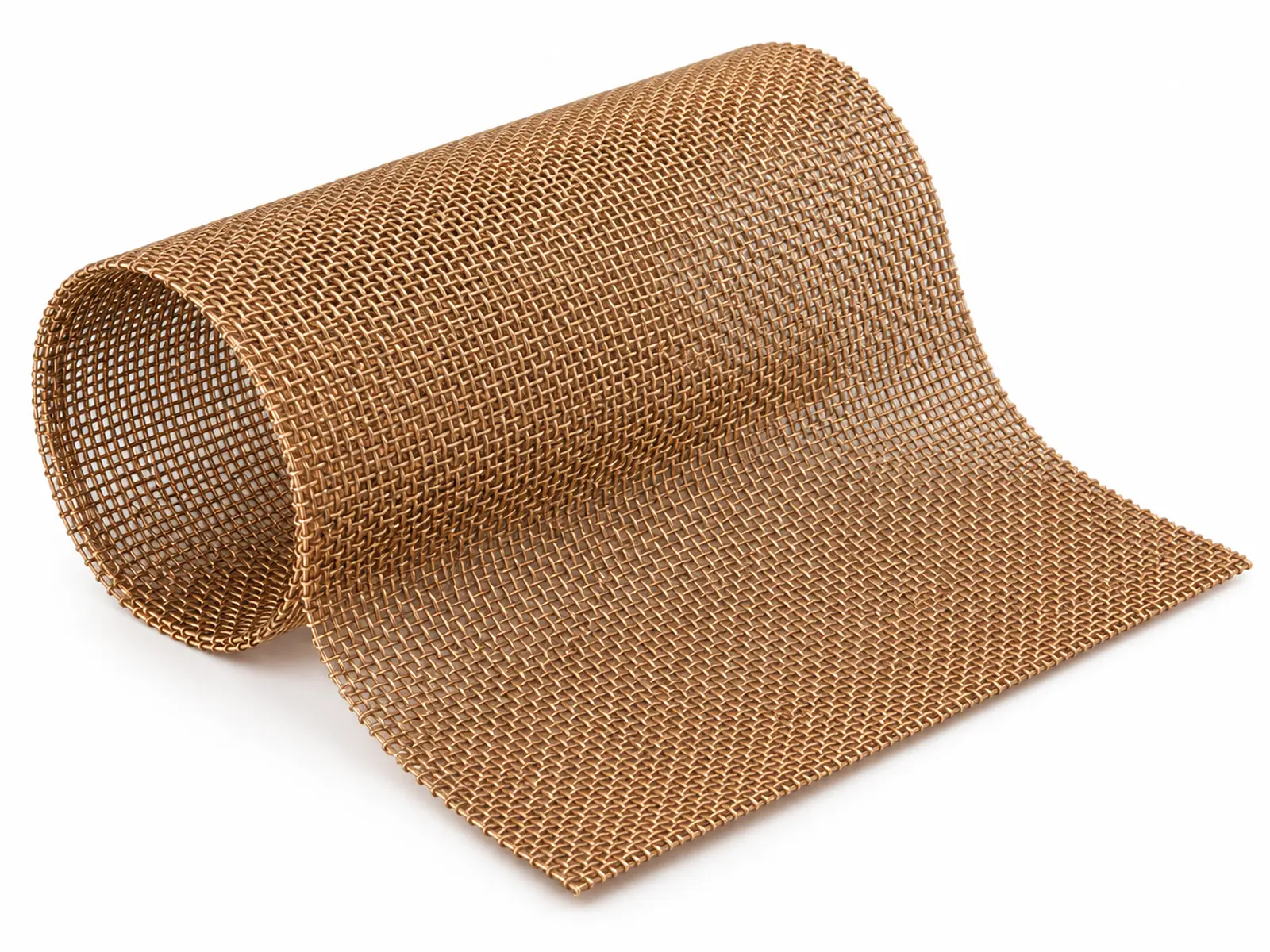
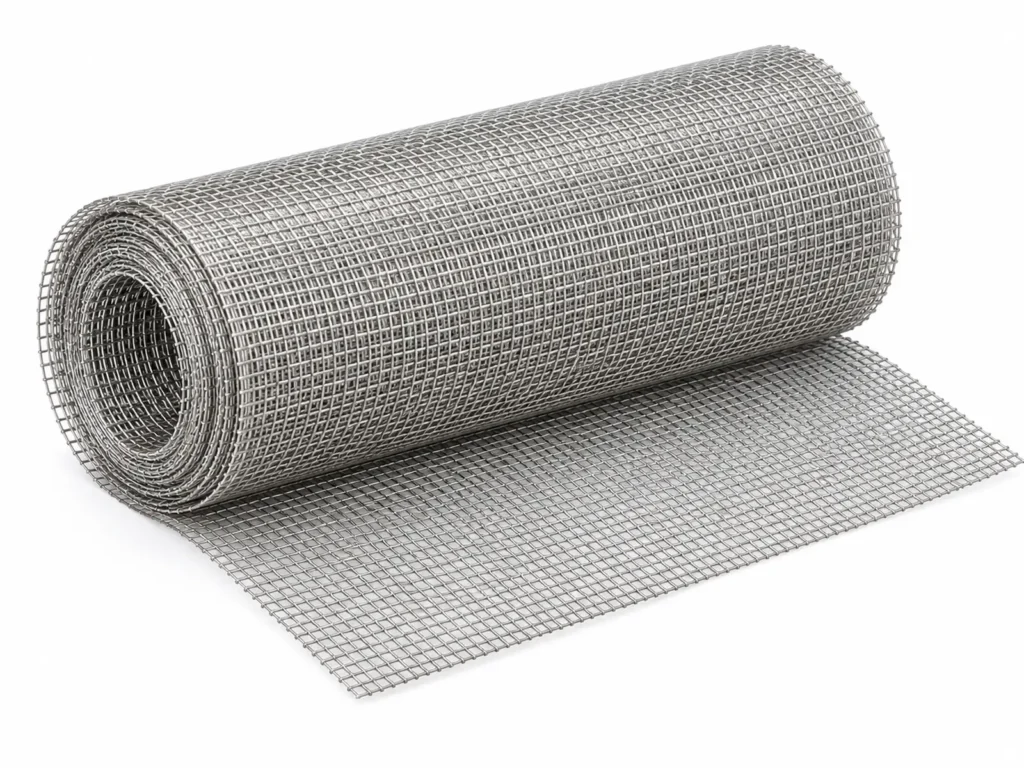
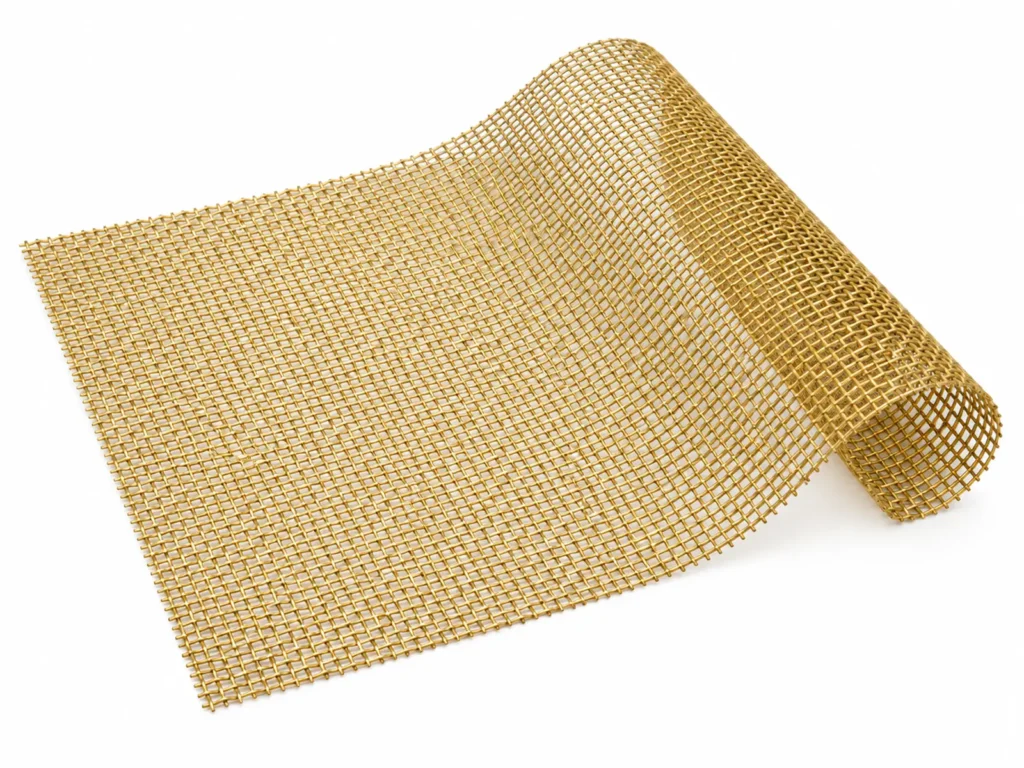
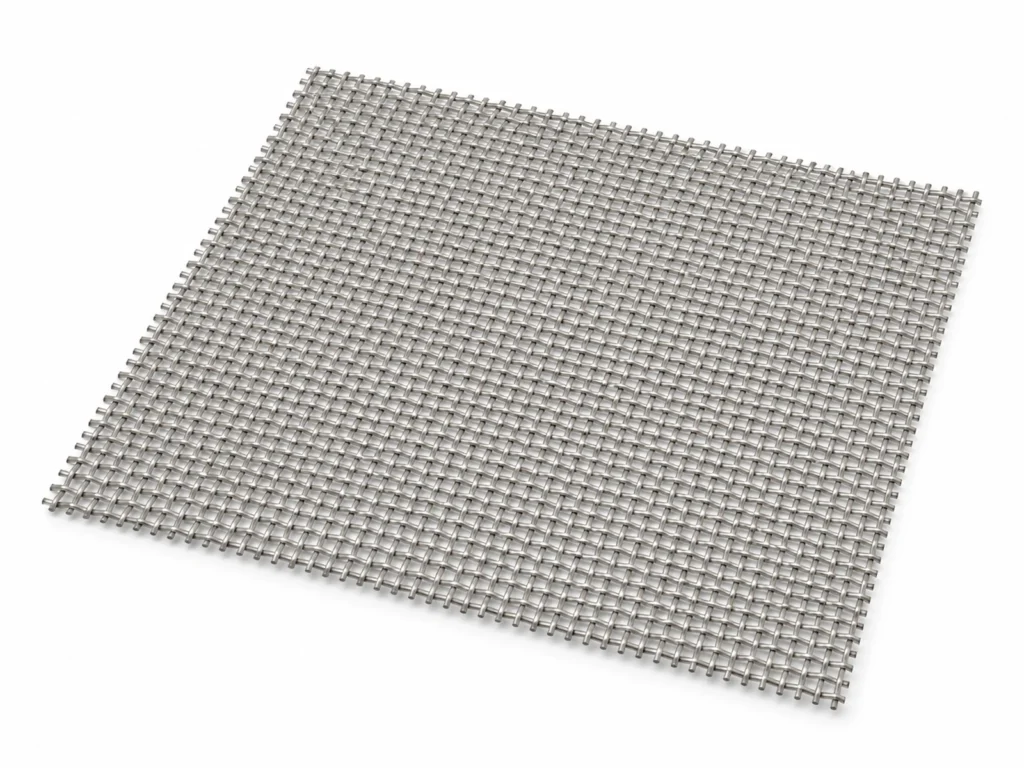
Phosphor Bronze Wire Mesh in Brass (H65 / CuZn35) is used for screening and filtering in marine, fuel and fatigue-loaded duties where tin-bronze cloth outlasts brass and stays non-magnetic. The alloy gives good atmospheric and fresh-water resistance; unsuitable for ammonia service and is non-magnetic, with a practical service limit of approx. +200 °C.
Alloy Properties
| Grade designation | H65 / CuZn35 |
|---|
| Magnetic response | Non-magnetic |
|---|
| Service temperature | approx. +200 °C |
|---|
| Corrosion characteristic | Good atmospheric and fresh-water resistance; unsuitable for ammonia service |
|---|
Specifications of Phosphor Bronze Wire Mesh Available in Brass
| Mesh count | Wire diameter (mm) | Aperture (mm) | Micron rating (u00b5m) | Open area (%) | Alloy |
|---|
| 30-Mesh | 0.300 | 0.547 | 547 | 41.7 | CuSn6 (C51900) |
| 60-Mesh | 0.180 | 0.243 | 243 | 33.0 | CuSn6 (C51900) |
| 100-Mesh | 0.110 | 0.144 | 144 | 32.0 | CuSn6 (C51900) |
| 150-Mesh | 0.066 | 0.103 | 103 | 37.2 | CuSn6 (C51900) |
| 200-Mesh | 0.053 | 0.074 | 74 | 34.0 | CuSn6 (C51900) |
Where Brass Phosphor Bronze Wire Mesh Is Used
- Marine & offshore: sea-water strainers, bilge screens and sensor guards on vessels.
- Fuel & oil systems: aviation and diesel fuel screens.
- Electronics: EMI shielding gaskets and spring-contact mesh.
- Papermaking: cylinder-mould and dandy-roll cloth.
Ordering Phosphor Bronze Wire Mesh in Brass
- Alloy: CuSn6 (C51900) for marine strainers; CuSn8 for higher strength.
- Weave: Twill weave from 100-mesh up carries the finer wire with more strength.
- Size: Supplied in rolls, cut pieces, discs or formed baskets.
Mistakes to Avoid with Phosphor Bronze Wire Mesh
- Choosing brass instead of phosphor bronze for sea water, where brass dezincifies.
- Specifying bronze where 316L stainless would be cheaper and equally resistant.