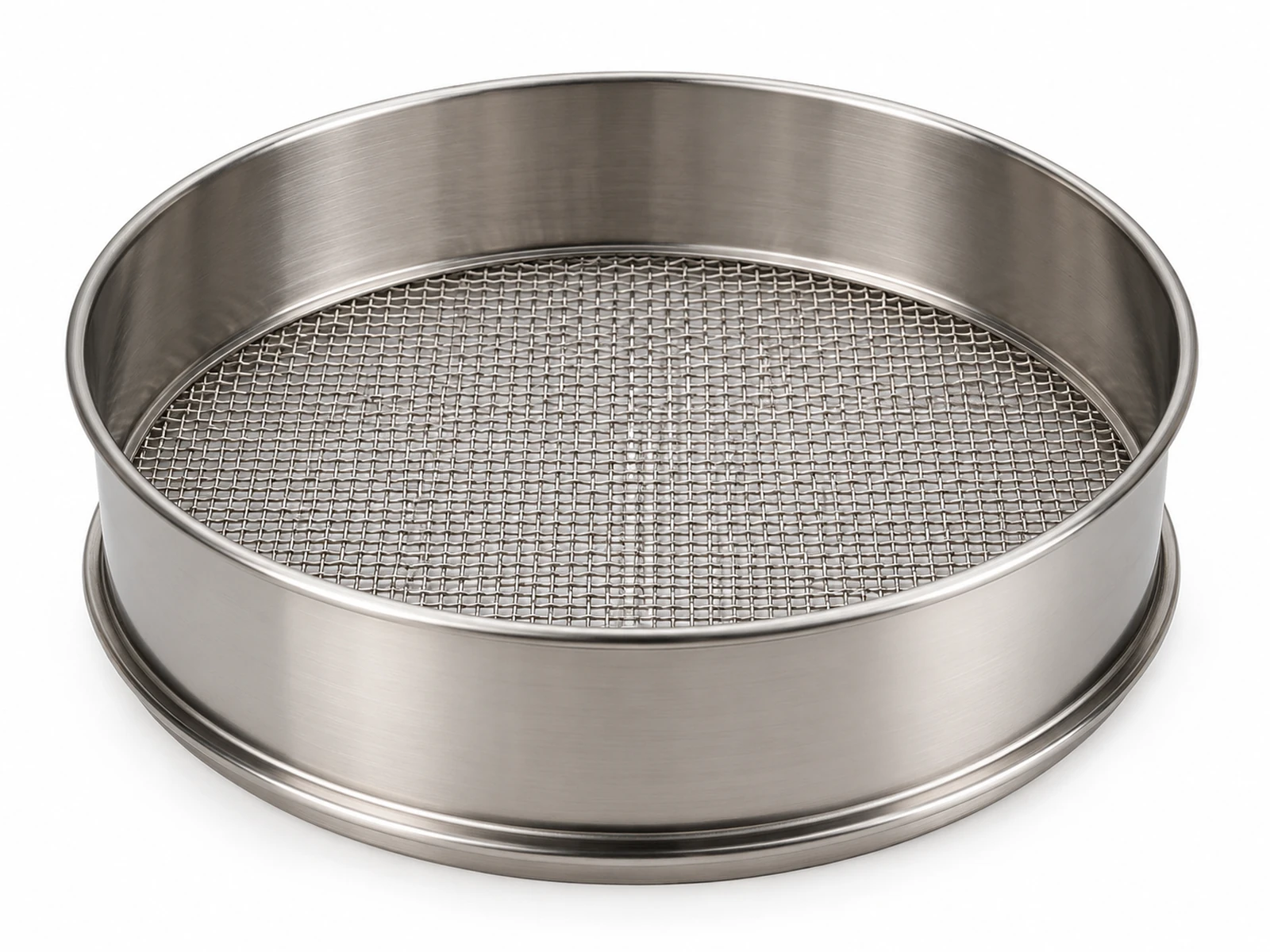
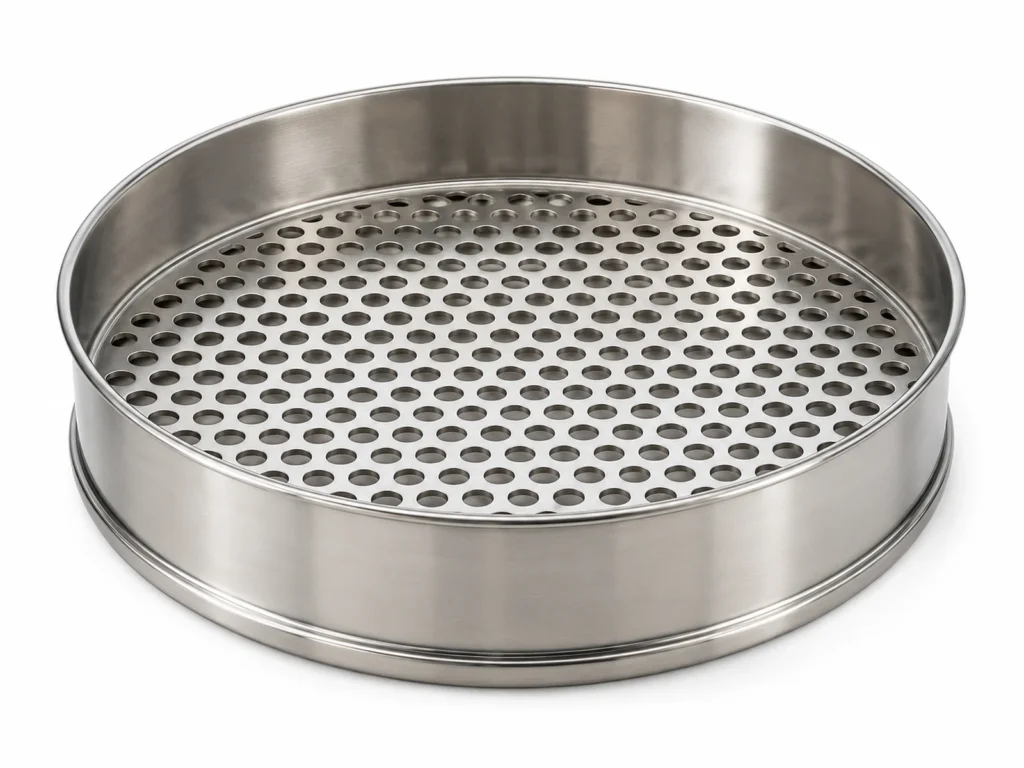
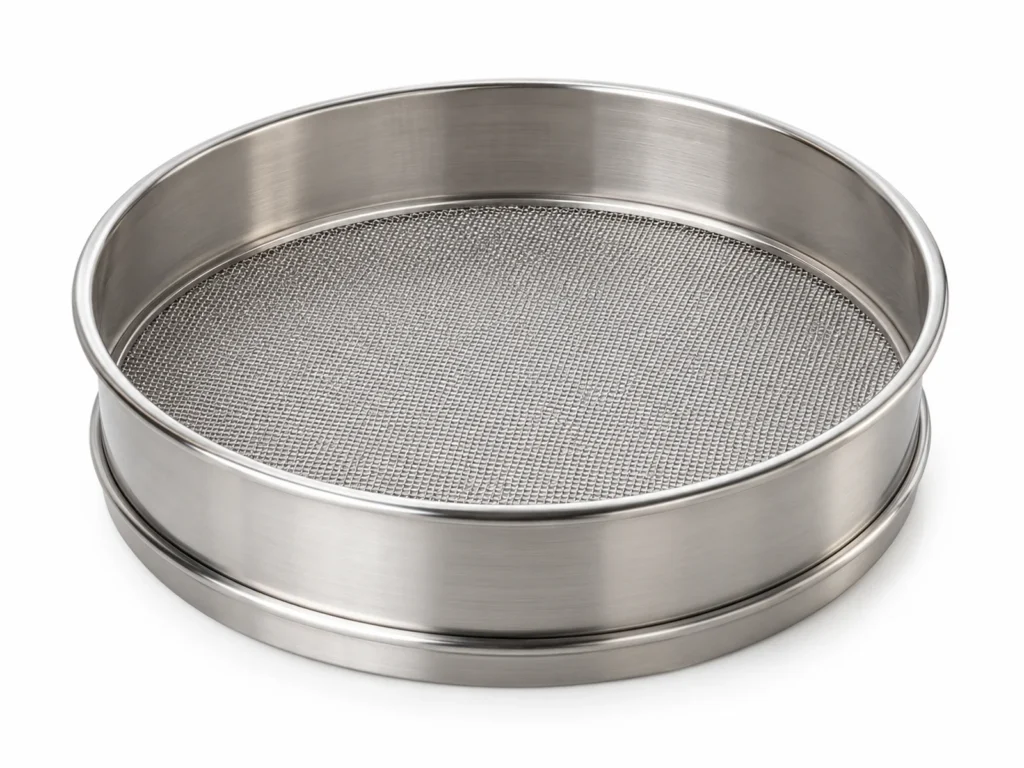
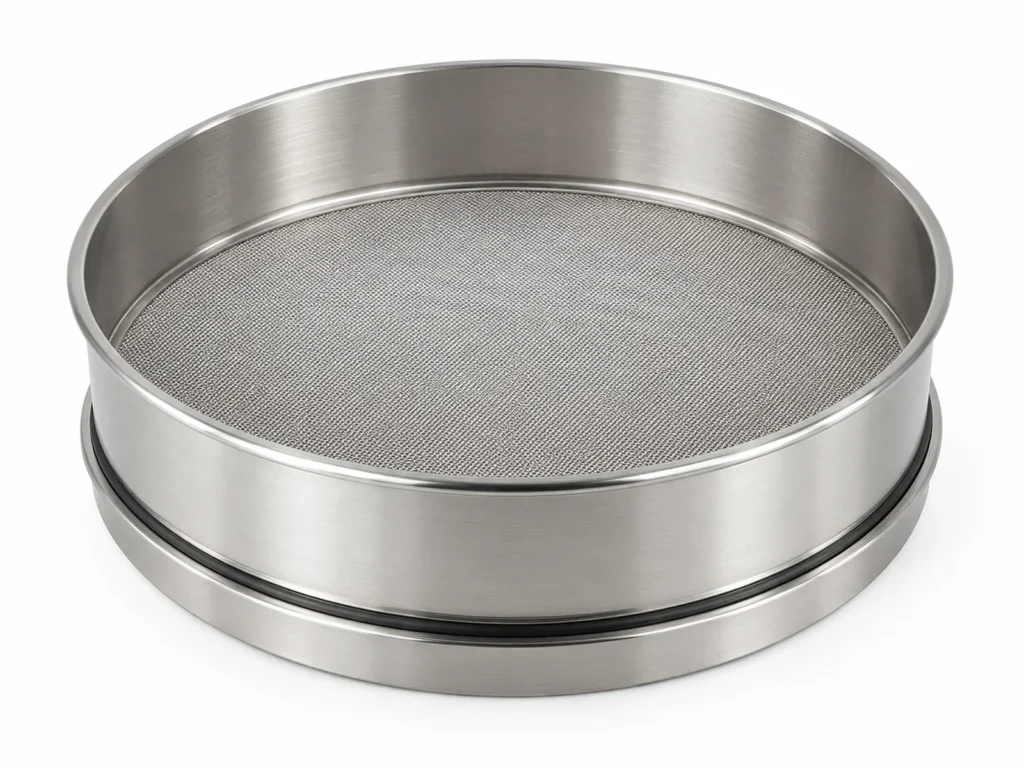
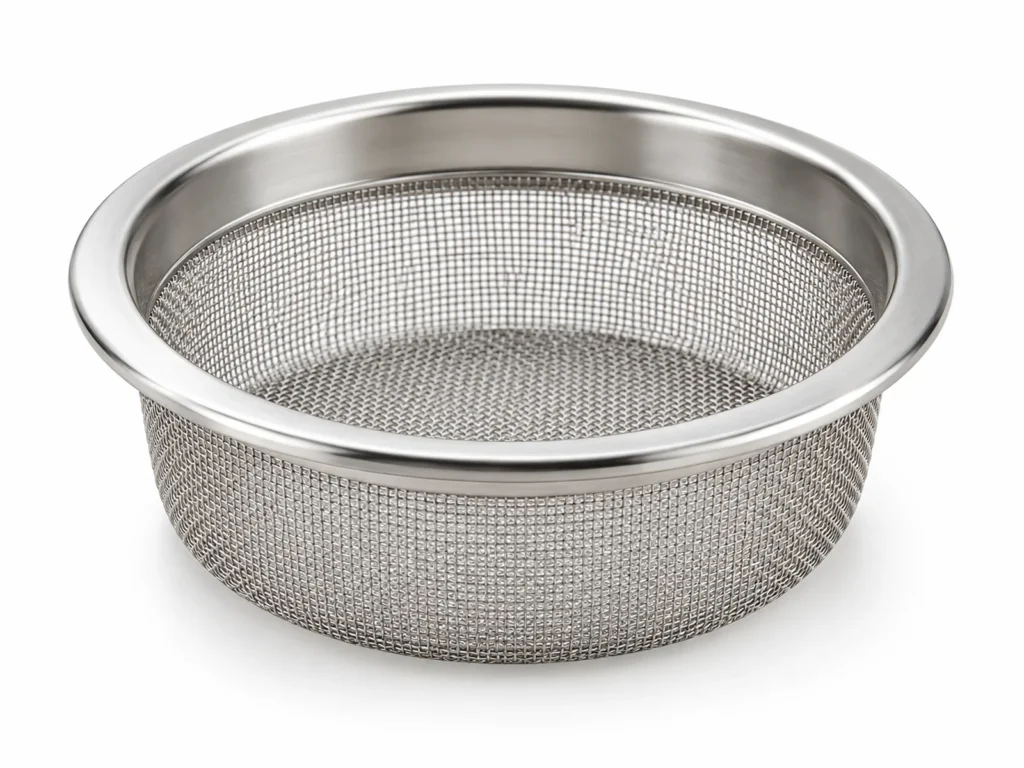
ASTM E11 Test Sieve (8 in / 12 in) in Brass (H65 / CuZn35) is used for grading soils, aggregates, powders and granules by US standard sieve number in 8 in and 12 in frames built to ASTM E11. The alloy gives good atmospheric and fresh-water resistance; unsuitable for ammonia service and is non-magnetic, with a practical service limit of approx. +200 °C.
Alloy Properties
| Grade designation | H65 / CuZn35 |
|---|
| Magnetic response | Non-magnetic |
|---|
| Service temperature | approx. +200 °C |
|---|
| Corrosion characteristic | Good atmospheric and fresh-water resistance; unsuitable for ammonia service |
|---|
Specifications of ASTM E11 Test Sieve (8 in / 12 in) Available in Brass
| US sieve No. | Frame diameter (mm) | Frame height (mm) | Aperture (mm) | Wire diameter (mm) | Frame |
|---|
| No. 4 | 203 | 50 | 4.750 | 1.600 | SS304 full height |
| No. 10 | 203 | 50 | 2.000 | 0.900 | SS304 full height |
| No. 40 | 203 | 50 | 0.425 | 0.280 | SS304 full height |
| No. 100 | 203 | 50 | 0.150 | 0.100 | SS304 full height |
| No. 200 | 203 | 25 | 0.075 | 0.050 | Brass half height |
| No. 200 u00b7 12 in | 305 | 75 | 0.075 | 0.050 | SS304 full height |
Where Brass ASTM E11 Test Sieve (8 in / 12 in) Is Used
- Construction materials labs: aggregate gradation to ASTM C136 for concrete and asphalt mixes.
- Geotechnical & soil labs: particle-size distribution to ASTM D6913.
- Powder metallurgy & additive manufacturing: checking metal powder size cuts.
- Botanical extraction: dry sieving of plant material by micron cut.
Ordering ASTM E11 Test Sieve (8 in / 12 in) in Brass
- Sieve number: Order by US sieve No. (No. 4 = 4.75 mm, No. 200 = 75 µm) as named in the test method.
- Frame height: Full height (2 in) for most work; half height (1 in) to fit more sieves on a shaker.
- Frame material: Stainless for wet washing and durability; brass for traditional dry sieving.
Mistakes to Avoid with ASTM E11 Test Sieve (8 in / 12 in)
- Mixing ISO-series and ASTM-series sieves in one stack, giving apertures the method does not call for.
- Overloading the No. 200, which blinds it and under-reports fines.