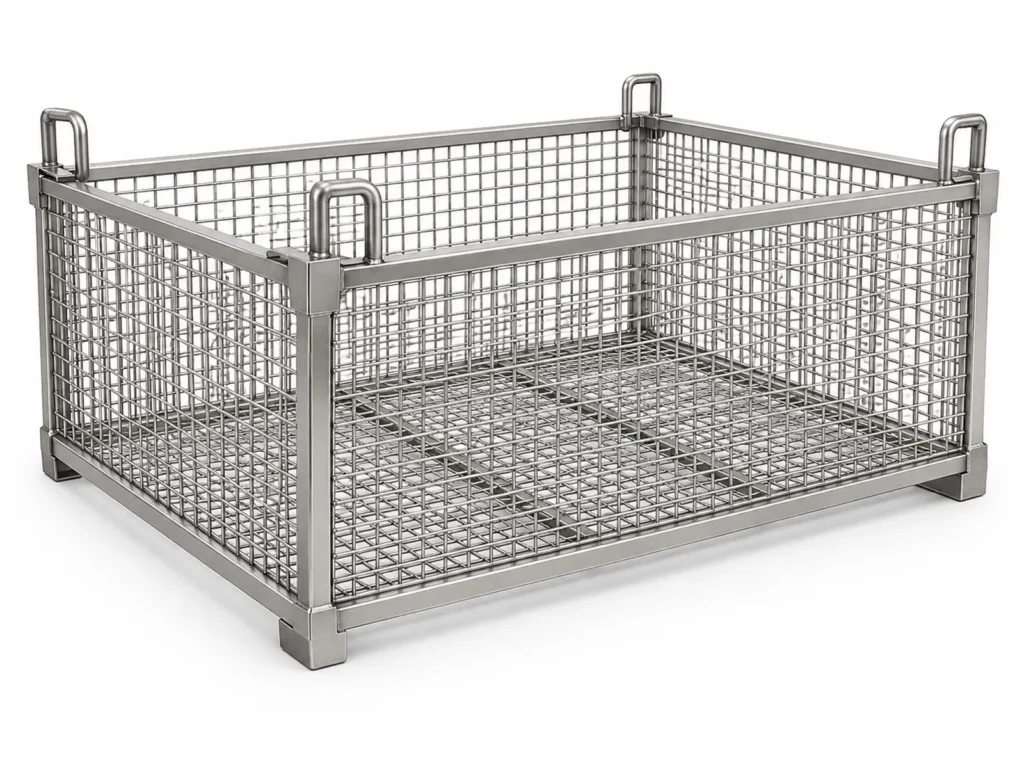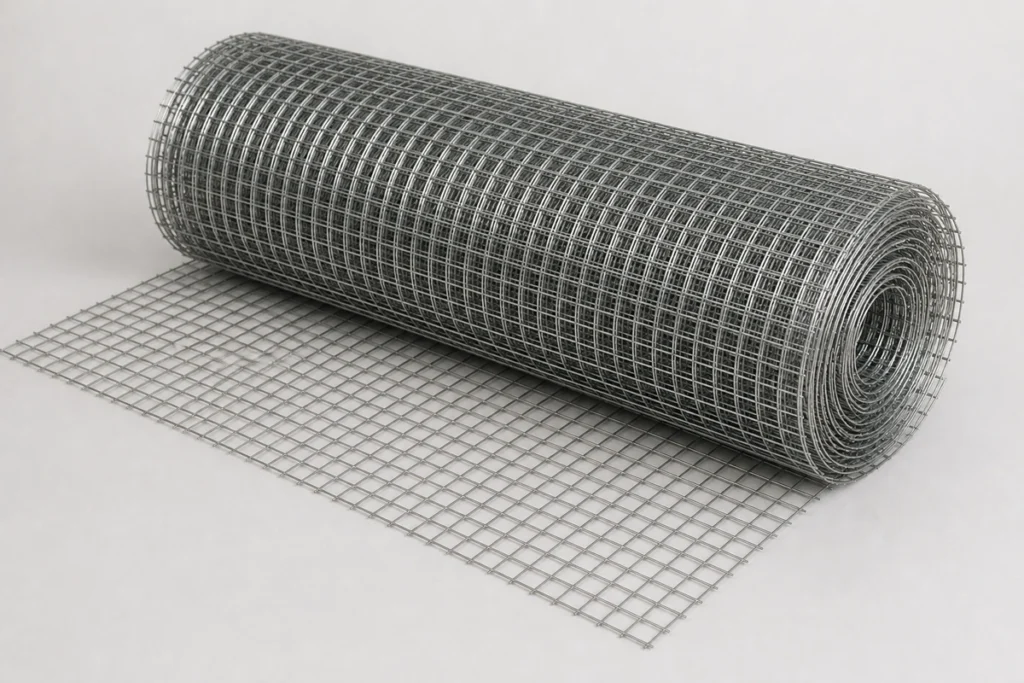
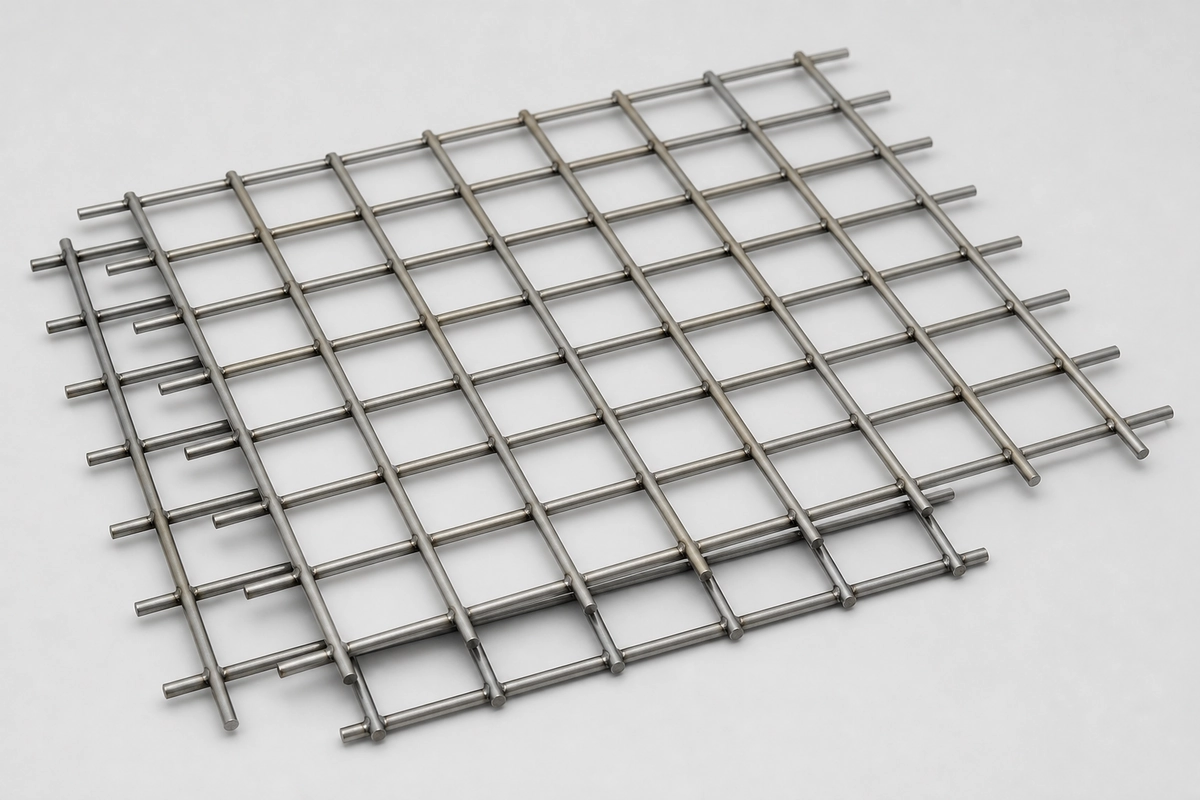
Welded Wire Mesh Panels (EN 10223-7 / ASTM A740) is specified where the duty calls for rigid partitions, machine guards, shelving, cages and reinforcement made from stainless steel welded wire mesh panels resistance-welded at every intersection. The sections below cover the typical end-uses by industry, the mesh, micron and material decisions for each, installation practice, and the applications this product type is not suited to.
Typical Applications for Welded Wire Mesh Panels
Where Welded Wire Mesh Panels is specified and bought:
- Machine guarding & partitions: heavy duty welded wire panels in modular guard systems.
- Food & pharmaceutical plants: stainless steel welded wire mesh shelving, racks and trays.
- Warehousing: rack decking and security partitions.
- OEM fabrication: welded mesh panels built into equipment frames.
How to Specify Welded Wire Mesh Panels for Your Application
- Opening & wire: Square or rectangular opening and wire gauge sized for load and containment.
- Panel size: Standard 4 × 8 ft or cut to drawing with trimmed or selvedge edges.
- Finish: Stainless 304/316, galvanized after welding, or powder coated.
- Standard: Quote EN 10223-7 / ASTM A740 and the size designation from the table on the product page, plus any value you changed in the technical drawing.
Handling & Installation Practice
- Support panels at intervals suited to the wire diameter so the grid does not sag.
- Touch up coating on cut ends of galvanized or coated panels.
Common Selection Mistakes with Welded Wire Mesh Panels
- Using bare carbon steel panels outdoors, which rust at every weld.
- Choosing a wire gauge too light for shelving or guard impact loads.
Where Welded Wire Mesh Panels Is Not the Right Choice
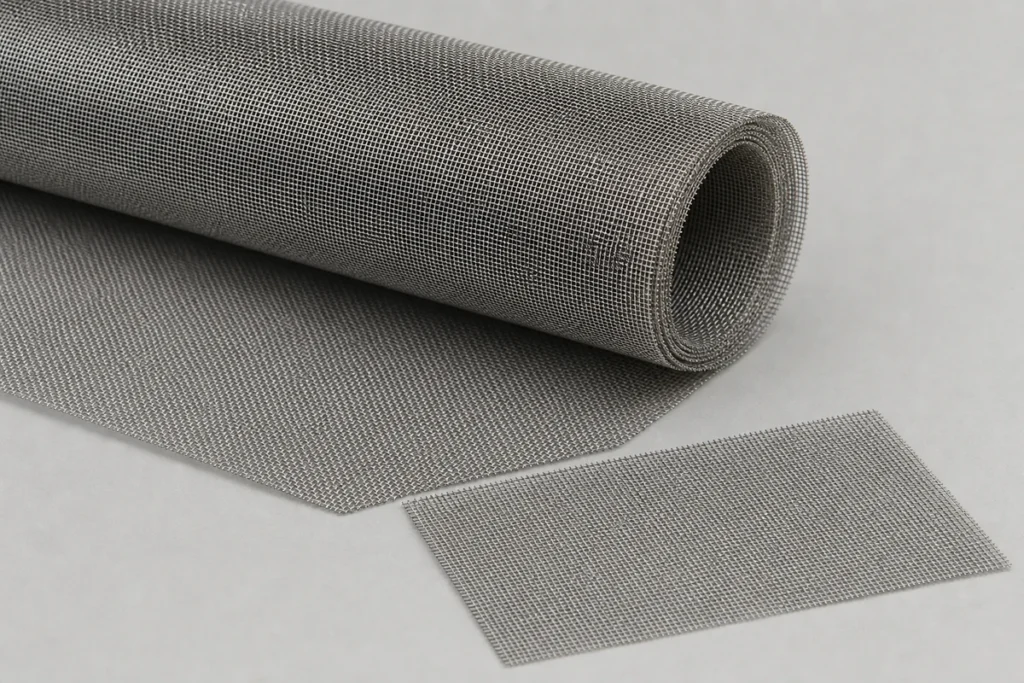
Not a filtration or sieving medium — welded grids are for containment and support.