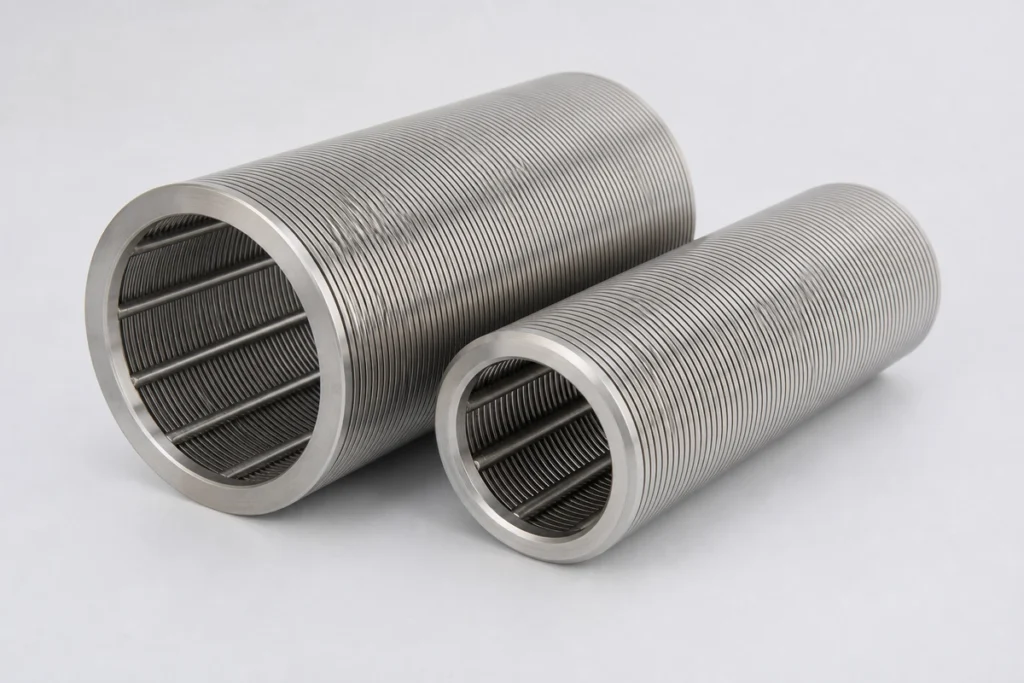
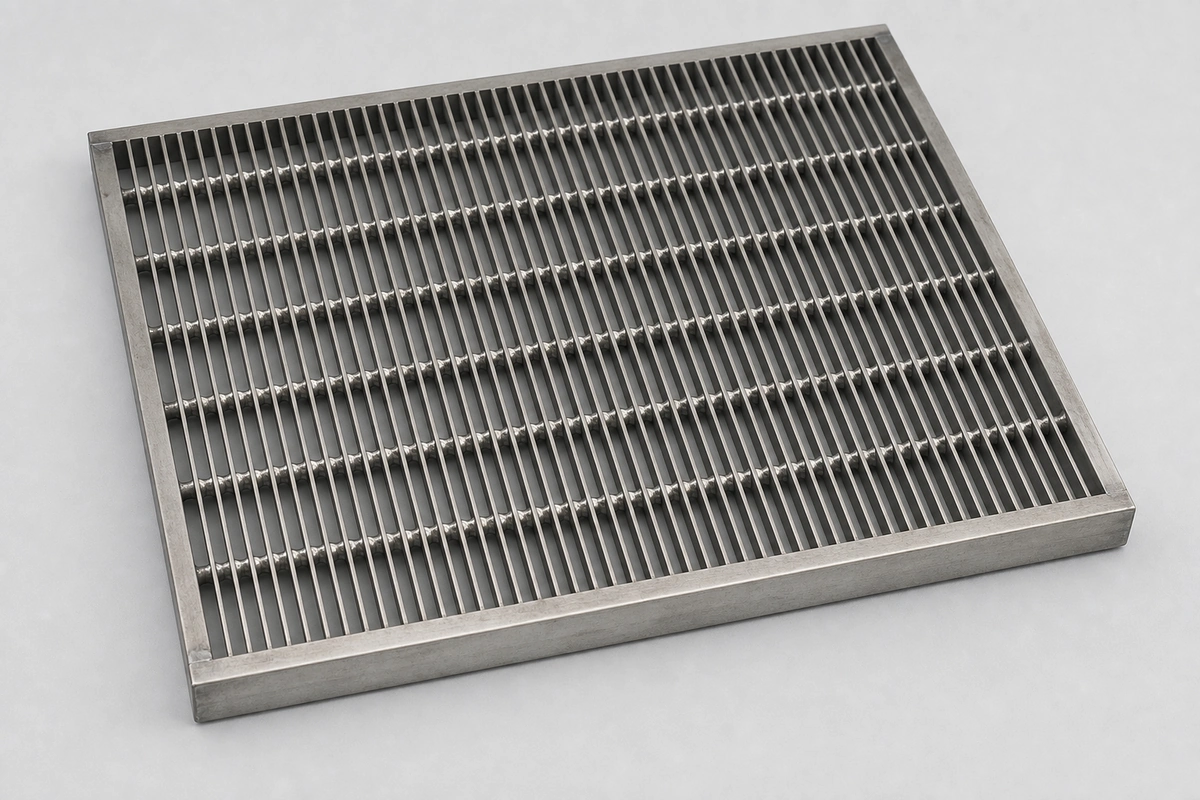
Wedge Wire Screen Panels (Industry standard (V-wire)) is specified where the duty calls for dewatering, sizing and straining with wedge wire screen panels — V-shaped profile wires welded to support rods so each slot widens behind the face and does not clog. The sections below cover the typical end-uses by industry, the mesh, micron and material decisions for each, installation practice, and the applications this product type is not suited to.
Typical Applications for Wedge Wire Screen Panels
Where Wedge Wire Screen Panels is specified and bought:
- Mining & coal preparation: dewatering screens, sieve bends and DSM screens.
- Food & starch: starch washing, juice and vegetable dewatering.
- Wastewater: inlet and step screens.
- Pulp & paper: pressure screen and sorting panels.
How to Specify Wedge Wire Screen Panels for Your Application
- Slot width: From 0.05 mm to 10 mm; specify slot tolerance for fine duties.
- Profile & support: Profile wire size and support-rod pitch for the load and span.
- Panel form: Flat, curved (sieve bend) or polyurethane-framed modular panels.
- Standard: Quote Industry standard (V-wire) and the size designation from the table on the product page, plus any value you changed in the technical drawing.
Handling & Installation Practice
- Install with the slot flat face toward the flow so particles pass rather than wedge.
- Support panel edges along the full length to prevent profile wires lifting.
Common Selection Mistakes with Wedge Wire Screen Panels
- Mounting the panel upside down, so the slot narrows downstream and blinds.
- Choosing a profile too small for impact loads on dewatering screens.
Where Wedge Wire Screen Panels Is Not the Right Choice
Not for very fine, sub-50 µm filtration where woven dutch weave or sintered media perform better.