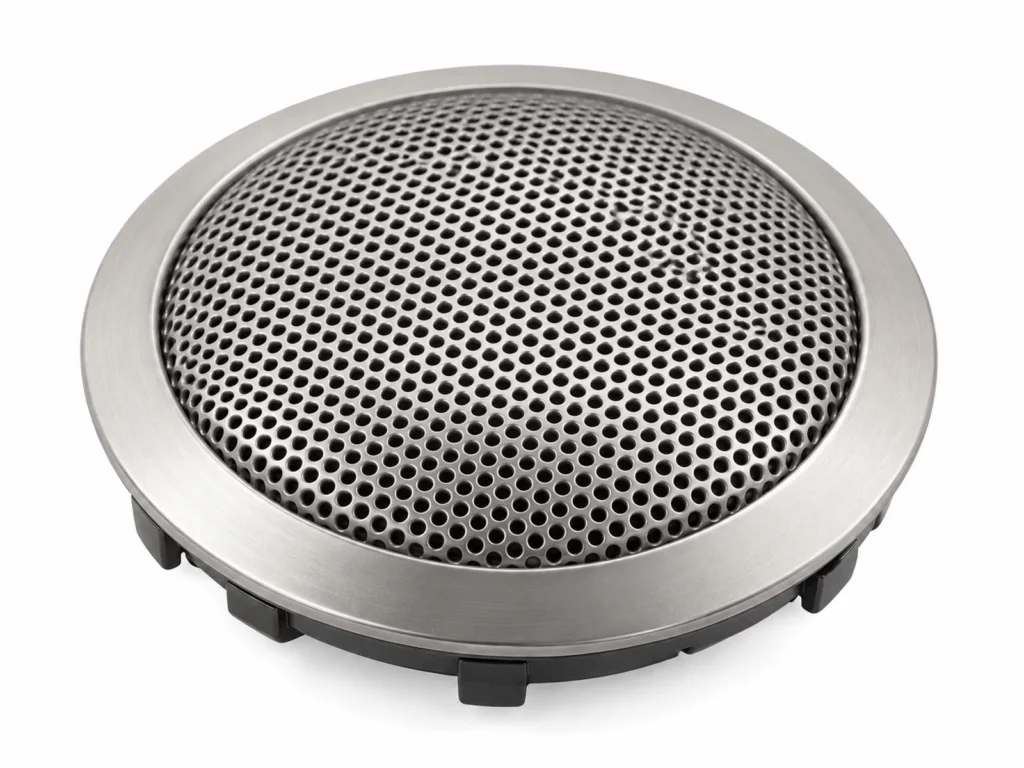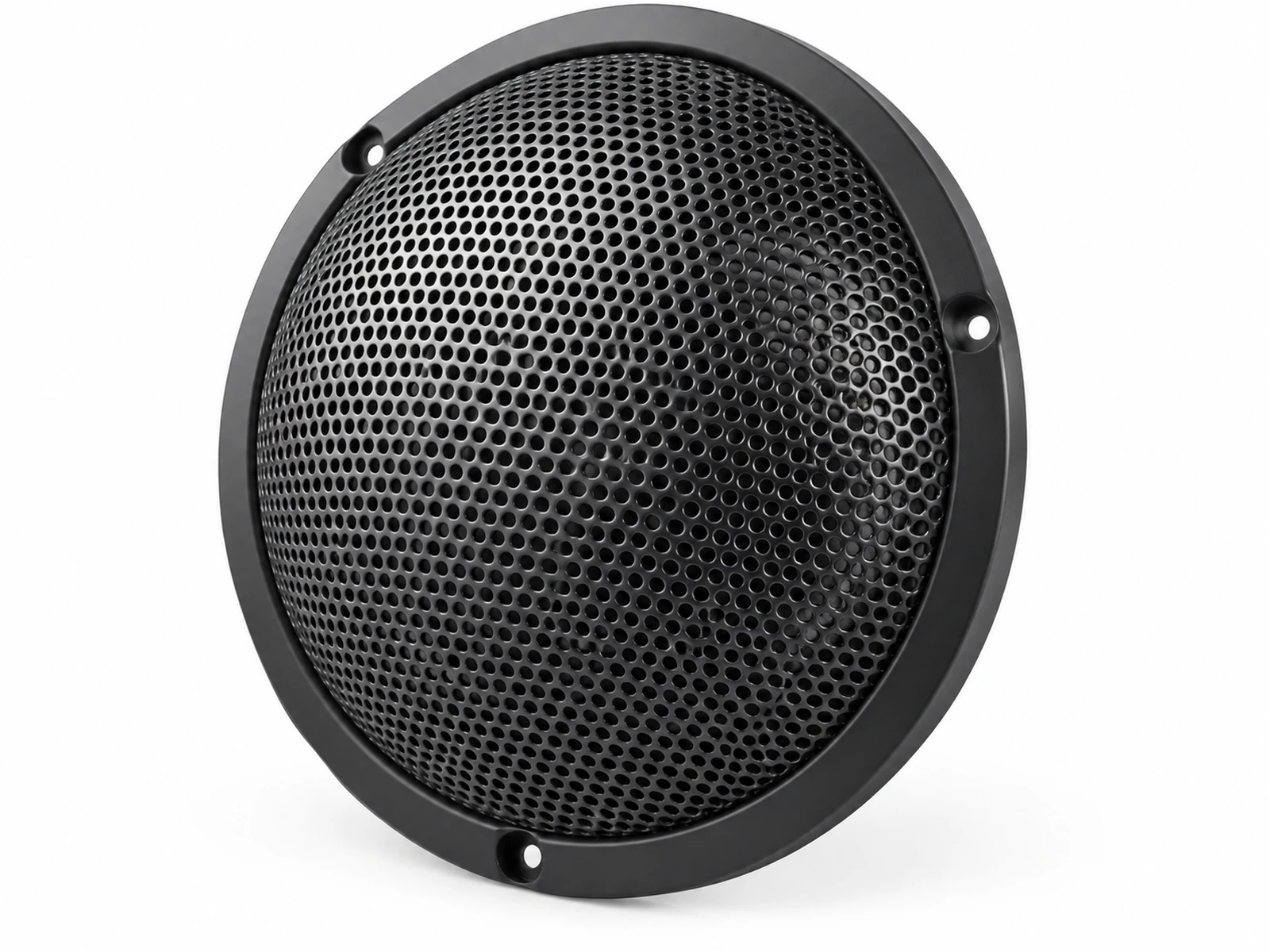
Application guide for Car Door Speaker Grille to Automotive OEM (IATF 16949 process). The core duty of the type is covering door-mounted car audio woofers and midrange speakers with a domed, perforated metal grille that protects the cone from knees, bags and cargo. The typical industries, the how-to-specify checklist, handling practice and the exclusion cases are set out below.
Typical Applications for Car Door Speaker Grille
Where Car Door Speaker Grille is specified and bought:
- Vehicle OEMs & premium audio brands: branded door grilles in luxury trims.
- Car audio aftermarket: upgrade grilles for 5.25, 6.5 and 6×9 in speakers.
- Marine & powersports audio: coated grilles for boats and UTVs.
- Custom & show builds: laser-patterned grilles in custom door panels.
How to Specify Car Door Speaker Grille for Your Application
- Speaker size & bolt pattern: Order by speaker size and the screw-hole pattern of the door or adapter ring.
- Dome height: Allow for the cone's excursion and the depth of the door trim.
- Finish: Black powder coat for aftermarket; anodized or PVD to match OEM trim.
- Standard: Quote Automotive OEM (IATF 16949 process) and the size designation from the table on the product page, plus any value you changed in the technical drawing.
Handling & Installation Practice
- Fit a foam ring between speaker and trim so the grille does not buzz against the panel.
- Check that the window glass clears the speaker magnet when the grille and adapter are fitted.
Common Selection Mistakes with Car Door Speaker Grille
- A shallow grille on a high-excursion woofer, which the cone hits on bass.
- Using a bright polished finish in sunlight-exposed doors, which reflects glare into mirrors.
Where Car Door Speaker Grille Is Not the Right Choice
Not waterproof — doors still need a speaker baffle or rain shield behind the speaker.