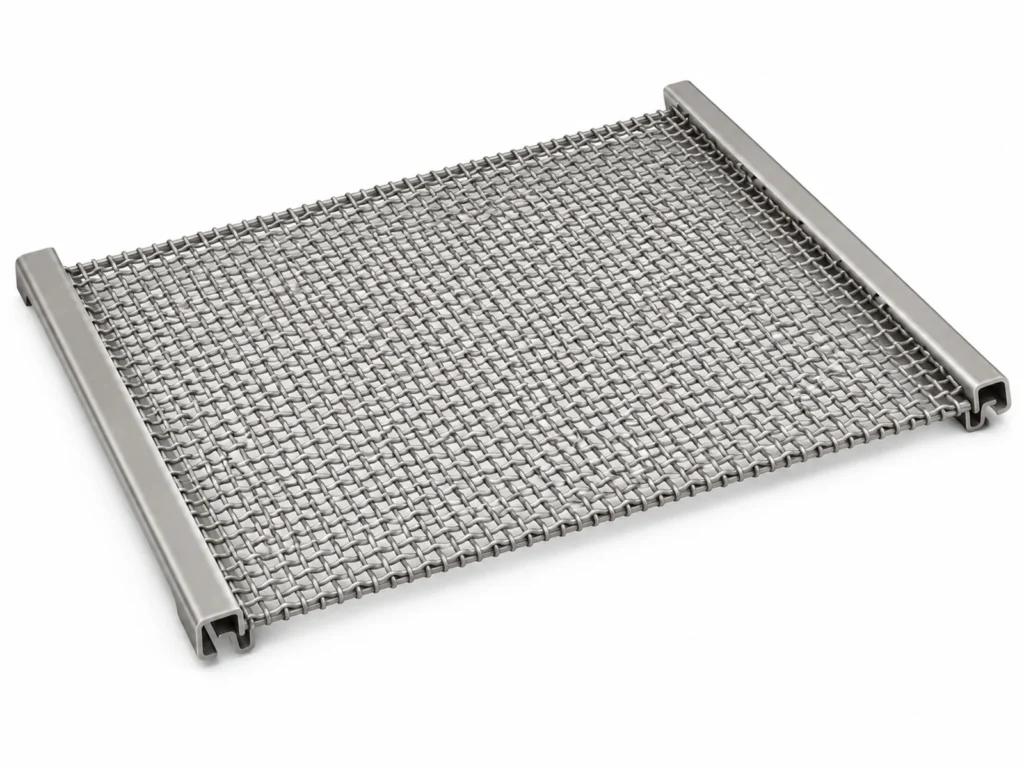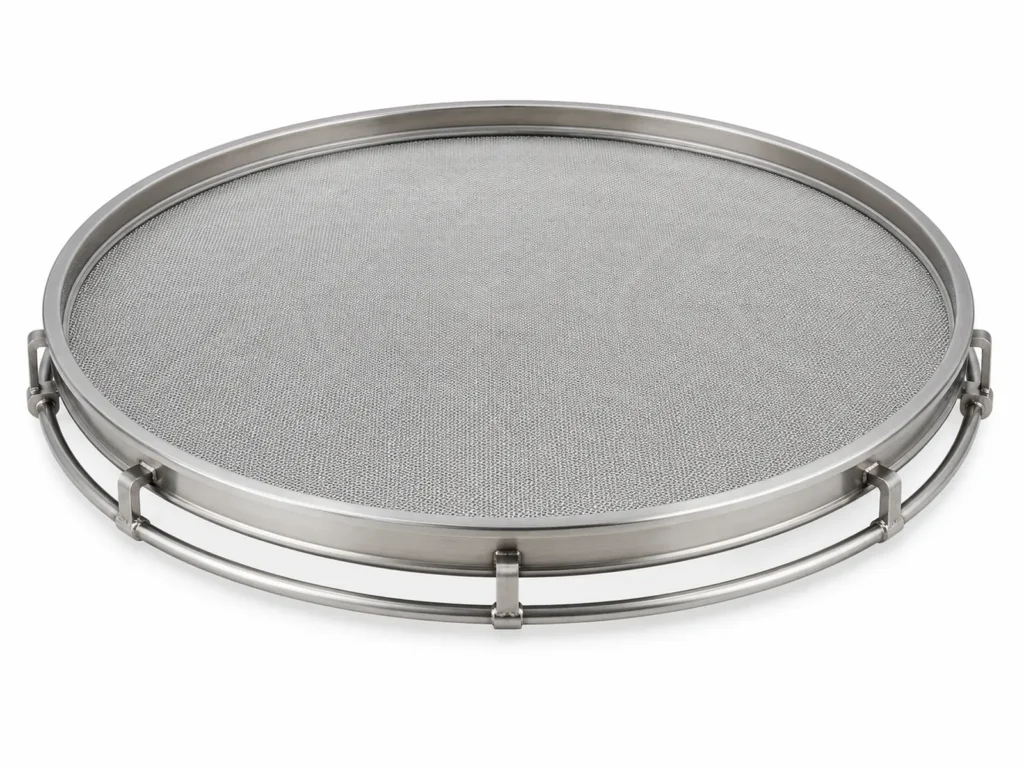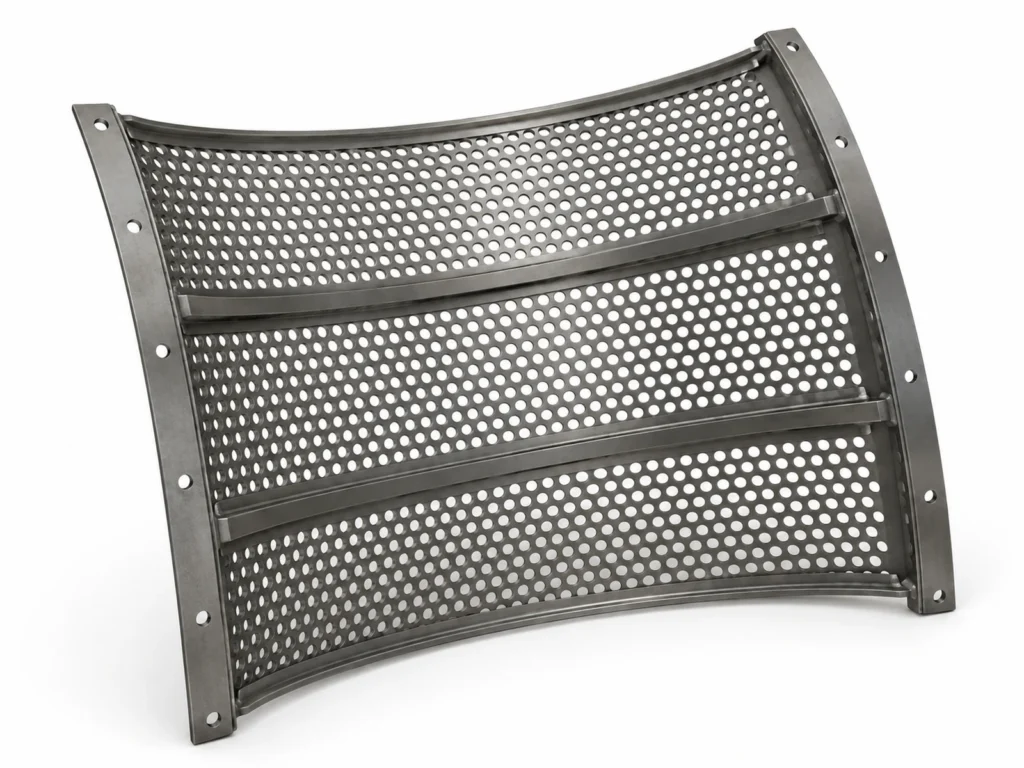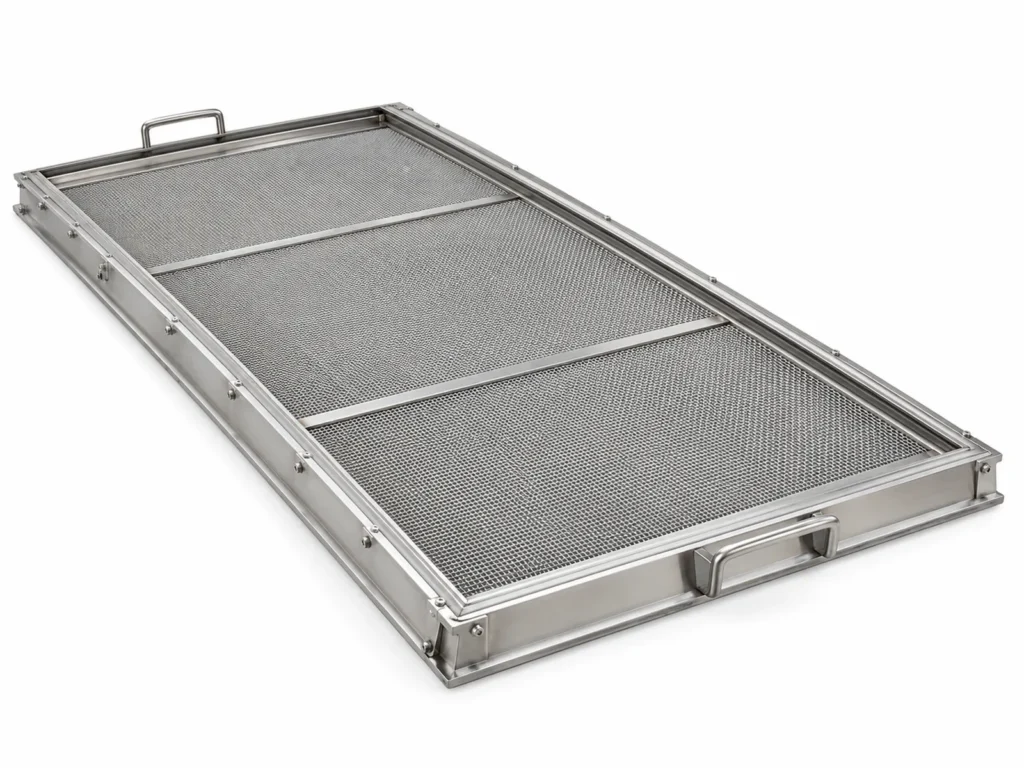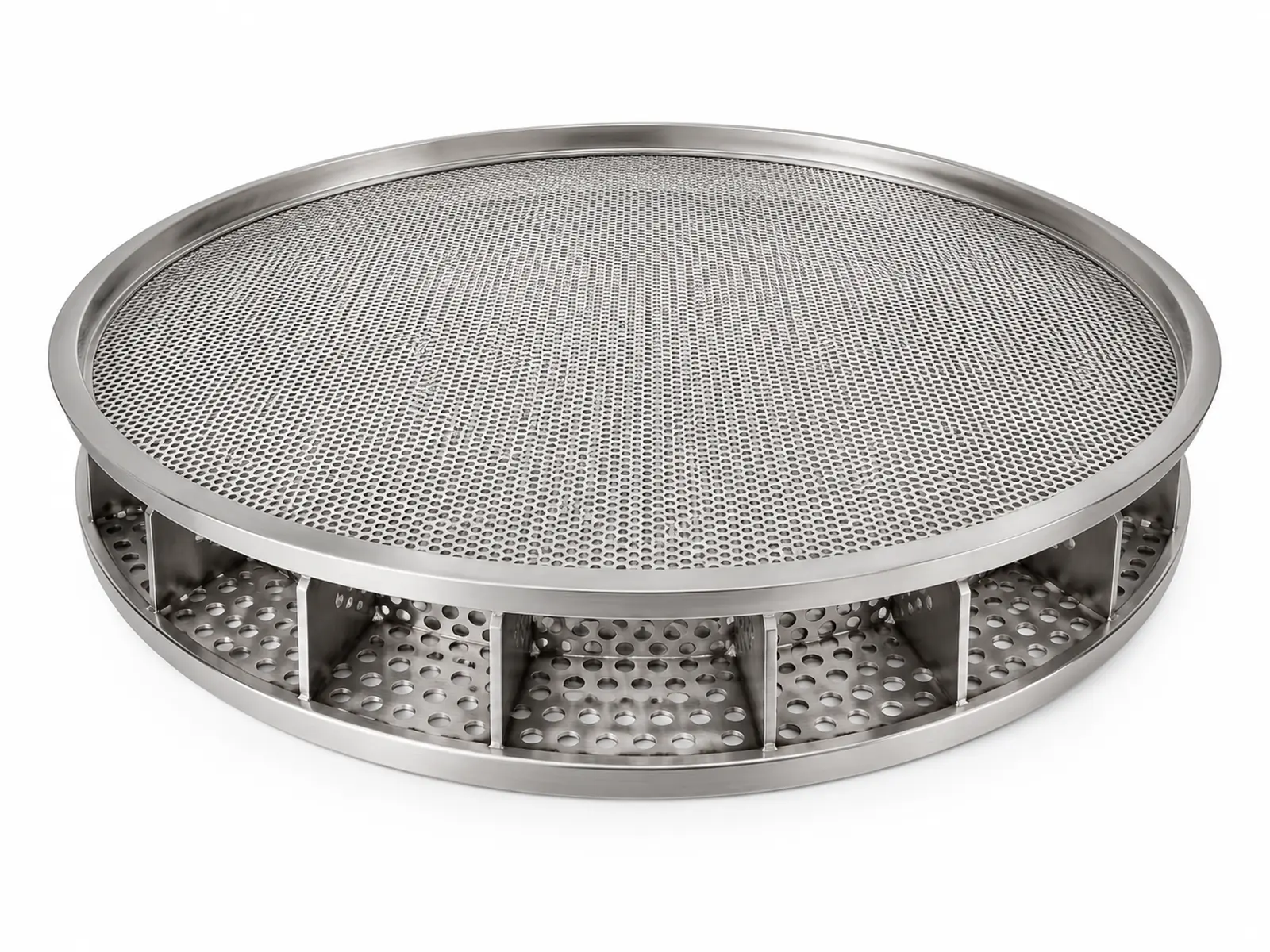
Anti-Blinding Ball Tray & Support Deck (Sifter OEM frames) is specified where the duty calls for keeping sifter screens clear by bouncing rubber or silicone balls against the underside of the mesh, held in compartments on a perforated support tray. The sections below cover the typical end-uses by industry, the mesh, micron and material decisions for each, installation practice, and the applications this product type is not suited to.
Typical Applications for Anti-Blinding Ball Tray & Support Deck
Where Anti-Blinding Ball Tray & Support Deck is specified and bought:
- Food & flour sifting: ball decks under plansifter and round sifter screens.
- Chemicals & plastics: sifting sticky or static-prone powders.
- Pharmaceutical: GMP sifter decks with silicone balls.
- Minerals & ceramics: fine powder screening.
How to Specify Anti-Blinding Ball Tray & Support Deck for Your Application
- Tray size & compartments: Match the sifter frame and give each ball its own compartment.
- Hole size: Large enough to pass product, smaller than the ball (8–12 mm holes for 20–30 mm balls).
- Ball material: Rubber, food-grade silicone or polyurethane.
- Standard: Quote Sifter OEM frames and the size designation from the table on the product page, plus any value you changed in the technical drawing.
Handling & Installation Practice
- Replace worn or flattened balls — they stop bouncing and the screen blinds.
- Keep the gap between tray and screen as designed so balls strike the mesh.
Common Selection Mistakes with Anti-Blinding Ball Tray & Support Deck
- Balls too small for the holes, which escape into product.
- Too large a gap, so balls never reach the mesh.
Where Anti-Blinding Ball Tray & Support Deck Is Not the Right Choice
Not as effective as ultrasonic cleaning for very fine powders below about 75 µm.