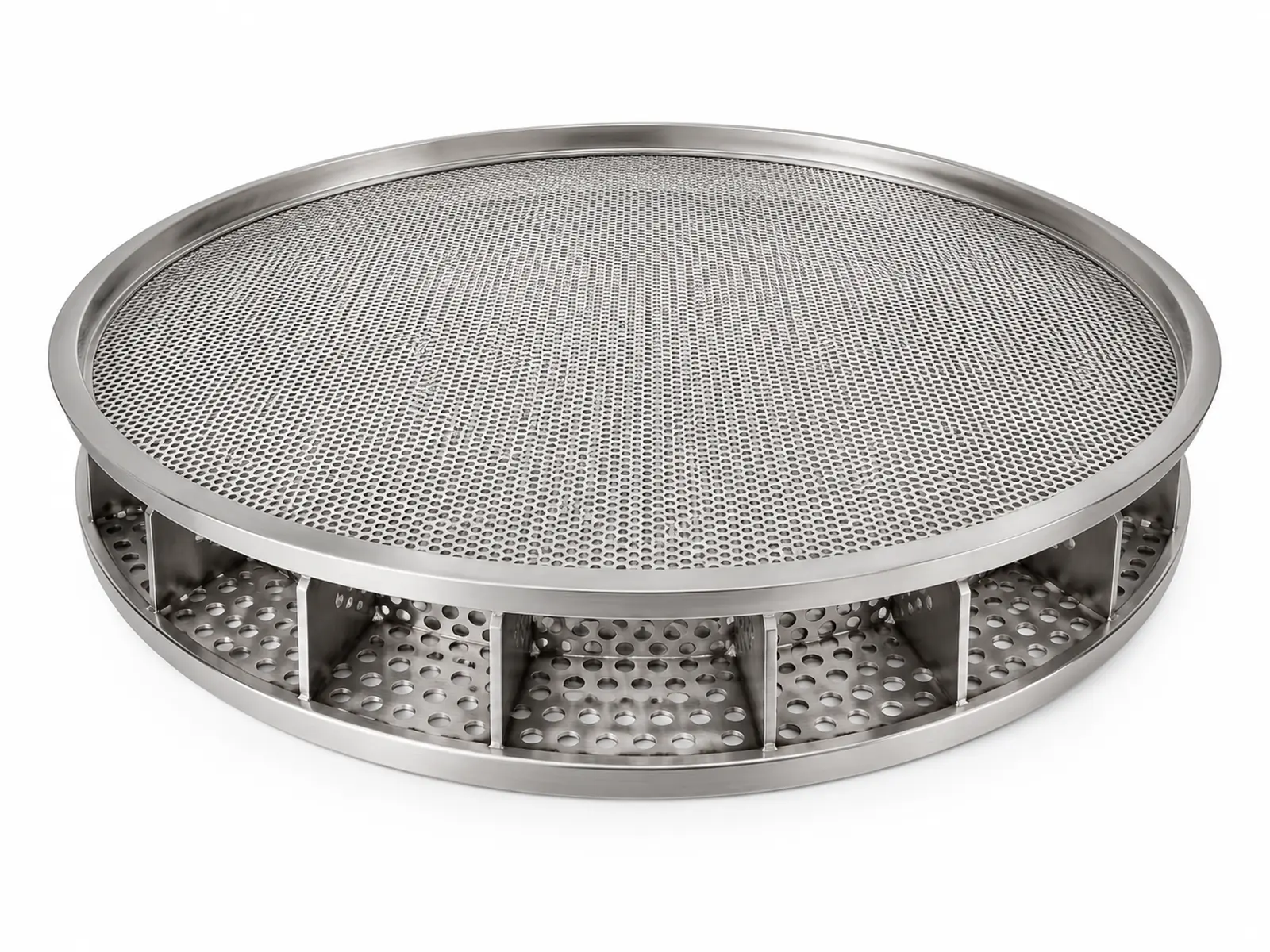
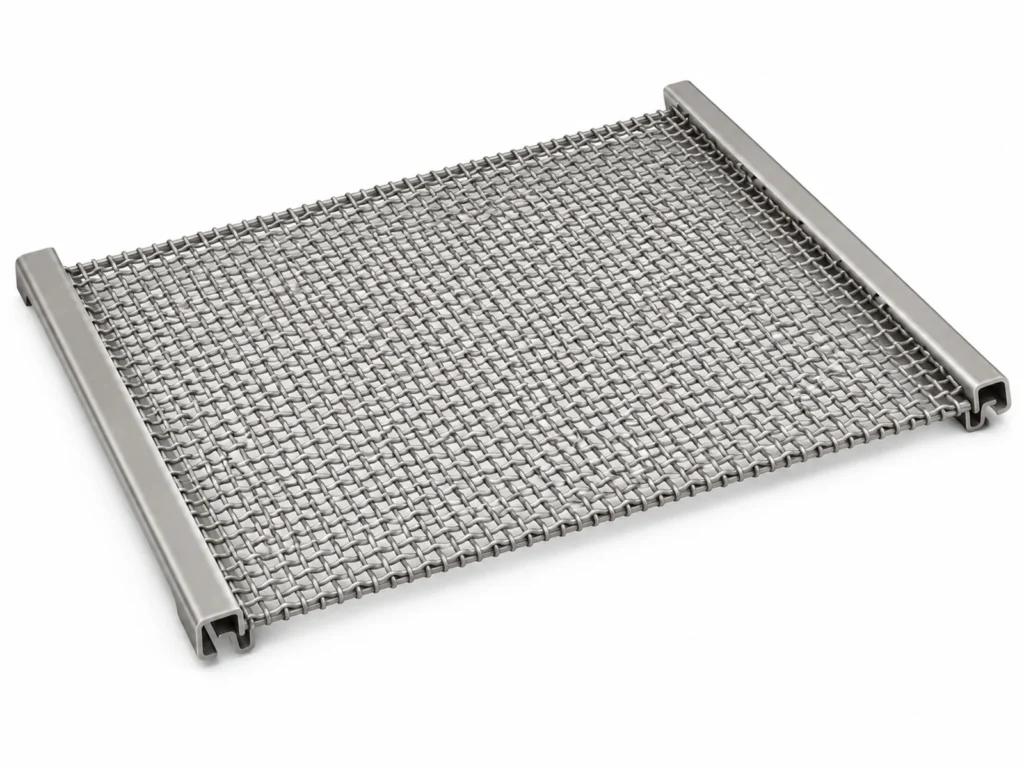
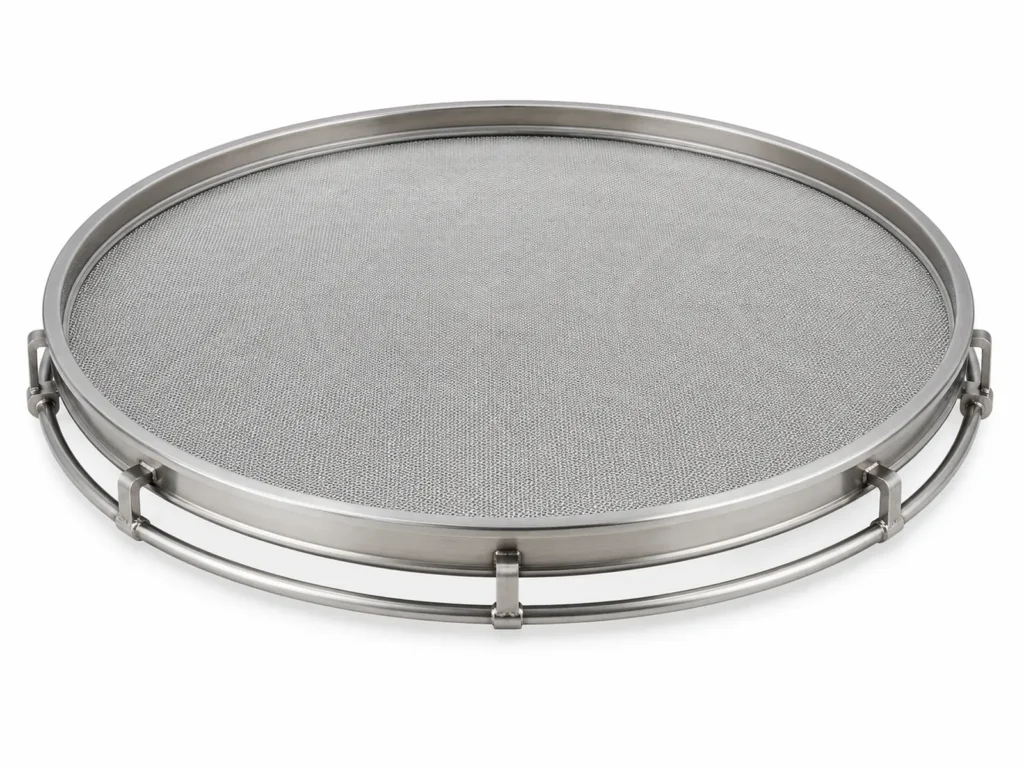
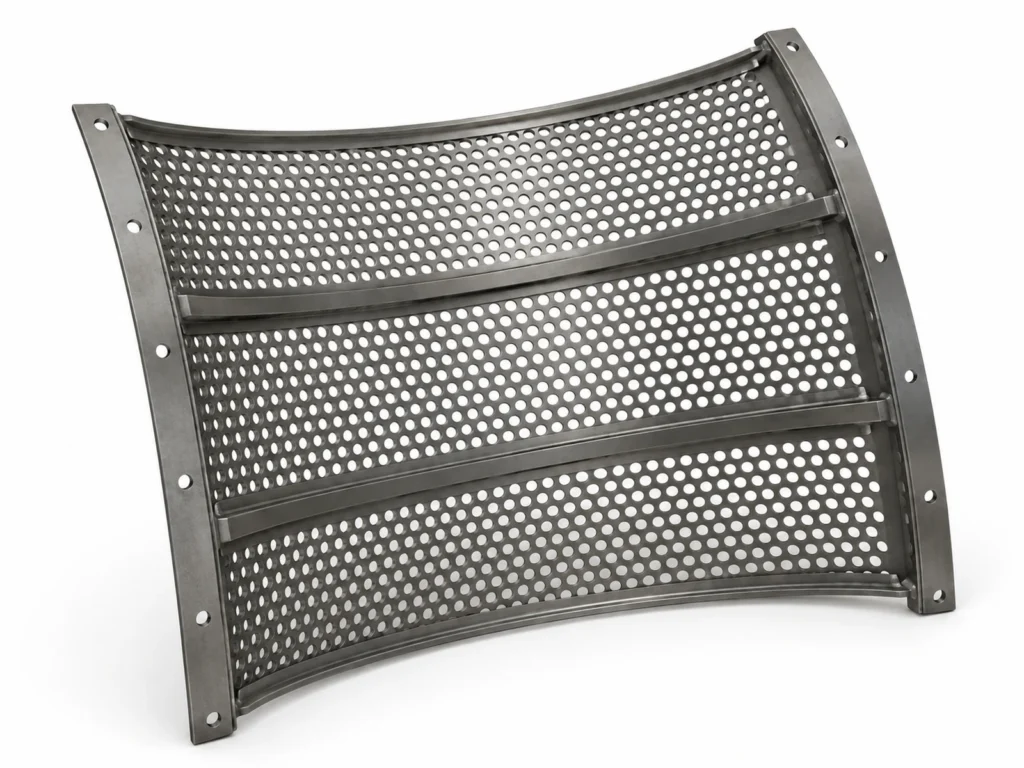
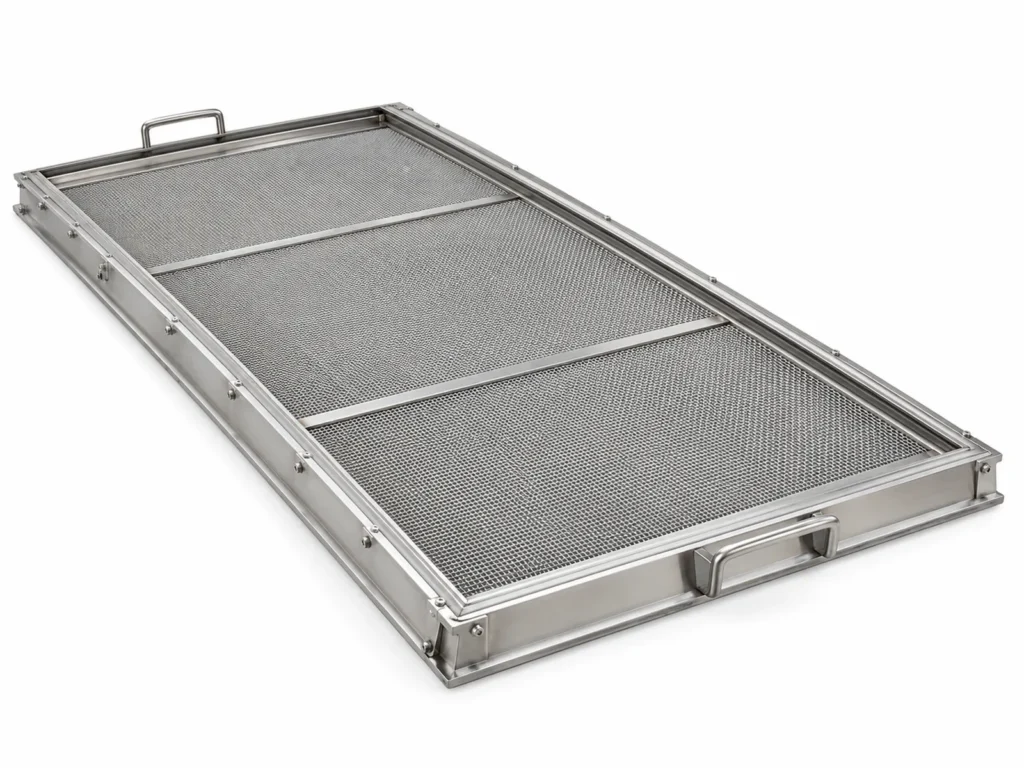
Anti-Blinding Ball Tray & Support Deck in 304 Stainless Steel (AISI 304 (1.4301)) is used for keeping sifter screens clear by bouncing rubber or silicone balls against the underside of the mesh, held in compartments on a perforated support tray. The alloy gives good general corrosion resistance in atmosphere and fresh water and is essentially non-magnetic (annealed), with a practical service limit of approx. +450 °C continuous.
Alloy Properties
| Grade designation | AISI 304 (1.4301) |
|---|
| Magnetic response | Essentially non-magnetic (annealed) |
|---|
| Service temperature | approx. +450 °C continuous |
|---|
| Corrosion characteristic | Good general corrosion resistance in atmosphere and fresh water |
|---|
Specifications of Anti-Blinding Ball Tray & Support Deck Available in 304 Stainless Steel
| Size | Hole diameter (mm) | Pitch (mm) | Thickness (mm) | Open area (%) | Ball (mm) |
|---|
| Round 600 | 10 | 14 | 1.5 | 46.3 | 25 |
| Round 1000 | 12 | 16 | 2.0 | 51.0 | 30 |
| Plansifter compartment | 8 | 12 | 1.5 | 40.3 | 20 |
Where 304 Stainless Steel Anti-Blinding Ball Tray & Support Deck Is Used
- Food & flour sifting: ball decks under plansifter and round sifter screens.
- Chemicals & plastics: sifting sticky or static-prone powders.
- Pharmaceutical: GMP sifter decks with silicone balls.
- Minerals & ceramics: fine powder screening.
Ordering Anti-Blinding Ball Tray & Support Deck in 304 Stainless Steel
- Tray size & compartments: Match the sifter frame and give each ball its own compartment.
- Hole size: Large enough to pass product, smaller than the ball (8–12 mm holes for 20–30 mm balls).
- Ball material: Rubber, food-grade silicone or polyurethane.
Mistakes to Avoid with Anti-Blinding Ball Tray & Support Deck
- Balls too small for the holes, which escape into product.
- Too large a gap, so balls never reach the mesh.