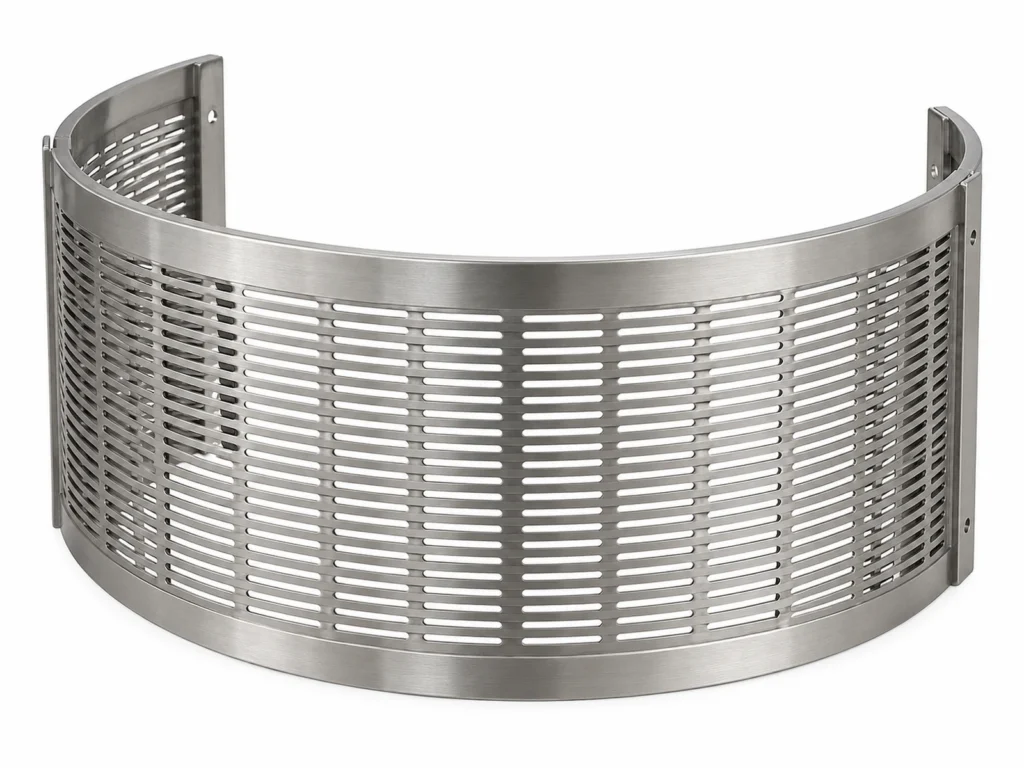
Pulper Finisher Screen — FDA 21 CFR / EU 1935/2004 food contact
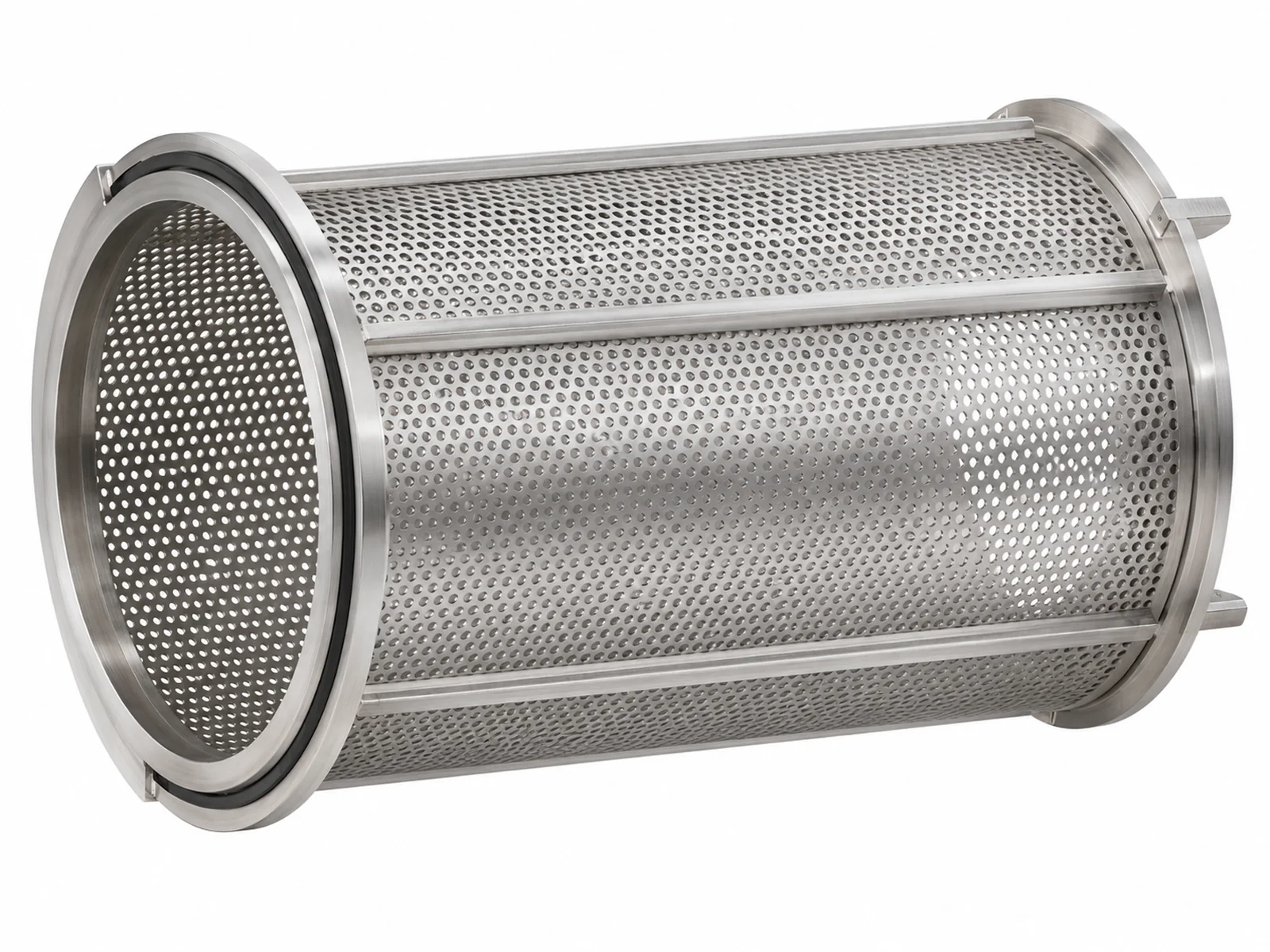
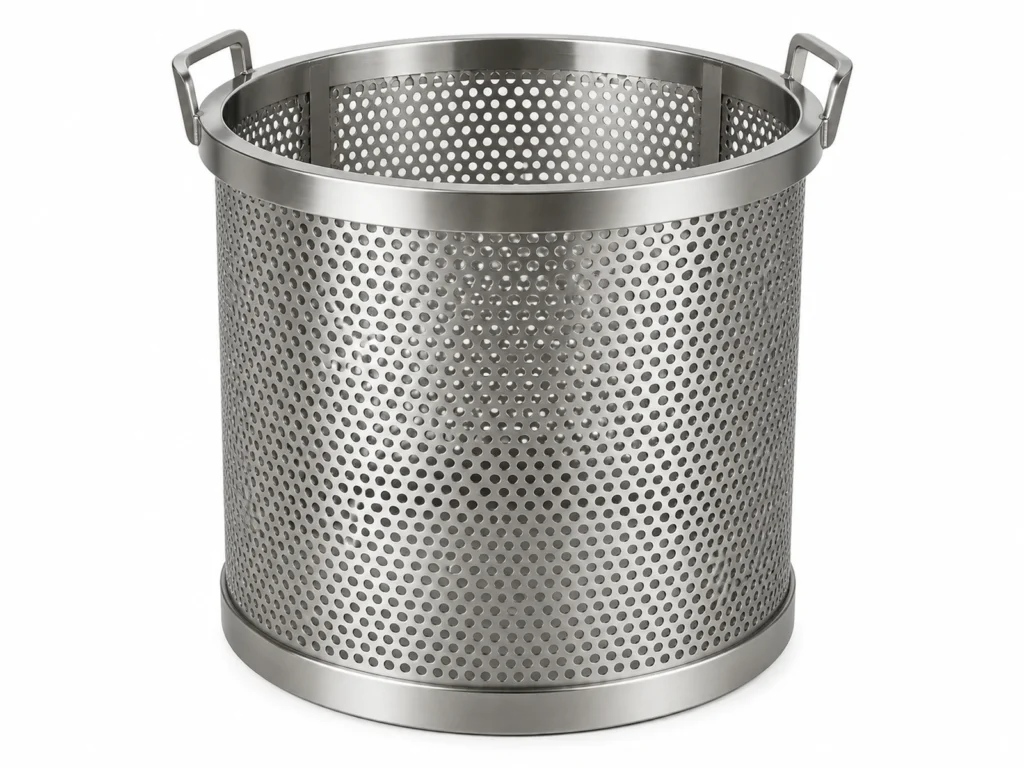
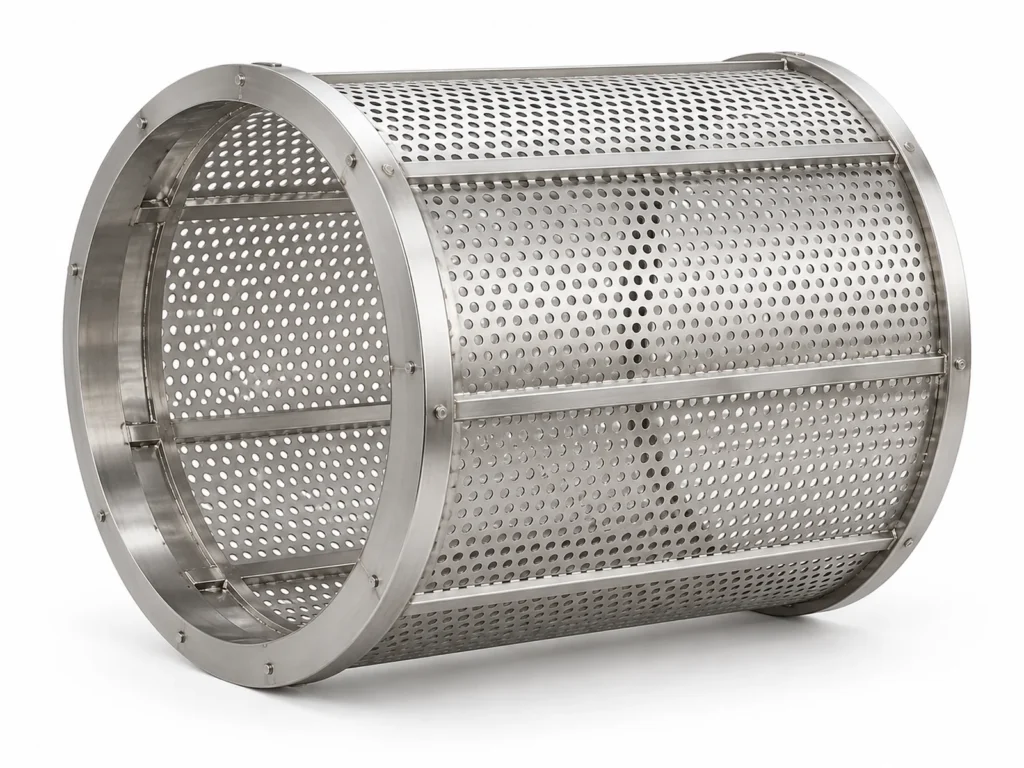
Pulper Finisher Screen for separating smooth pulp and juice from seeds, skins and fibers in tomato and fruit pulper-finishers, where rotating paddles force product through a cylindrical perforated screen. 4 sizes listed, with technical drawing and quotation.
Customize the parameters below — every spec field is editable, and the drawing redraws to match the values you choose. Changing the size will snap the other fields to that size's standard values; you can then override any individual value.
Sends the selected values to the quote form below.
Request a Quotation for Pulper Finisher Screen
Tell us the specification (mesh count / micron / dimensions), material and quantity you need for Pulper Finisher Screen (FDA 21 CFR / EU 1935/2004 food contact) and our team will respond within one business day. Click "Request this configuration" on the drawing above to send the parameters you just chose straight into this form.
Every row below is a starting point for the customizer above — pick any specification row and the drawing will redraw to it.
Size
Outer diameter (mm)
Length (mm)
Hole diameter (mm)
Open area (%)
Product
Pulper 1.5
300
900
1.5
28
Tomato pulping
Finisher 0.8
300
900
0.8
22
Tomato finishing
Finisher 0.5
400
1200
0.5
18
Fruit puru00e9e
Citrus 0.6
250
800
0.6
20
Citrus juice finishing
Pulper Finisher Screen (FDA 21 CFR / EU 1935/2004 food contact) is used for separating smooth pulp and juice from seeds, skins and fibers in tomato and fruit pulper-finishers, where rotating paddles force product through a cylindrical perforated screen.
Hole size by stage: 1.2–1.5 mm on the pulper, 0.5–0.8 mm on the finisher.
Screen size: Diameter and length must match the machine and paddle rotor.
Alloy: SS316 for acidic tomato and fruit products.
Materials
Standard supply is stainless steel 316/316L; the material column in the table and the drawing options show the exact grade for each size. Other alloys and finishes can be quoted to your drawing.
Fitting & Care
Set paddle-to-screen clearance after every screen change.
Run CIP at the end of each shift so skins do not dry in the holes.
Common Mistakes
Paddles touching the screen, which tears it.
Using a finisher screen on the pulper stage, so seeds blind it immediately.
When Pulper Finisher Screen Is Not the Right Choice
Not a juice clarifier; centrifuges or filters remove fine solids afterwards.
Pulper Finisher Screen is made to order as finished parts. Indicative pricing starts from about US$280.00 per piece for a standard size at production quantity; the final price depends on size, material, finish, tooling and order volume. Send your configuration from the drawing above for a quotation.
Pulper Finisher Screen — FDA 21 CFR / EU 1935/2004 food contact
Separating smooth pulp and juice from seeds, skins and fibers in tomato and fruit pulper-finishers, where rotating paddles force product through a cylindrical perforated screen.
What is the difference between a pulper and a finisher screen?
The finisher uses a finer screen to remove smaller particles after pulping.
What hole sizes do pulper screens use?
About 0.5–1.5 mm.
Which stainless for pulper screens?
SS316 for acidic products.
What specifications are available for Pulper Finisher Screen?
The table on this page lists 4 standard specifications for Pulper Finisher Screen, from Pulper 1.5 to Citrus 0.6. Specifications outside the table — custom mesh counts, wire diameters, roll widths and fabricated pieces — can be quoted on request.
How do I request a quotation?
Use the parametric drawing on this page to set the exact configuration (specification, material, treatment) and click "Request this configuration" — a specialist from custommetalfilters.com will respond within one business day.
Related Mesh Products
Closely related constructions in Food Machinery Mesh & Screens — compare aperture range, open area and cleanability.
This website uses only necessary and functional cookies to operate, secure, and improve basic website performance.
We do not use advertising cookies, Google Analytics, or cross-site tracking technologies.
Privacy Policy