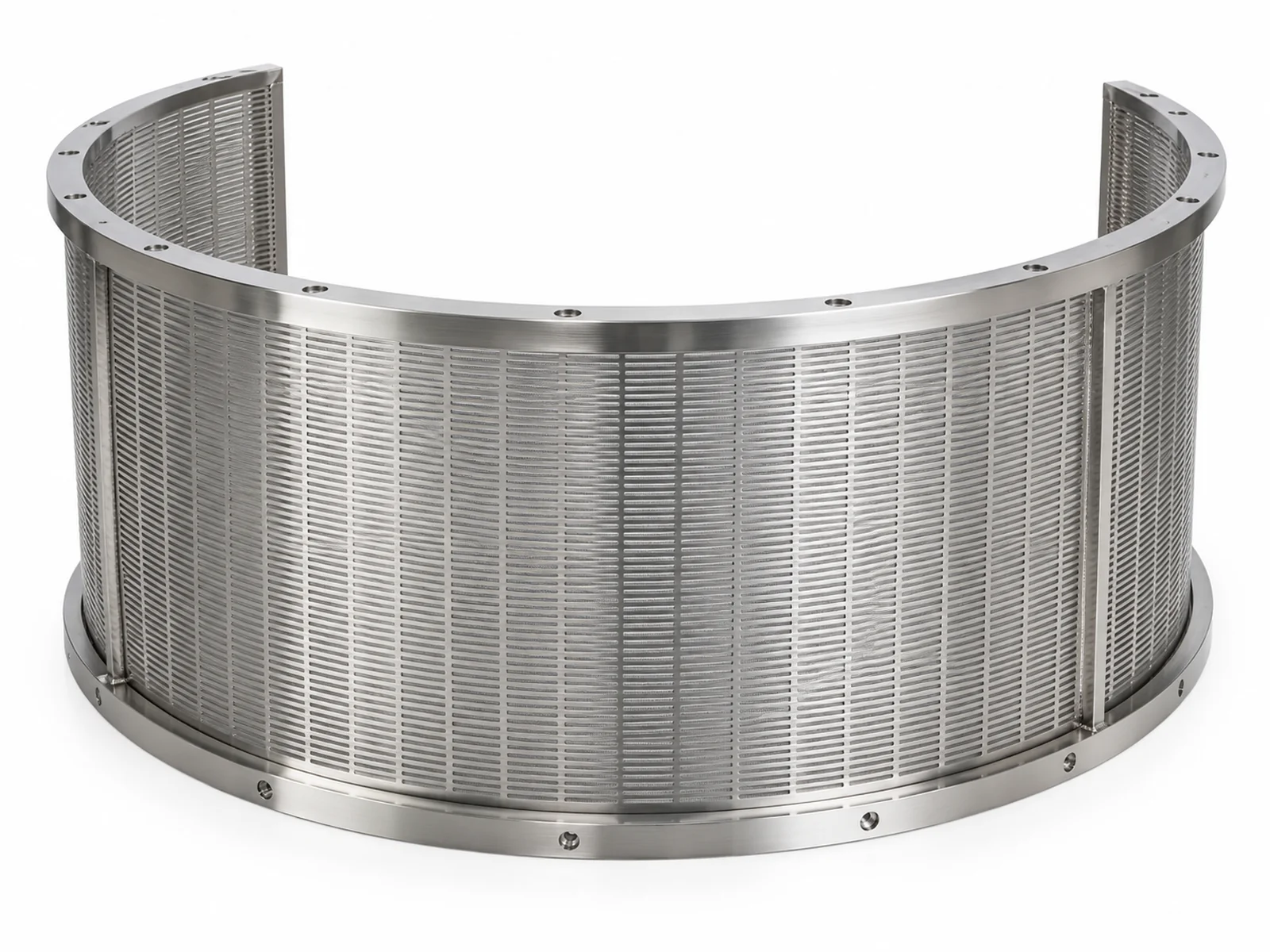
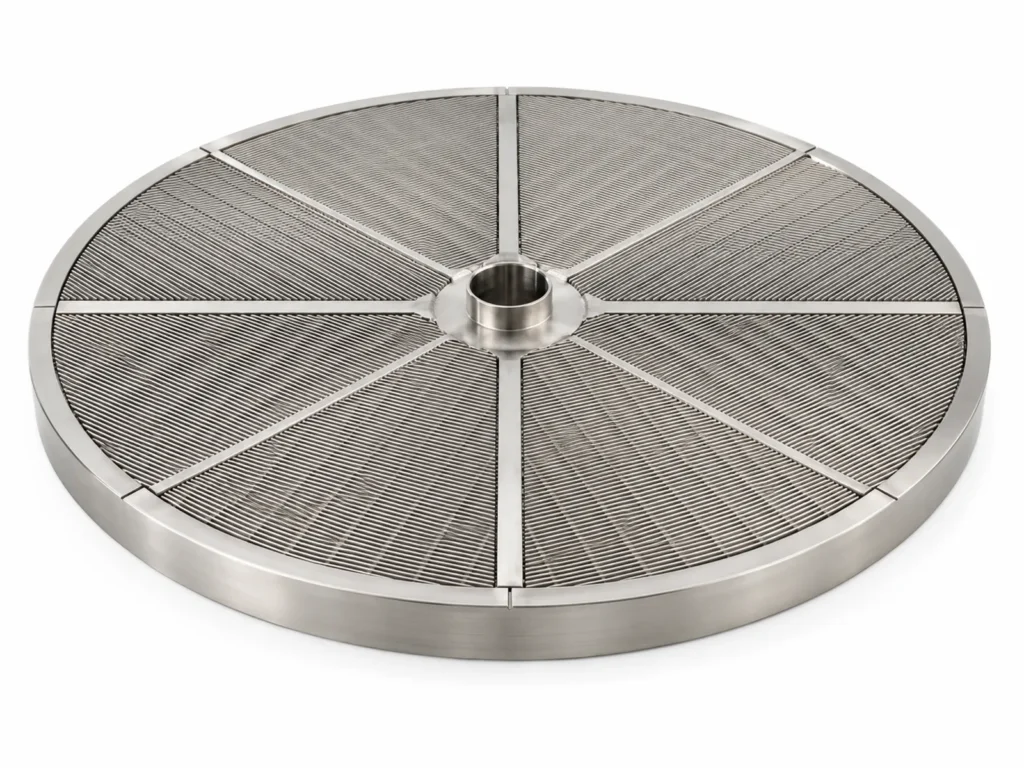
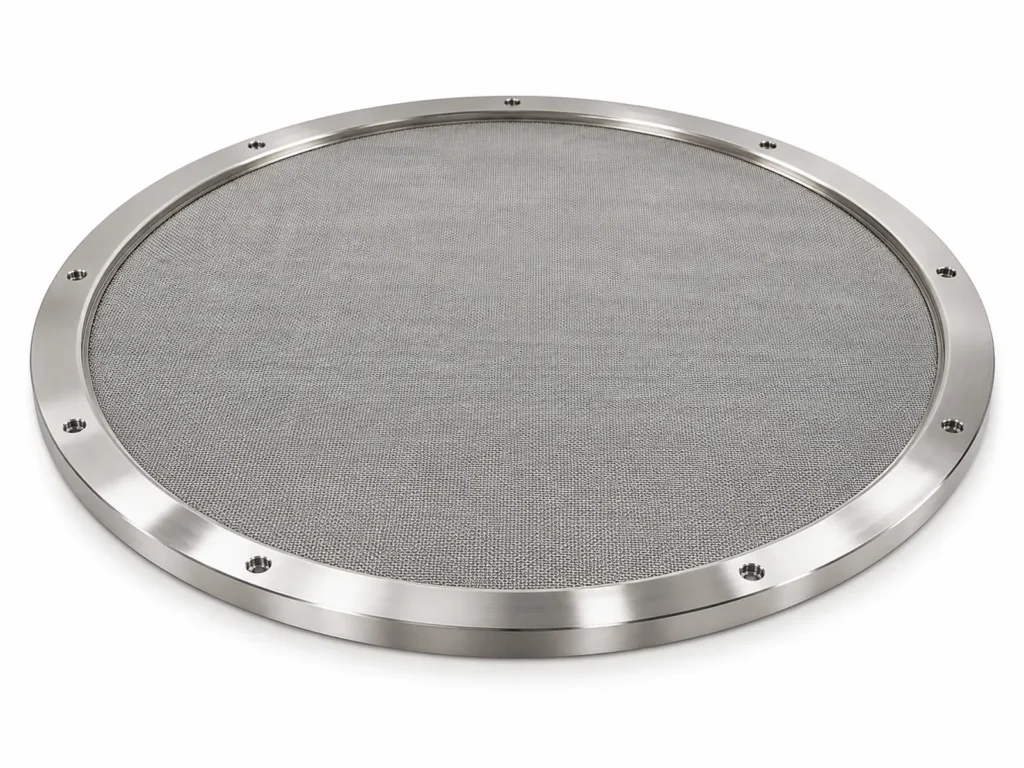
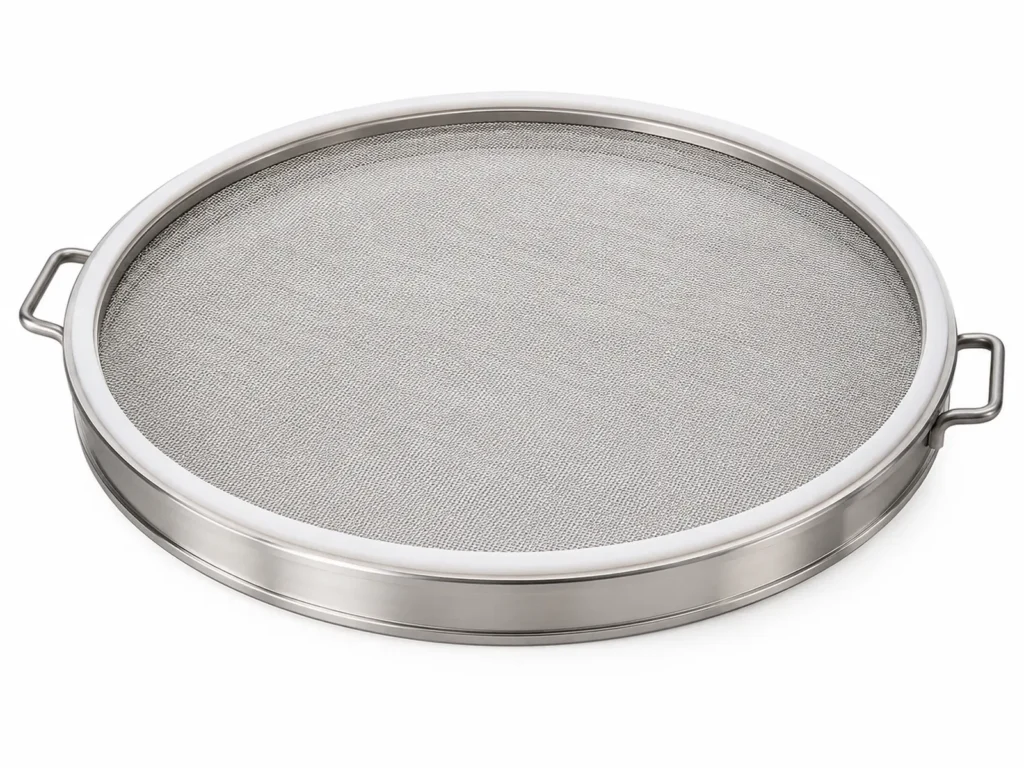
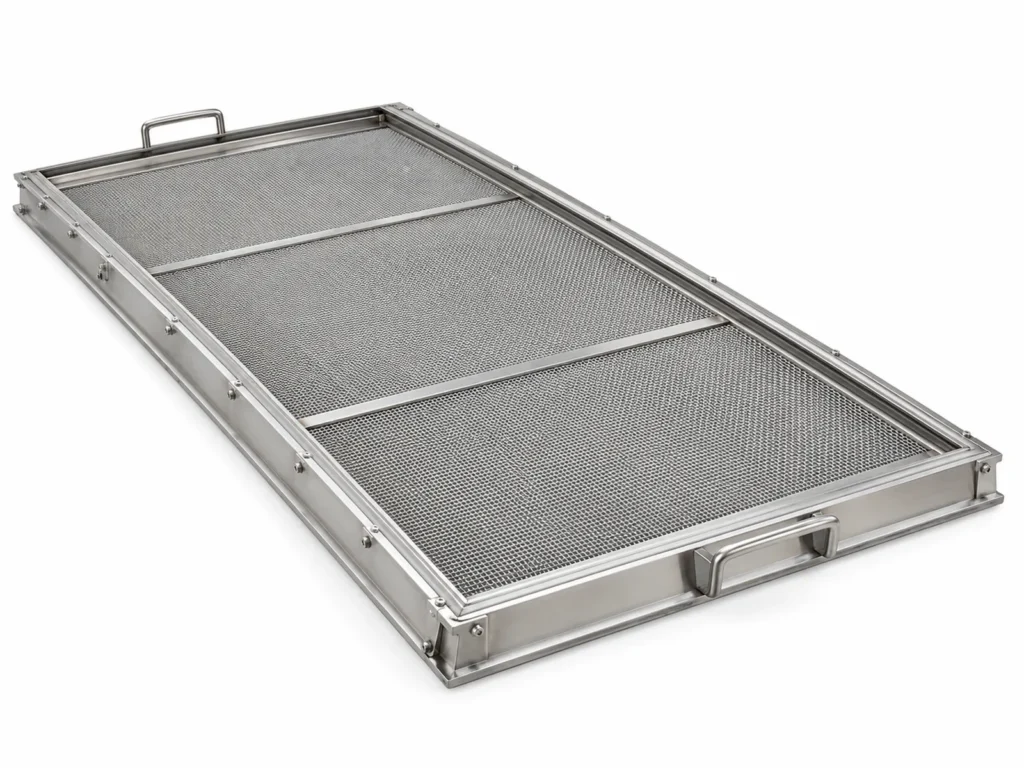
Sugar Centrifuge Screen in 316L Stainless Steel (AISI 316L (1.4404)) is used for separating sugar crystals from molasses in batch and continuous centrifuges with fine chromium-plated nickel working screens over a stainless backing screen. The alloy gives superior resistance, including chlorides, brines, food CIP and mild acids and is essentially non-magnetic, with a practical service limit of approx. +550 °C continuous.
Alloy Properties
| Grade designation | AISI 316L (1.4404) |
|---|
| Magnetic response | Essentially non-magnetic |
|---|
| Service temperature | approx. +550 °C continuous |
|---|
| Corrosion characteristic | Superior resistance, including chlorides, brines, food CIP and mild acids |
|---|
Specifications of Sugar Centrifuge Screen Available in 316L Stainless Steel
| Size | Hole diameter (mm) | Pitch (mm) | Thickness (mm) | Open area (%) | Material |
|---|
| Batch working screen 0.06 | 0.06 | 0.30 | 0.25 | 8.5 | Nickel, chromium-plated |
| Continuous 0.09 slot | 0.09 | 0.40 | 0.30 | 10.0 | Nickel, chromium-plated |
| Backing screen | 2.0 | 3.5 | 0.8 | 29.6 | SS316 |
Where 316L Stainless Steel Sugar Centrifuge Screen Is Used
- Cane sugar mills: A, B and C massecuite centrifuges.
- Beet sugar factories: batch and continuous centrifuges.
- Sugar refineries: refined sugar curing.
- Salt & starch: crystal centrifuges.
Ordering Sugar Centrifuge Screen in 316L Stainless Steel
- Slot or hole: 0.06–0.09 mm to suit crystal size.
- Hard plating: Chromium plating extends wear life against abrasive crystals.
- Backing screen: A coarse stainless backing screen supports the fine working screen.
Mistakes to Avoid with Sugar Centrifuge Screen
- Wrong slot size for the massecuite grade.
- Running worn screens that lose crystals.