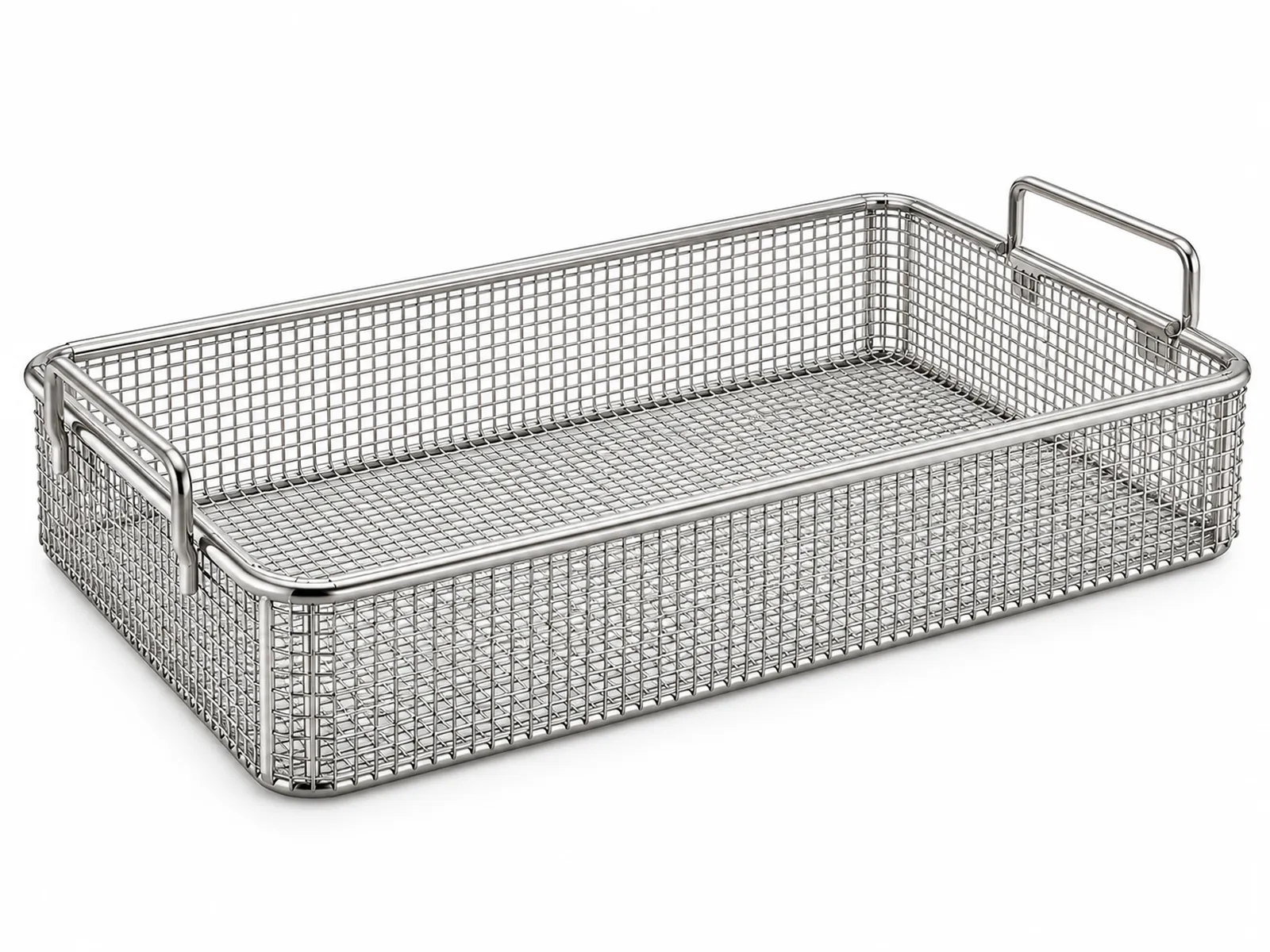
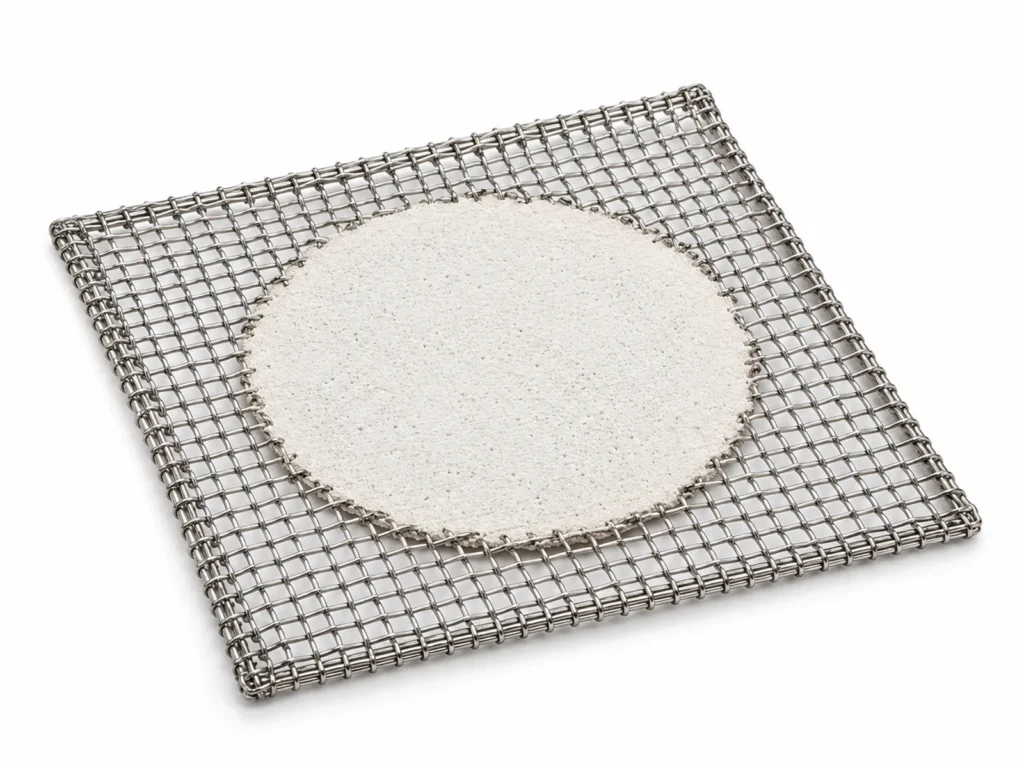
Sterilization & Instrument Wire Mesh Basket in 316L Stainless Steel (AISI 316L (1.4404)) is used for holding surgical, dental and laboratory instruments through washer-disinfector, ultrasonic and steam-autoclave cycles. The alloy gives superior resistance, including chlorides, brines, food CIP and mild acids and is essentially non-magnetic, with a practical service limit of approx. +550 °C continuous.
Alloy Properties
| Grade designation | AISI 316L (1.4404) |
|---|
| Magnetic response | Essentially non-magnetic |
|---|
| Service temperature | approx. +550 °C continuous |
|---|
| Corrosion characteristic | Superior resistance, including chlorides, brines, food CIP and mild acids |
|---|
Specifications of Sterilization & Instrument Wire Mesh Basket Available in 316L Stainless Steel
| Size | Length (mm) | Width (mm) | Height (mm) | Mesh opening (mm) | Wire diameter (mm) |
|---|
| 1/1 DIN | 480 | 250 | 50 | 5 | 1.0 |
| 1/2 DIN | 240 | 250 | 50 | 5 | 1.0 |
| 1/4 DIN | 240 | 125 | 50 | 3 | 0.8 |
| Micro 1/8 | 160 | 70 | 30 | 1.5 | 0.5 |
Where 316L Stainless Steel Sterilization & Instrument Wire Mesh Basket Is Used
- Hospital sterile processing (CSSD): instrument trays in standard DIN sizes.
- Dental clinics: instrument baskets and cassettes.
- Laboratories: glassware and small-part washing baskets.
- Precision industry: ultrasonic cleaning baskets for small parts.
Ordering Sterilization & Instrument Wire Mesh Basket in 316L Stainless Steel
- DIN size: 1/1 (480 × 250 mm), 1/2, 1/4 to fit containers and washer racks.
- Mesh opening: 1.5–5 mm; smaller openings stop tiny parts but drain and dry more slowly.
- Finish: Electropolished SS304/316 for corrosion resistance and easy cleaning.
Mistakes to Avoid with Sterilization & Instrument Wire Mesh Basket
- Too-fine mesh that slows drying and leaves wet packs.
- Non-electropolished baskets that rust after repeated cycles.