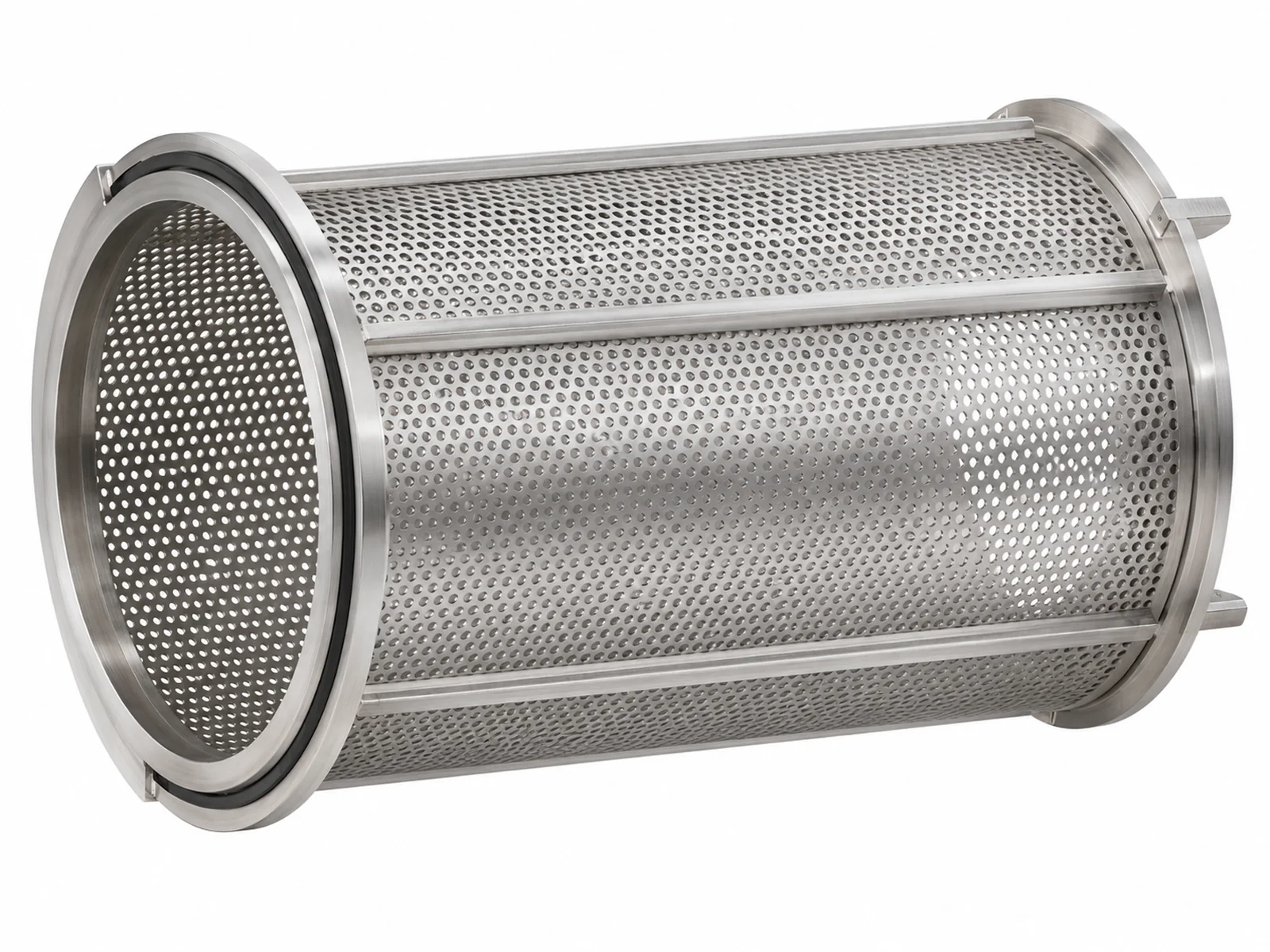
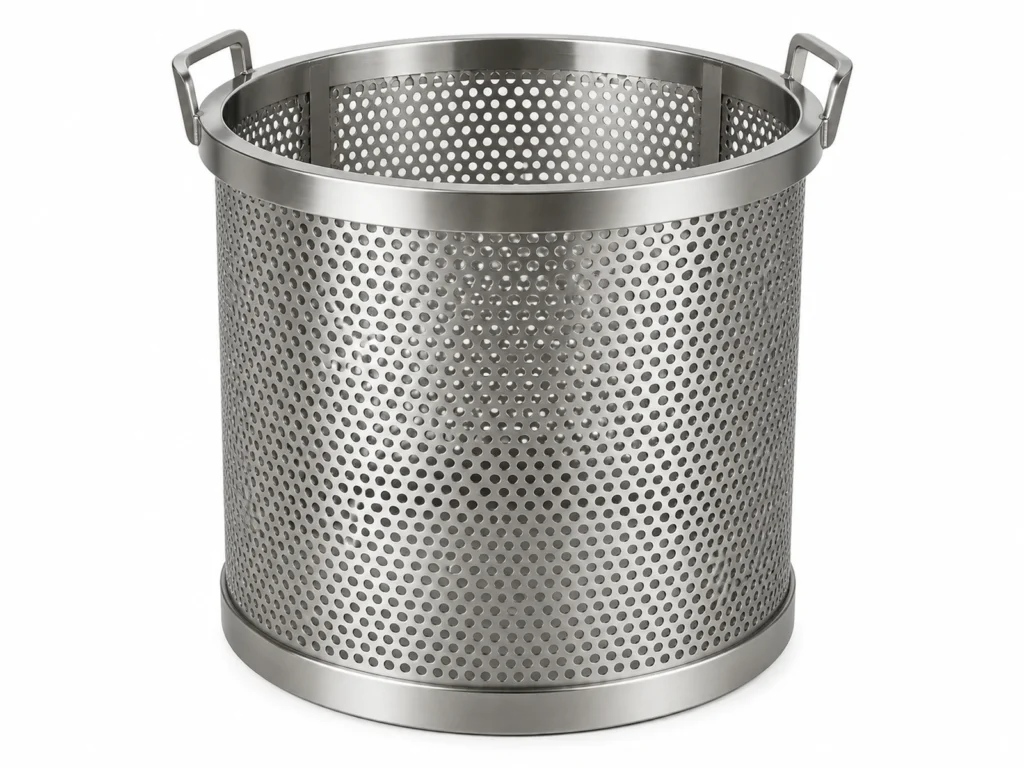
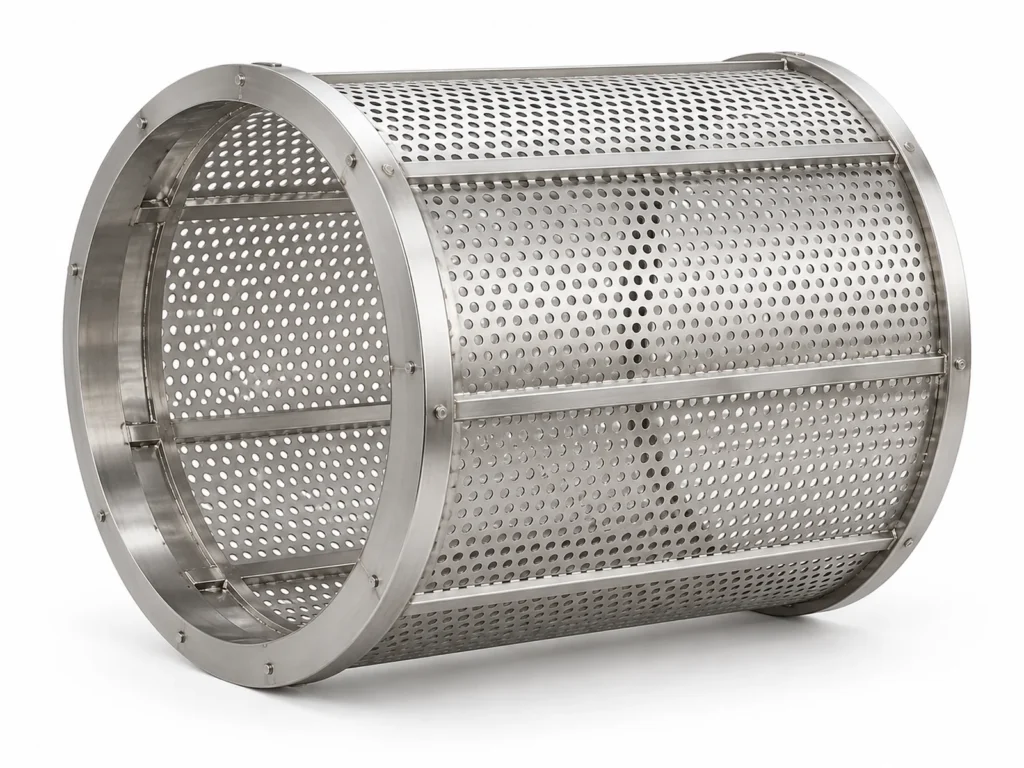
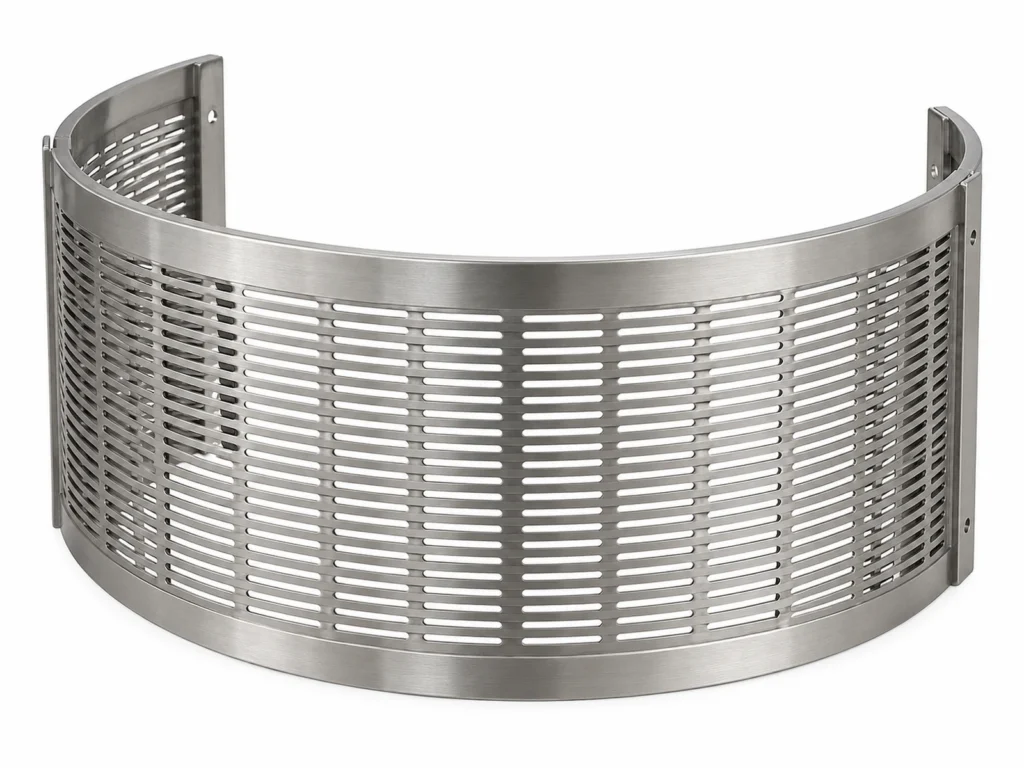
Pulper Finisher Screen in 316L Stainless Steel (AISI 316L (1.4404)) is used for separating smooth pulp and juice from seeds, skins and fibers in tomato and fruit pulper-finishers, where rotating paddles force product through a cylindrical perforated screen. The alloy gives superior resistance, including chlorides, brines, food CIP and mild acids and is essentially non-magnetic, with a practical service limit of approx. +550 °C continuous.
Alloy Properties
| Grade designation | AISI 316L (1.4404) |
|---|
| Magnetic response | Essentially non-magnetic |
|---|
| Service temperature | approx. +550 °C continuous |
|---|
| Corrosion characteristic | Superior resistance, including chlorides, brines, food CIP and mild acids |
|---|
Specifications of Pulper Finisher Screen Available in 316L Stainless Steel
| Size | Outer diameter (mm) | Length (mm) | Hole diameter (mm) | Open area (%) | Product |
|---|
| Pulper 1.5 | 300 | 900 | 1.5 | 28 | Tomato pulping |
| Finisher 0.8 | 300 | 900 | 0.8 | 22 | Tomato finishing |
| Finisher 0.5 | 400 | 1200 | 0.5 | 18 | Fruit puru00e9e |
| Citrus 0.6 | 250 | 800 | 0.6 | 20 | Citrus juice finishing |
Where 316L Stainless Steel Pulper Finisher Screen Is Used
- Tomato processing: hot- and cold-break pulping and finishing for paste and sauce.
- Fruit purée: mango, apricot, banana and berry purées.
- Citrus processing: juice finishers that remove pulp and seeds.
- Baby food: ultra-smooth purée finishing.
Ordering Pulper Finisher Screen in 316L Stainless Steel
- Hole size by stage: 1.2–1.5 mm on the pulper, 0.5–0.8 mm on the finisher.
- Screen size: Diameter and length must match the machine and paddle rotor.
- Alloy: SS316 for acidic tomato and fruit products.
Mistakes to Avoid with Pulper Finisher Screen
- Paddles touching the screen, which tears it.
- Using a finisher screen on the pulper stage, so seeds blind it immediately.