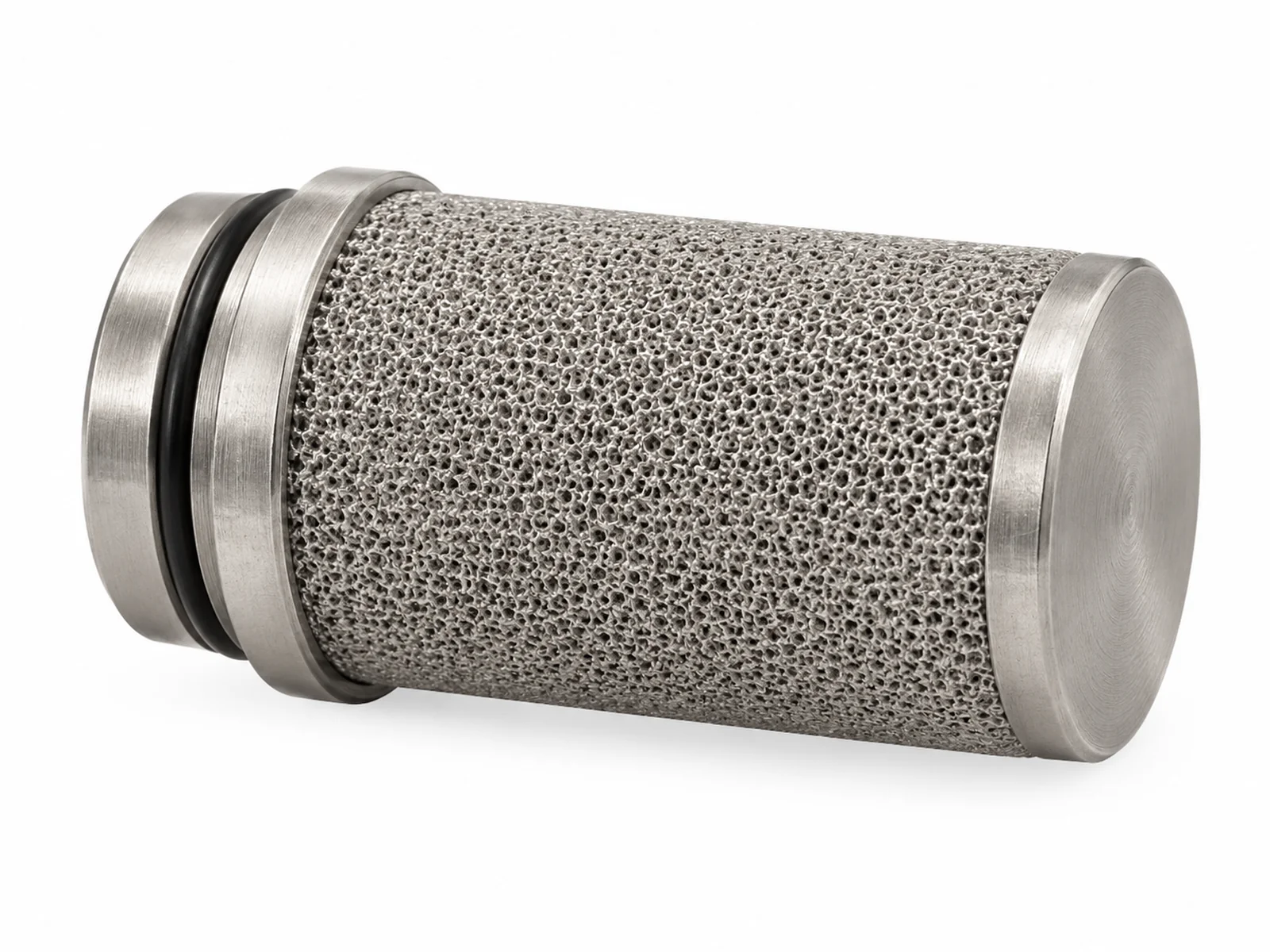
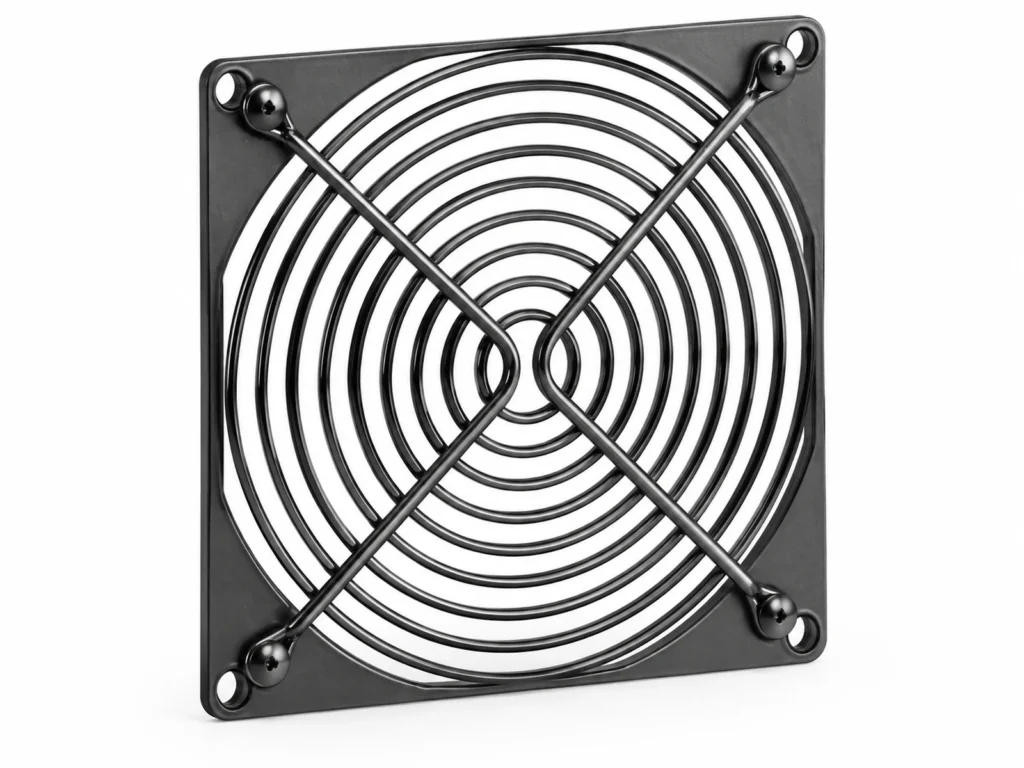
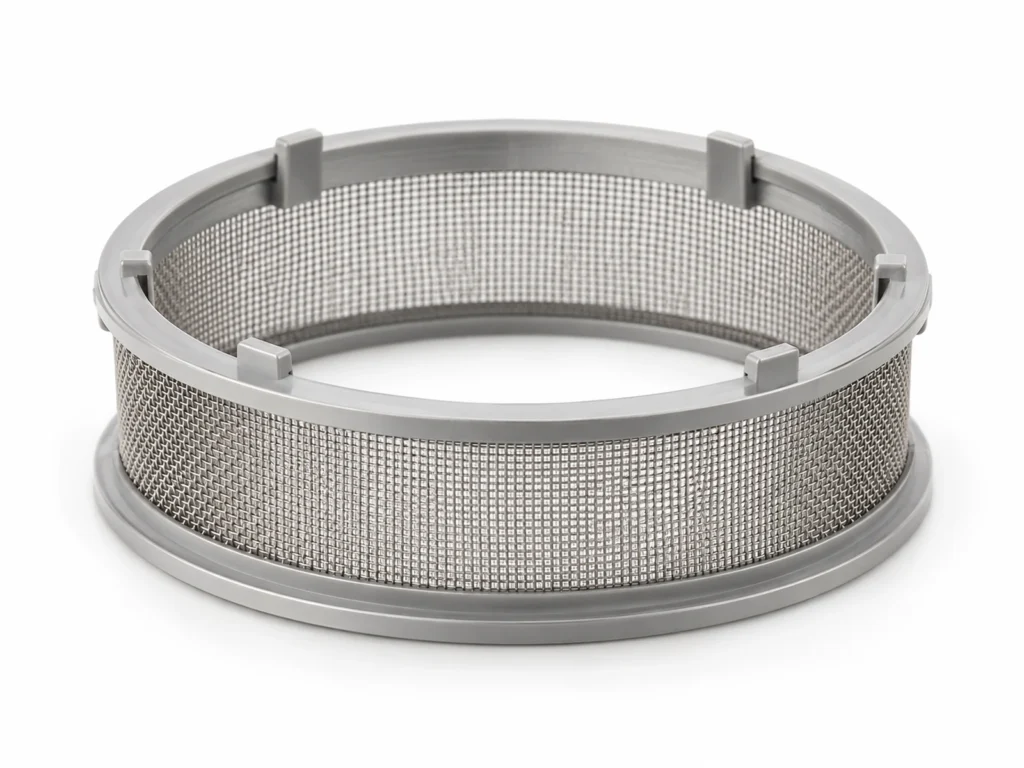
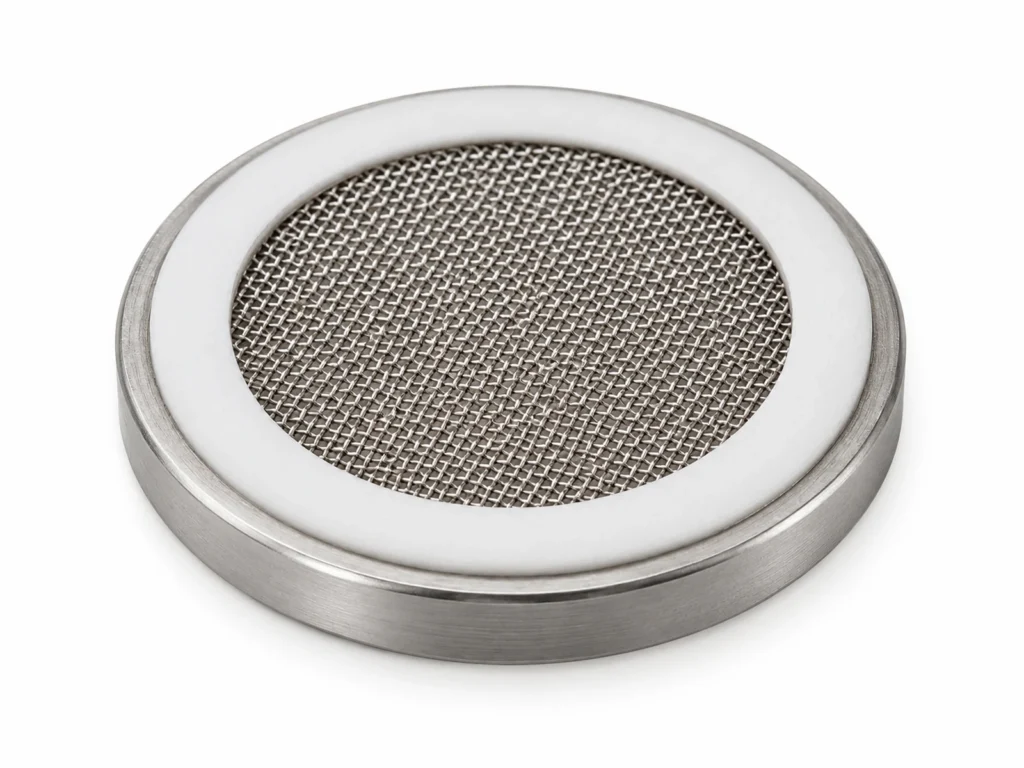
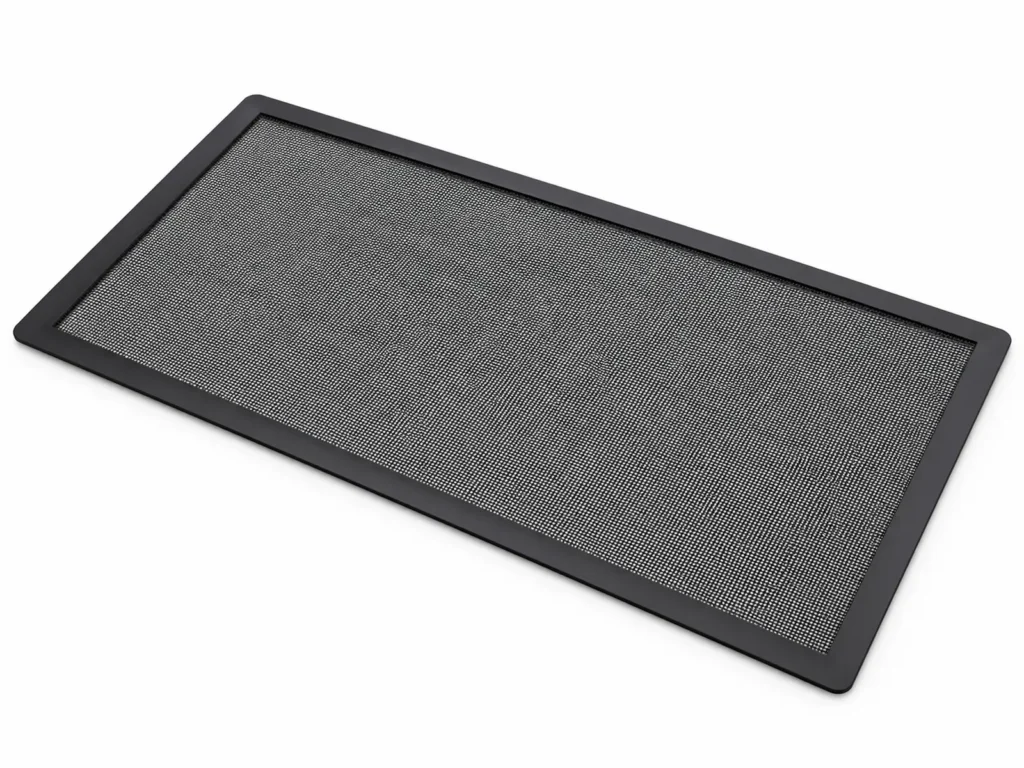
Gas Sensor Sintered Flame-Arrestor Cap in 316L Stainless Steel (AISI 316L (1.4404)) is used for letting target gas diffuse to a catalytic or infrared sensor while the sintered metal cap stops a flame inside the sensor head from reaching the outside atmosphere. The alloy gives superior resistance, including chlorides, brines, food CIP and mild acids and is essentially non-magnetic, with a practical service limit of approx. +550 °C continuous.
Alloy Properties
| Grade designation | AISI 316L (1.4404) |
|---|
| Magnetic response | Essentially non-magnetic |
|---|
| Service temperature | approx. +550 °C continuous |
|---|
| Corrosion characteristic | Superior resistance, including chlorides, brines, food CIP and mild acids |
|---|
Specifications of Gas Sensor Sintered Flame-Arrestor Cap Available in 316L Stainless Steel
| Size | Outer diameter (mm) | Length (mm) | Micron rating (u00b5m) | Media |
|---|
| Cap 16 | 16 | 10 | 20 | Sintered SS316L powder |
| Cap 20 | 20 | 12 | 40 | Sintered SS316L powder |
| Disc 12 | 12 | 2 | 10 | Sintered 5-layer mesh |
Where 316L Stainless Steel Gas Sensor Sintered Flame-Arrestor Cap Is Used
- Fixed gas detector OEMs: flameproof (Ex d) sensor heads for refineries and chemical plants.
- Mining: methane sensor heads for underground monitoring.
- Portable & personal monitors: compact sensor inlet caps.
- Boiler rooms & commercial kitchens: combustible gas detectors.
Ordering Gas Sensor Sintered Flame-Arrestor Cap in 316L Stainless Steel
- Porosity: Finer porosity (10–20 µm) gives better flame quenching but slower gas diffusion; the sensor maker specifies the window.
- Material: SS316L sintered powder or multi-layer mesh, resistant to H2S and humidity.
- Certification: The cap is part of the certified flameproof assembly — substitutes must be identical.
Mistakes to Avoid with Gas Sensor Sintered Flame-Arrestor Cap
- Fitting a non-certified cap, which voids the Ex certification.
- Letting dust or oil foul the cap, which slows response and under-reads concentration.