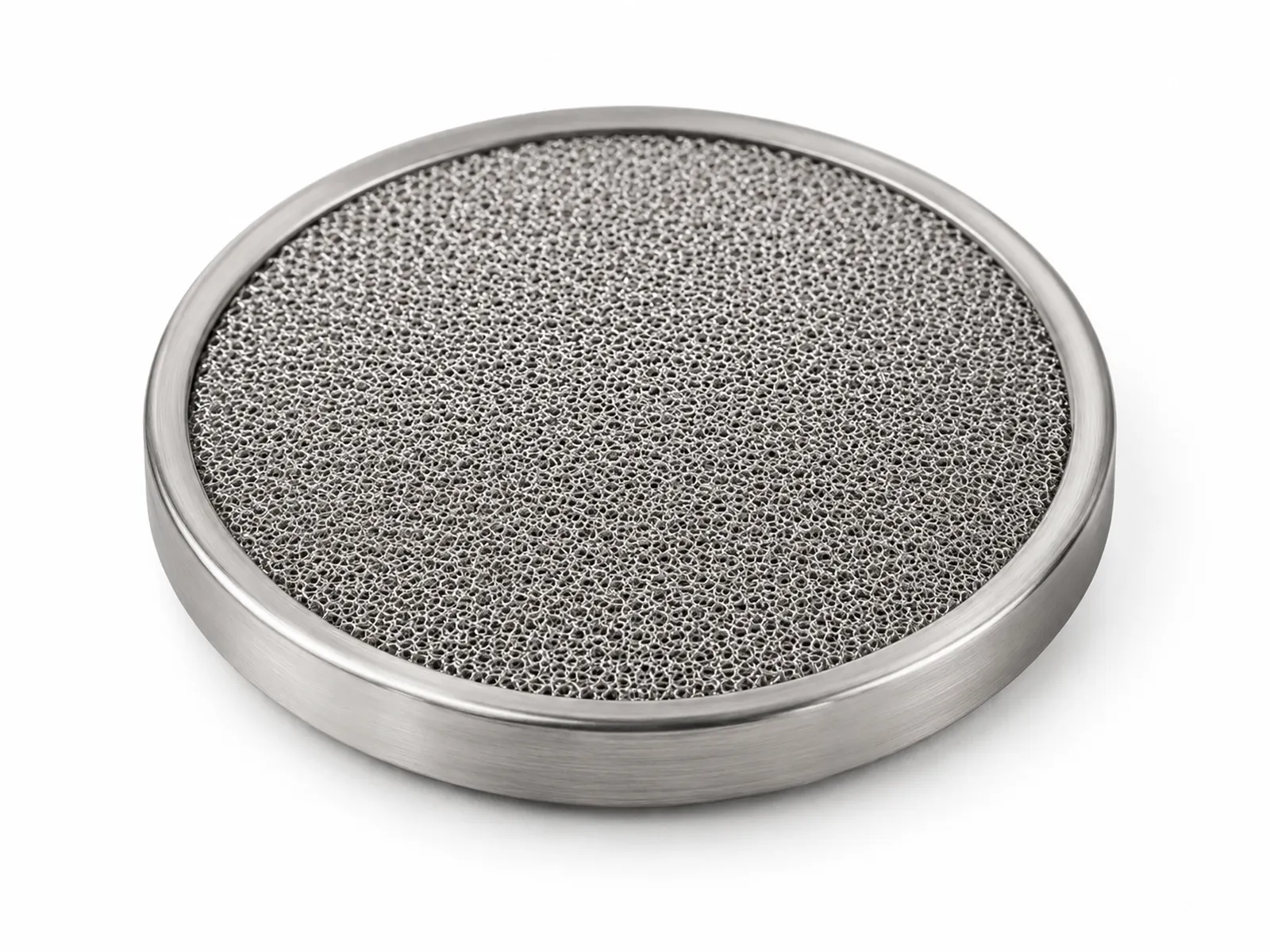
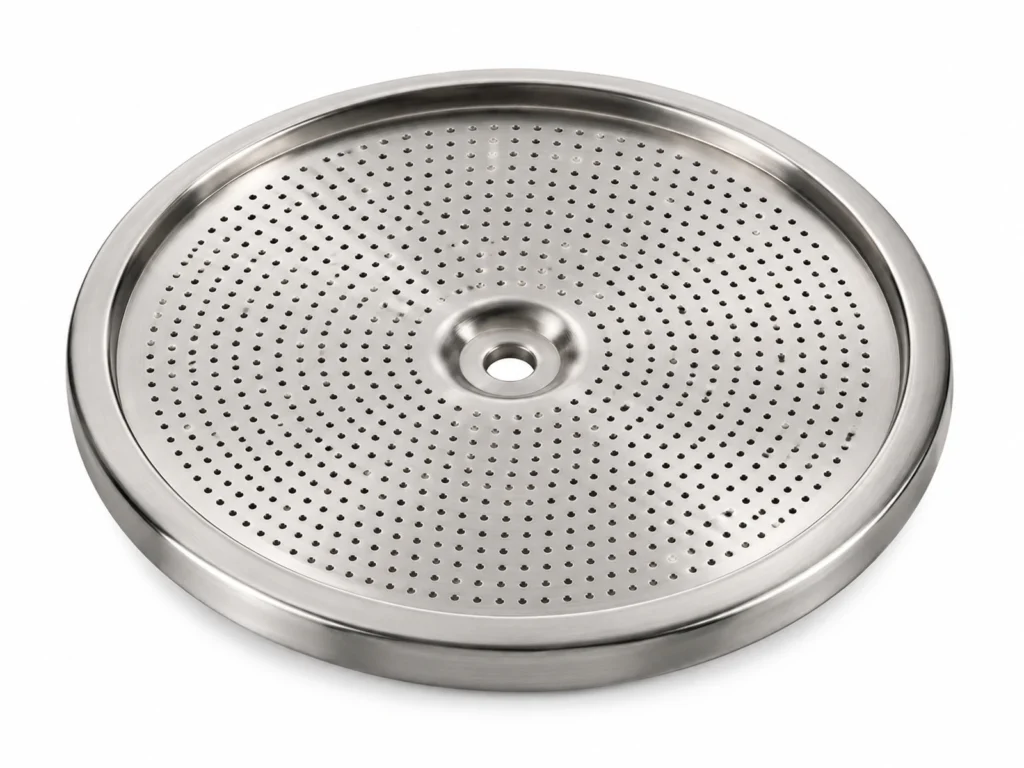
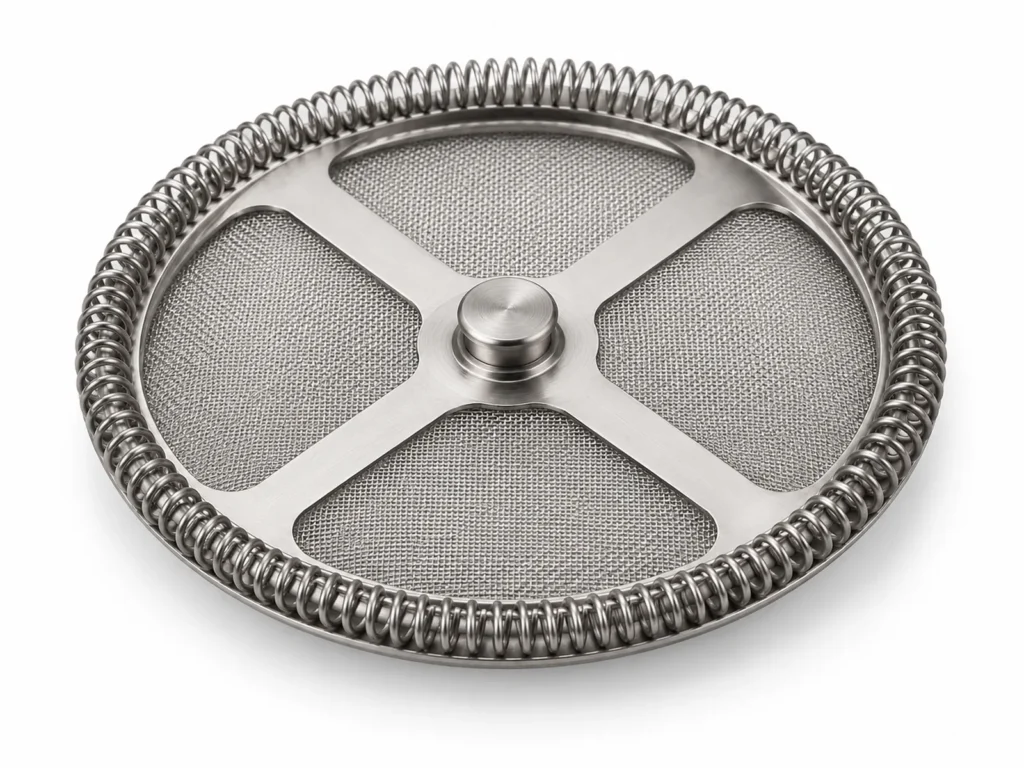
Espresso Puck Screen in 316L Stainless Steel (AISI 316L (1.4404)) is used for spreading shower-head water evenly over the espresso puck and keeping the group-head screen clean. The alloy gives superior resistance, including chlorides, brines, food CIP and mild acids and is essentially non-magnetic, with a practical service limit of approx. +550 °C continuous.
Alloy Properties
| Grade designation | AISI 316L (1.4404) |
|---|
| Magnetic response | Essentially non-magnetic |
|---|
| Service temperature | approx. +550 °C continuous |
|---|
| Corrosion characteristic | Superior resistance, including chlorides, brines, food CIP and mild acids |
|---|
Specifications of Espresso Puck Screen Available in 316L Stainless Steel
| Size | Diameter (mm) | Thickness (mm) | Construction | Micron rating (u00b5m) |
|---|
| 51 | 51.5 | 1.7 | Sintered 4-layer + 1 mm perforated | 150 |
| 53 | 53.3 | 1.7 | Sintered 4-layer + 1 mm perforated | 150 |
| 58 | 58.5 | 1.7 | Sintered 4-layer + 1 mm perforated | 150 |
| 58 thin | 58.5 | 1.0 | Single 150-mesh, laser cut | 100 |
Where 316L Stainless Steel Espresso Puck Screen Is Used
- Barista accessory brands: puck screens sold with distribution and tamping tools.
- Home espresso enthusiasts: shots with less channeling and cleaner shower screens.
- Café workflows: faster group cleaning between shots during service.
- Machine OEMs: factory accessories for single-boiler and lever machines.
Ordering Espresso Puck Screen in 316L Stainless Steel
- Diameter: Choose 0.2–0.5 mm under the basket inner diameter so the screen sits flat without binding.
- Thickness: A 1.7 mm sintered screen raises headspace use; a 1.0 mm single-mesh screen suits shallow baskets.
- Construction: Sintered multi-layer screens are rigid and stay flat; laser-cut single mesh is lighter and cheaper.
Mistakes to Avoid with Espresso Puck Screen
- Leaving the dose unchanged so the screen touches the group gasket and the portafilter will not lock.
- Buying a screen sized to the basket rim rather than the inner floor diameter.