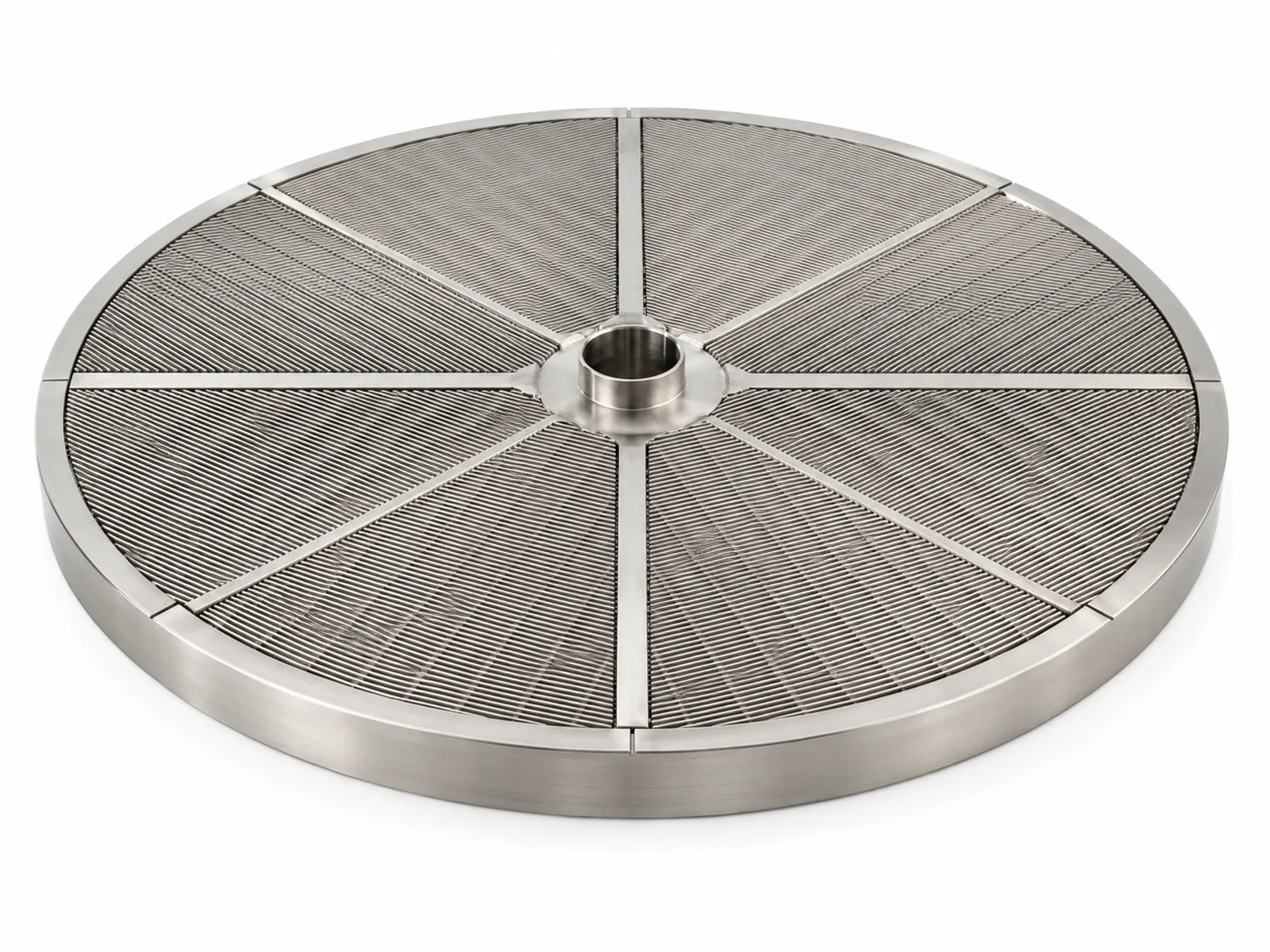
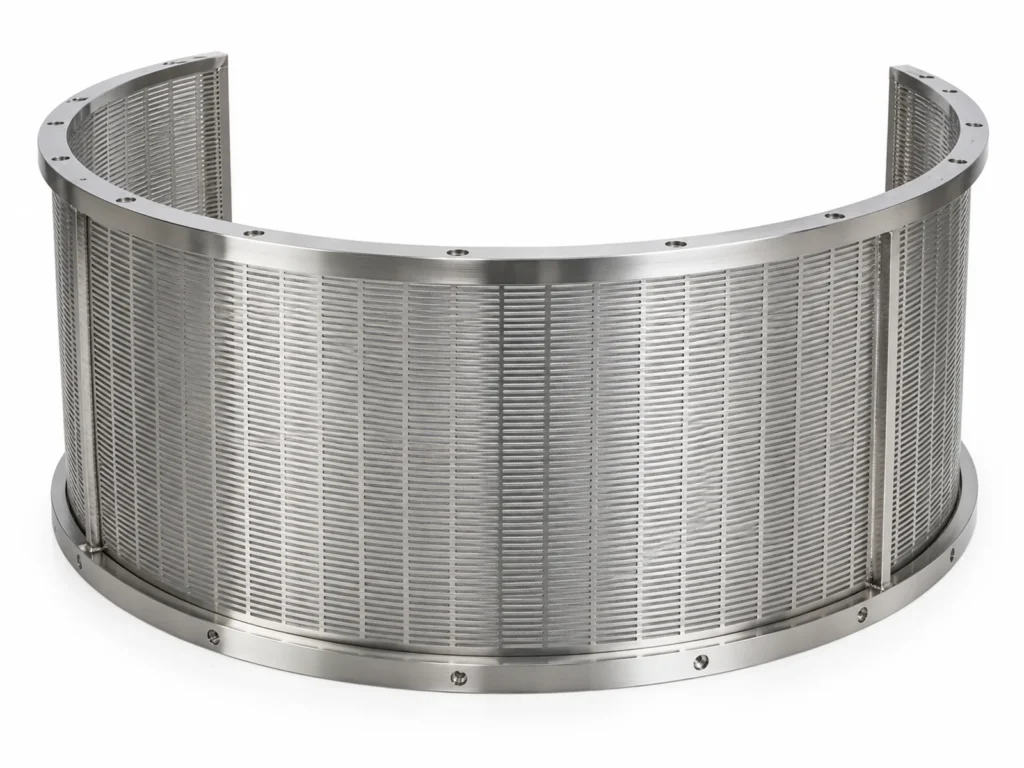
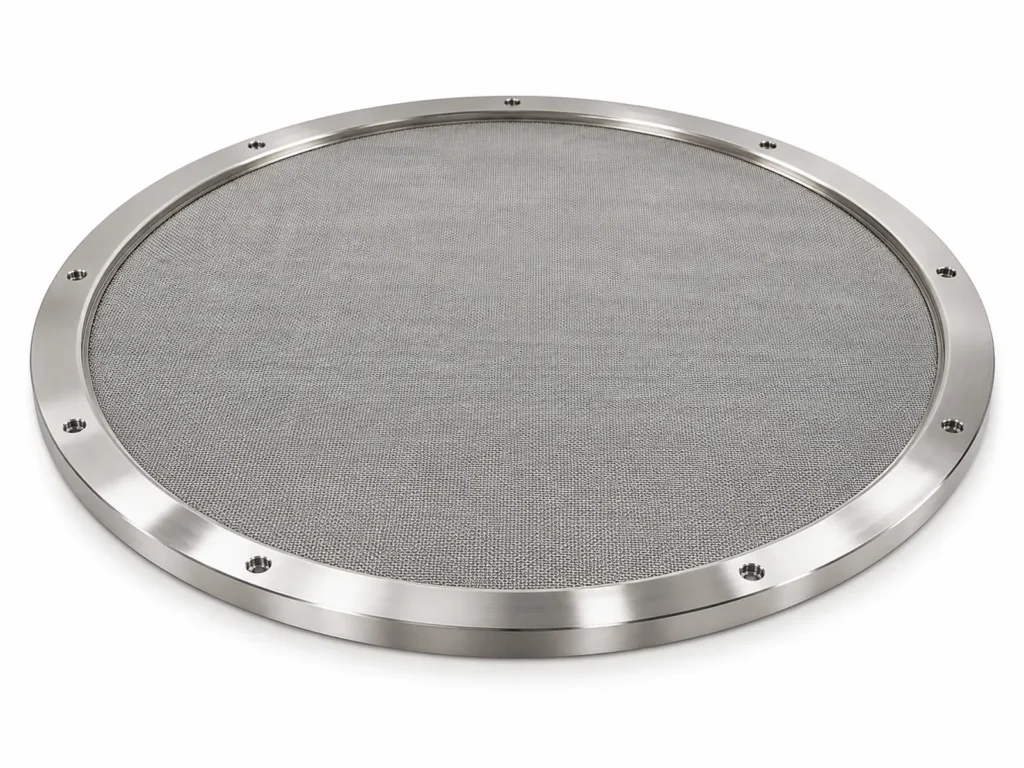
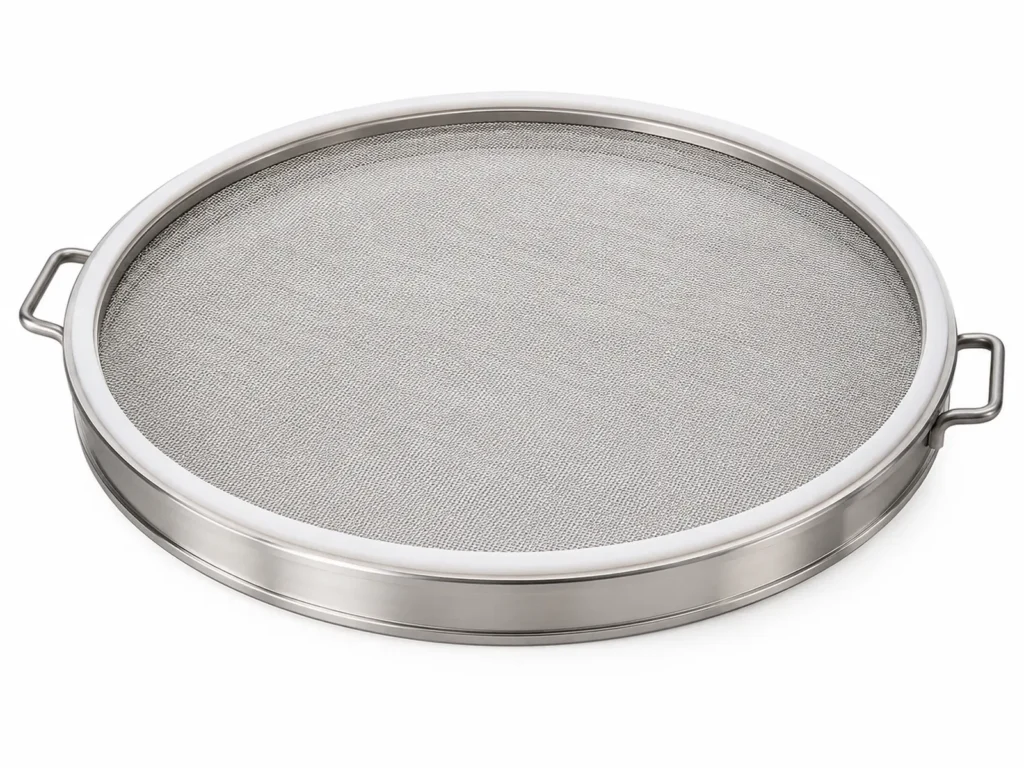
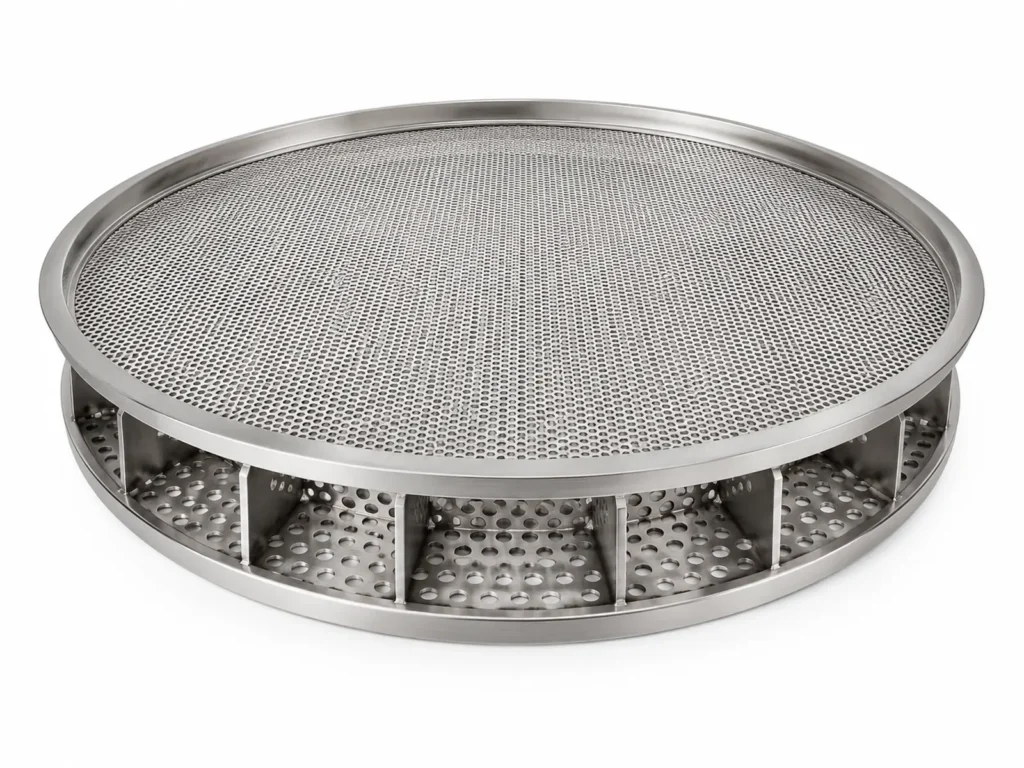
Brewery Lauter Tun False Bottom in 316L Stainless Steel (AISI 316L (1.4404)) is used for separating sweet wort from the grain bed in brewery lauter tuns and mash filters with wedge wire false-bottom plates. The alloy gives superior resistance, including chlorides, brines, food CIP and mild acids and is essentially non-magnetic, with a practical service limit of approx. +550 °C continuous.
Alloy Properties
| Grade designation | AISI 316L (1.4404) |
|---|
| Magnetic response | Essentially non-magnetic |
|---|
| Service temperature | approx. +550 °C continuous |
|---|
| Corrosion characteristic | Superior resistance, including chlorides, brines, food CIP and mild acids |
|---|
Specifications of Brewery Lauter Tun False Bottom Available in 316L Stainless Steel
| Size | Slot opening (mm) | Wire profile (mm) | Open area (%) | Vessel (bbl) |
|---|
| 7 bbl | 0.7 | 2.5 u00d7 4.0 | 11 | 7 |
| 15 bbl | 0.7 | 2.5 u00d7 4.0 | 11 | 15 |
| 30 bbl | 0.8 | 3.0 u00d7 5.0 | 12 | 30 |
Where 316L Stainless Steel Brewery Lauter Tun False Bottom Is Used
- Craft breweries: 7–30 bbl lauter tuns and combi mash/lauter tuns.
- Distilleries: mash tuns for whisky wort.
- Brewhouse OEMs: false bottoms for new brewhouses.
- Retrofit: replacing milled-slot plates with wedge wire.
Ordering Brewery Lauter Tun False Bottom in 316L Stainless Steel
- Slot width: 0.7–0.8 mm keeps husks back while wort runs clear.
- Open area: 10–12 % for fast, stable run-off.
- Segments: Pie-shaped segments sized to fit through the manway.
Mistakes to Avoid with Brewery Lauter Tun False Bottom
- Choosing too wide a slot, so husks pass and wort turns cloudy.
- Gaps between segments that let grain fall under the plate.