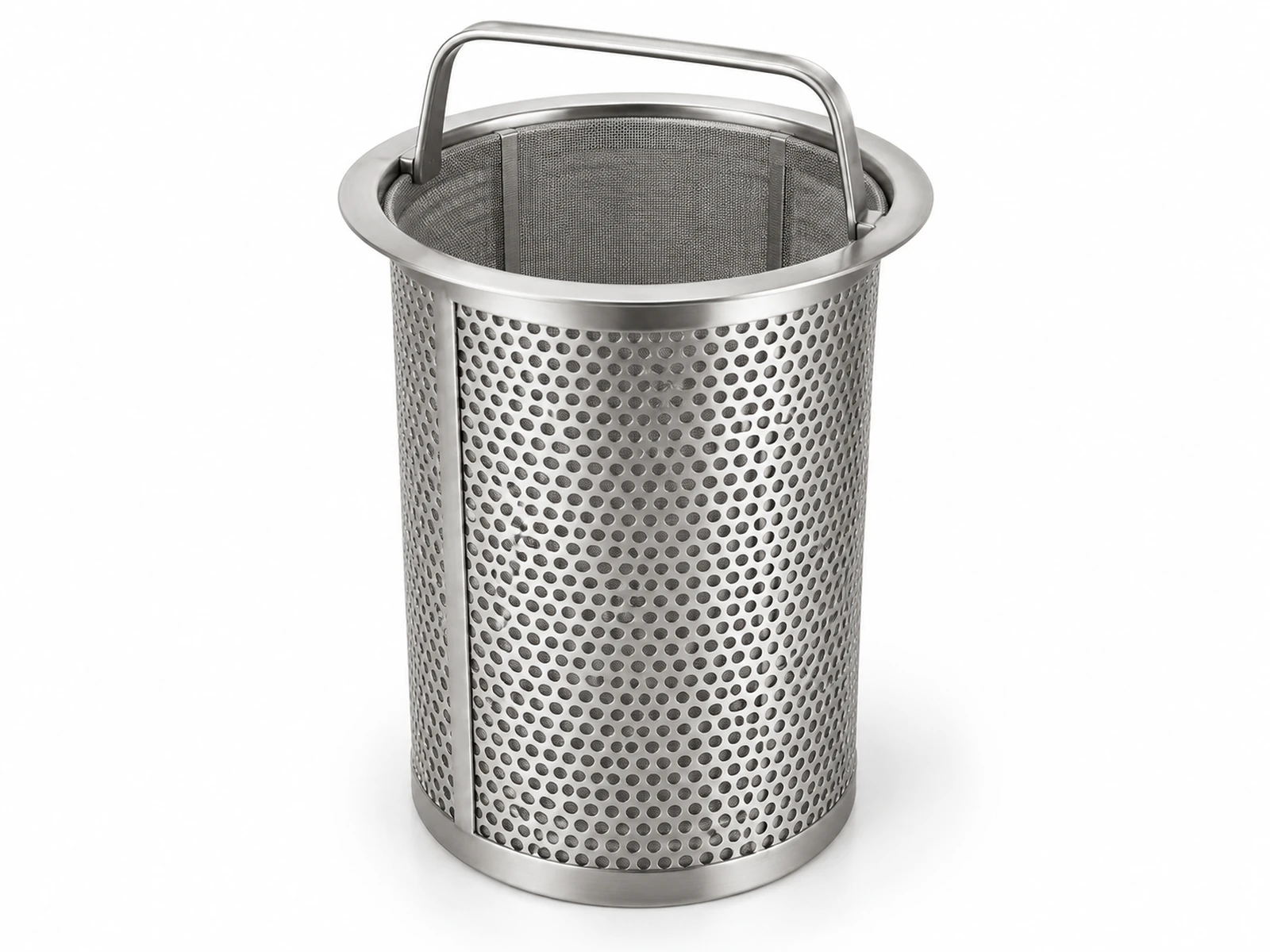
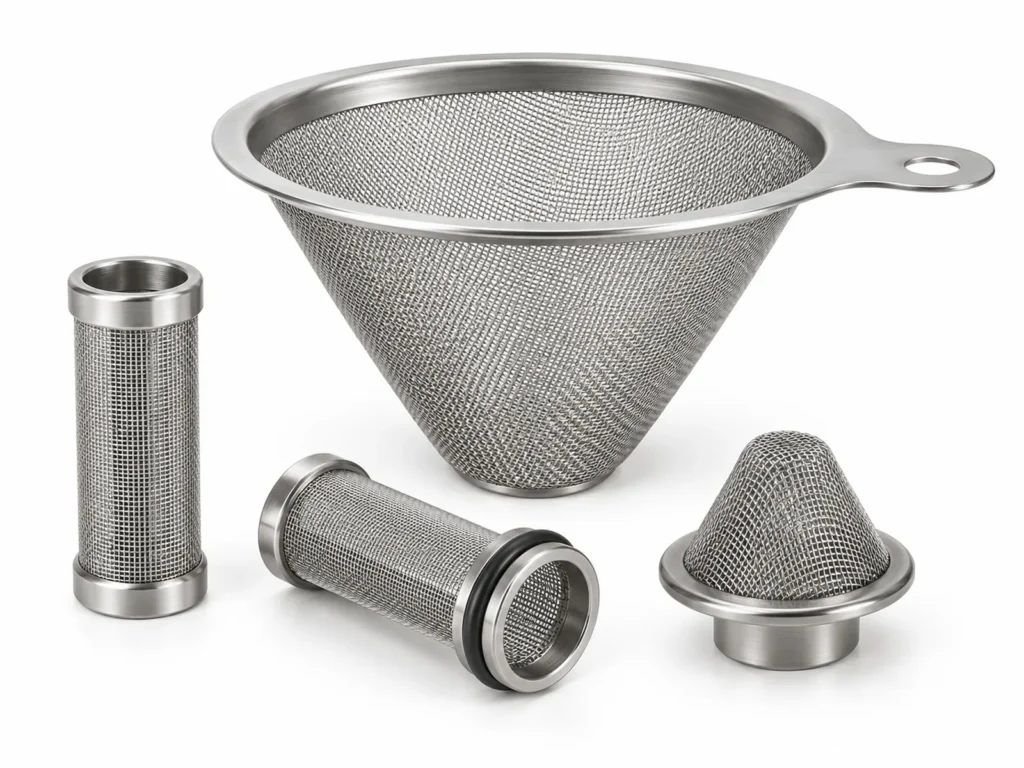
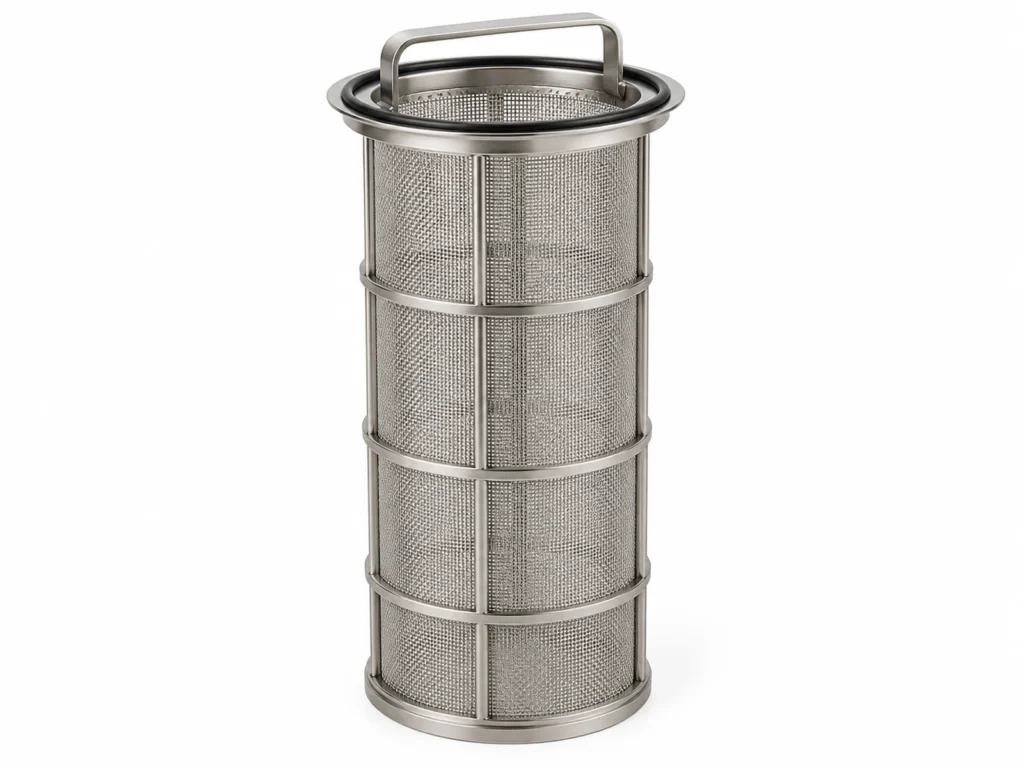
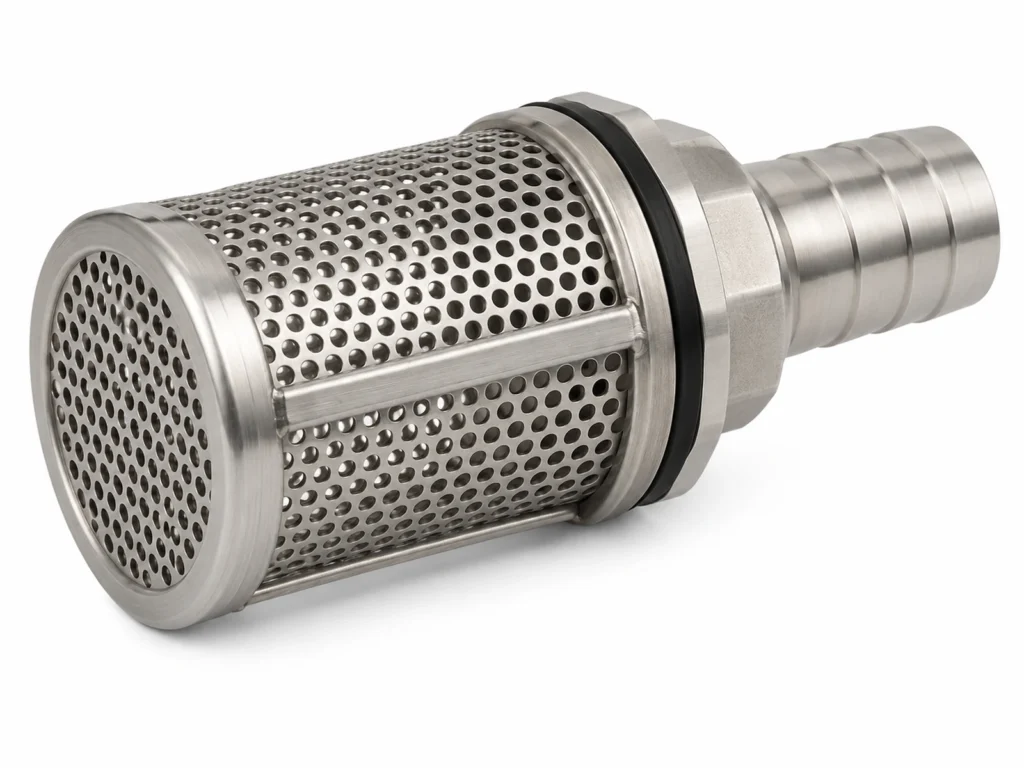
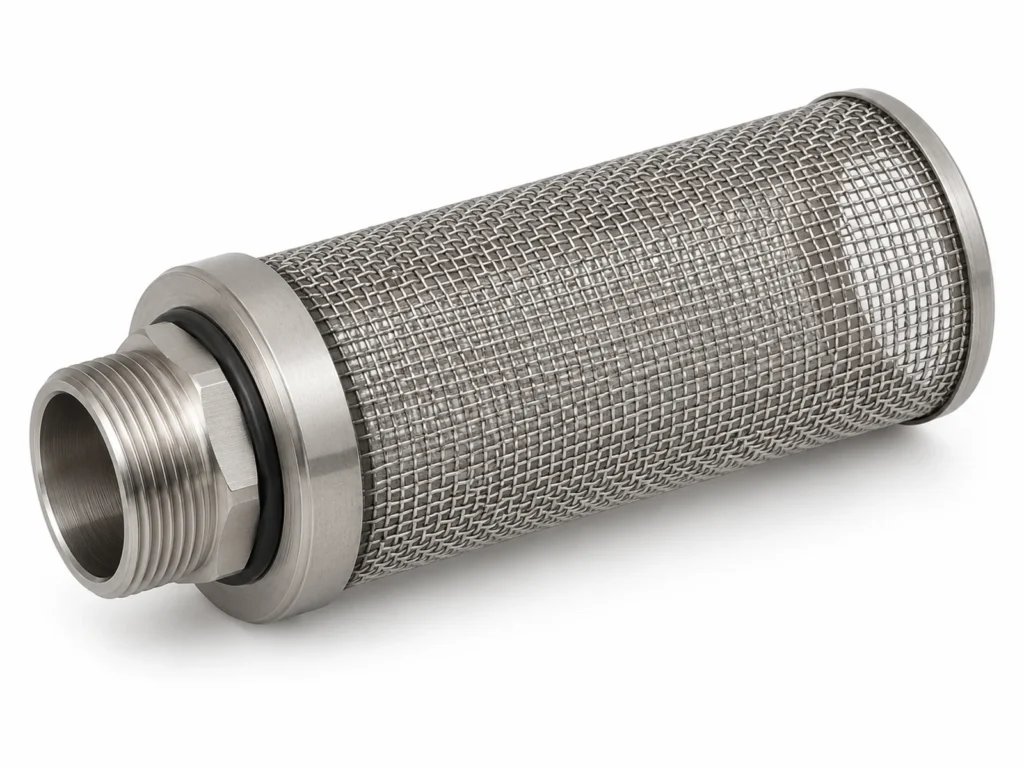
Basket Strainer Replacement Basket in 316L Stainless Steel (AISI 316L (1.4404)) is used for replacing the perforated or mesh-lined basket inside permanent simplex and duplex basket strainers that protect pumps, heat exchangers and meters on pipelines. The alloy gives superior resistance, including chlorides, brines, food CIP and mild acids and is essentially non-magnetic, with a practical service limit of approx. +550 °C continuous.
Alloy Properties
| Grade designation | AISI 316L (1.4404) |
|---|
| Magnetic response | Essentially non-magnetic |
|---|
| Service temperature | approx. +550 °C continuous |
|---|
| Corrosion characteristic | Superior resistance, including chlorides, brines, food CIP and mild acids |
|---|
Specifications of Basket Strainer Replacement Basket Available in 316L Stainless Steel
| Size | Basket diameter (mm) | Depth (mm) | Hole diameter (mm) | Mesh liner | Open area ratio (%) |
|---|
| DN 50 | 90 | 160 | 3.0 | 40-Mesh | 400 |
| DN 100 | 160 | 280 | 3.0 | 40-Mesh | 400 |
| DN 150 | 230 | 380 | 4.0 | 20-Mesh | 350 |
| DN 200 duplex | 290 | 470 | 4.0 | None | 300 |
Where 316L Stainless Steel Basket Strainer Replacement Basket Is Used
- Cooling & process water: basket strainers ahead of plate heat exchangers and chillers.
- Oil & fuel terminals: transfer-line strainers in front of pumps and meters.
- Chemical plants: pump suction protection on corrosive lines.
- Marine & power: duplex strainers that are cleaned without stopping flow.
Ordering Basket Strainer Replacement Basket in 316L Stainless Steel
- Body size & make: Basket outside diameter and depth must match the strainer body exactly so nothing bypasses.
- Perforation & liner: 3–4 mm perforation for strength, with a 20–40 mesh liner when finer straining is needed.
- Open area ratio: 300–400 % of the pipe area keeps pressure drop low between cleanings.
Mistakes to Avoid with Basket Strainer Replacement Basket
- Choosing too fine a liner for the dirt load, so the basket blinds within hours.
- Fitting a shorter basket than the body needs, leaving a bypass gap at the bottom.