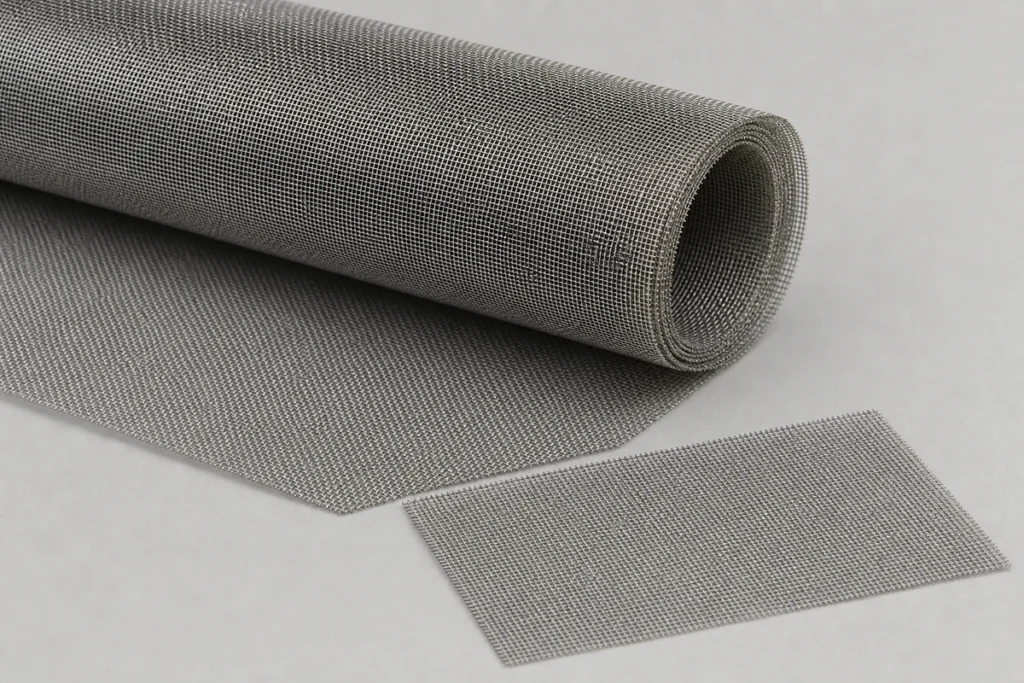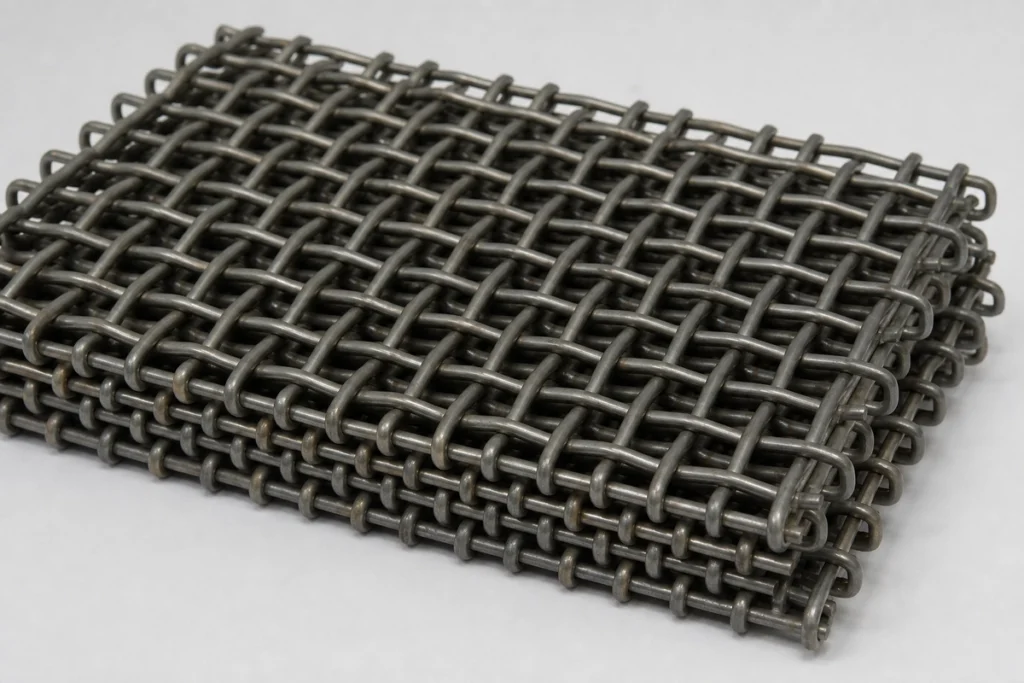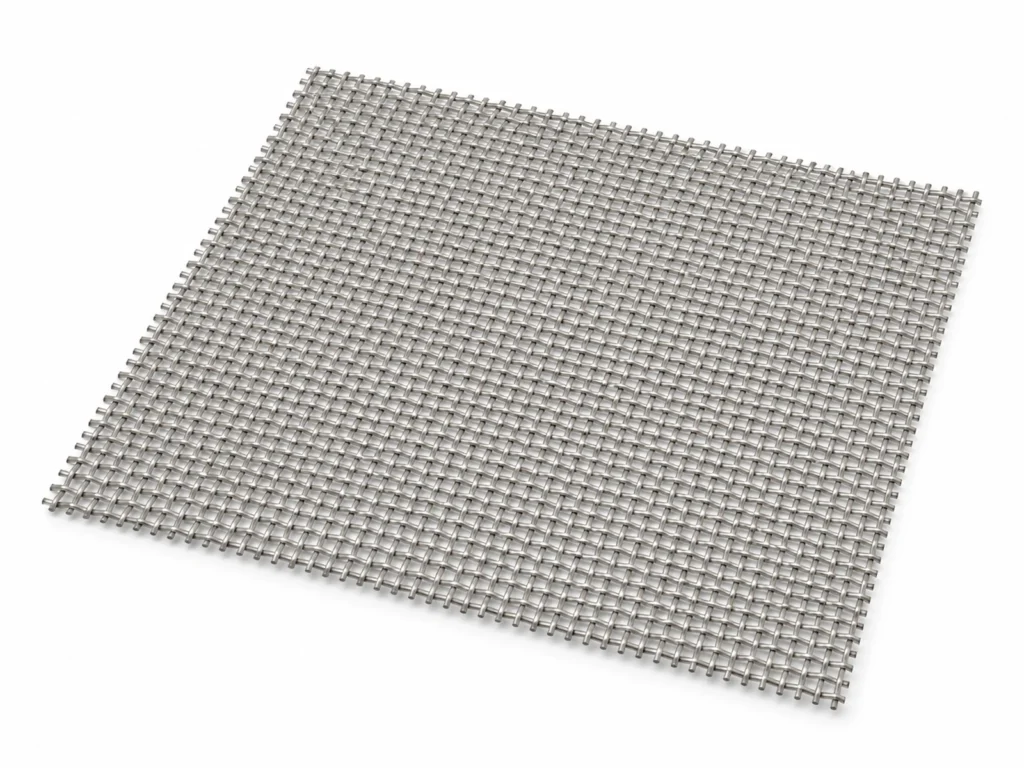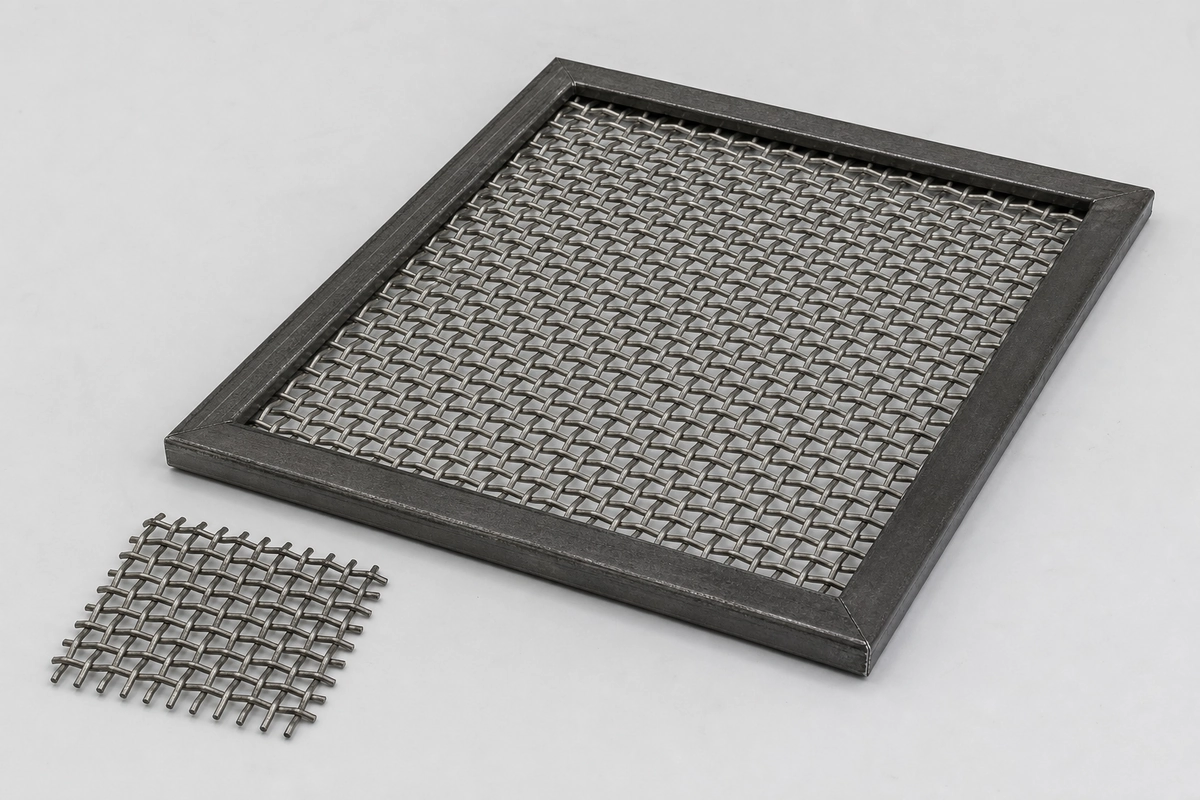
Material page for security screen mesh in 304 Stainless Steel. The standard general-purpose stainless mesh alloy. Covers the grade designation (AISI 304 (1.4301)), corrosion and magnetic behavior, cleaning and compatibility notes, and the specifications available.
Why Choose 304 Stainless Steel for Security Screen Mesh
The standard general-purpose stainless mesh alloy. For security screen mesh, this matters when good general corrosion resistance in atmosphere and fresh water is the controlling requirement.
Alloy Properties
| Grade designation | AISI 304 (1.4301) |
|---|---|
| Magnetic response | Essentially non-magnetic (annealed) |
| Service temperature | approx. +450 °C continuous |
| Corrosion characteristic | Good general corrosion resistance in atmosphere and fresh water |
Corrosion Behavior in Filtration Service
304 gives good resistance to atmospheric exposure, fresh water and most neutral media, and is the standard general-purpose grade for security screen mesh. In chloride-bearing service (seawater, brines, road-salt spray) step up to 316L; in reducing acids consider a nickel alloy.
Cleaning & Compatibility
Stainless security screen mesh can be cleaned by backflush, ultrasonic bath, steam and most CIP chemistry. Two cautions: (1) avoid extended contact with hydrochloric acid or hypochlorite sanitizers, which pit even 316; (2) where the mesh contacts carbon steel during fabrication or service, iron pick-up can rust-stain the surface — specify passivation after fabrication.
Specifications of Security Screen Mesh Available in 304 Stainless Steel
| Mesh count | Wire diameter (mm) | Aperture (mm) | Micron rating (u00b5m) | Open area (%) | Weight SS (kg/mu00b2) | Reference standard |
|---|---|---|---|---|---|---|
| 11-Mesh | 0.80 | 1.51 | 1509 | 42.7 | u2014 | SS316 marine grade |
| 12-Mesh | 0.80 | 1.32 | 1317 | 38.7 | u2014 | SS316 marine grade |
Where 304 Stainless Steel Security Screen Mesh Is Used
- Residential: security screen doors and window screens.
- Commercial & retail: ground-floor windows and vents.
- Coastal properties: marine-grade 316 security screens.
- Institutional: schools, clinics and detention facilities.
Ordering Security Screen Mesh in 304 Stainless Steel
- Wire & weave: About 0.8–1.0 mm stainless wire at 11 mesh for cut and impact resistance.
- Alloy & finish: SS316 with black powder coat for coastal durability.
- Framing: Screw-clamped frames — the frame decides real-world security.
Mistakes to Avoid with Security Screen Mesh
- Light wire mesh sold as "security".
- Strong mesh in a weak frame.