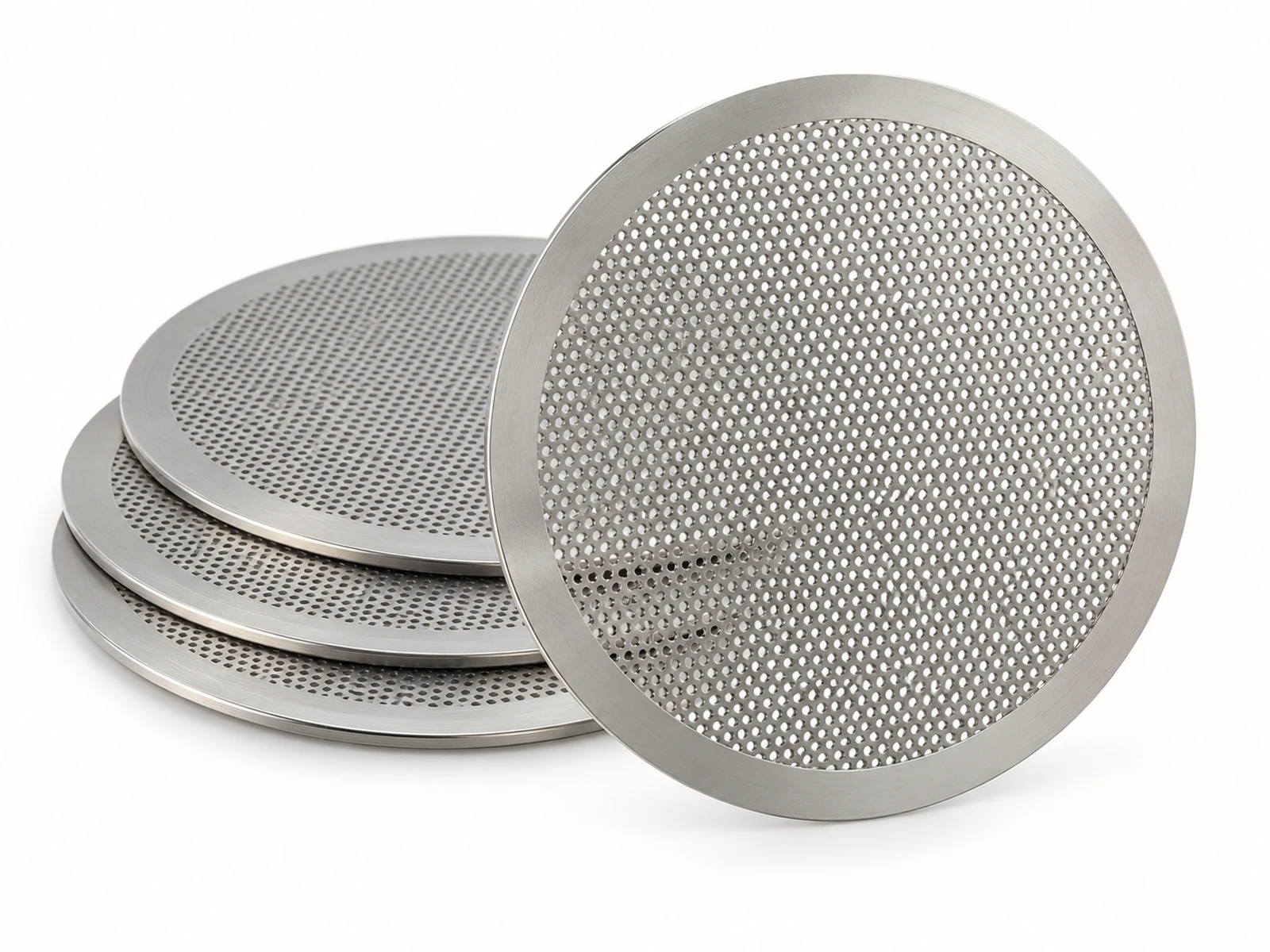
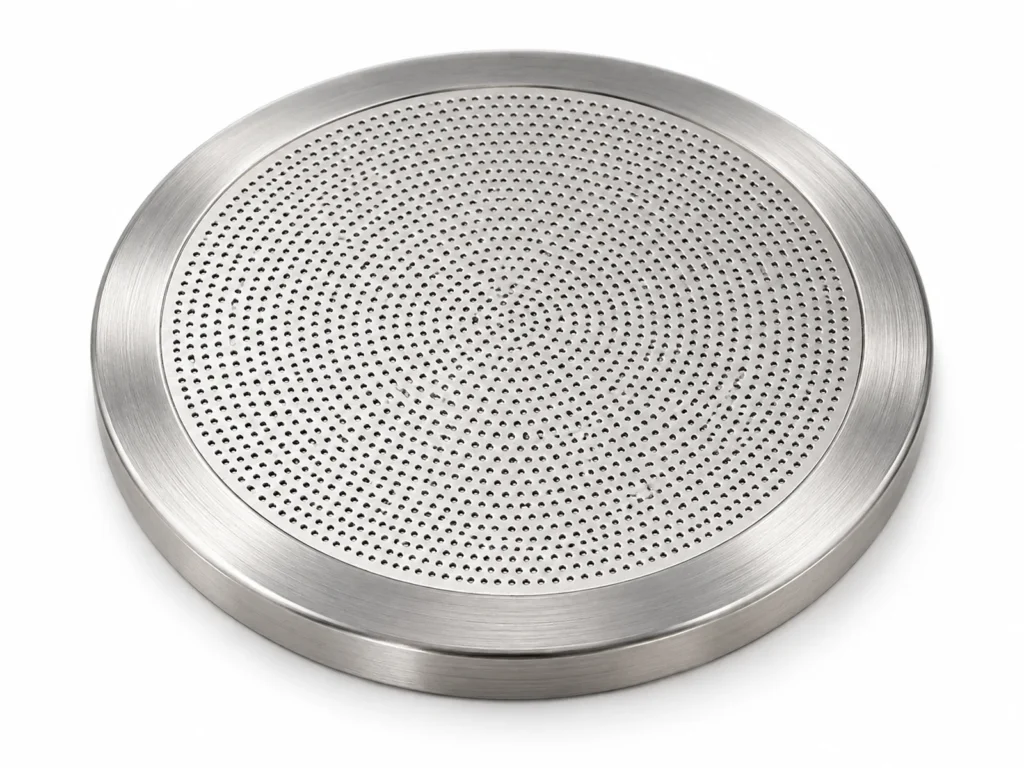
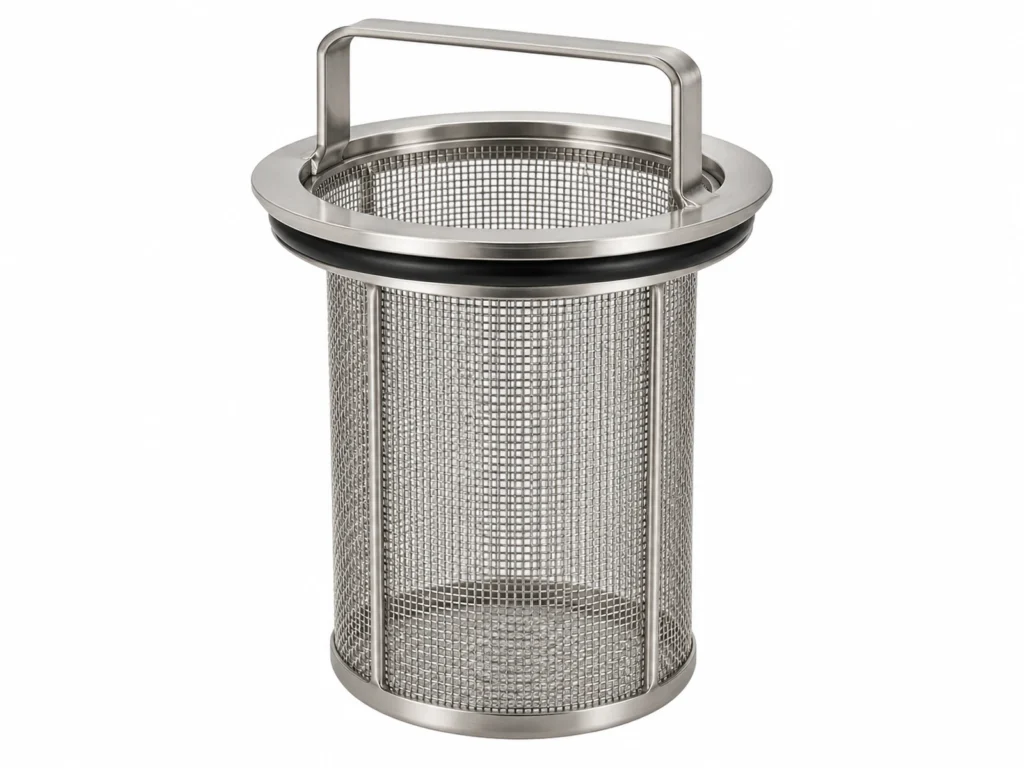
Photo-Etched Precision Filter Disc in 304 Stainless Steel (AISI 304 (1.4301)) is used for filtering, metering and diffusing fluids through thin stainless discs whose holes are chemically etched to an exact pattern — burr-free, stress-free and far more uniform than woven mesh. The alloy gives good general corrosion resistance in atmosphere and fresh water and is essentially non-magnetic (annealed), with a practical service limit of approx. +450 °C continuous.
Alloy Properties
| Grade designation | AISI 304 (1.4301) |
|---|
| Magnetic response | Essentially non-magnetic (annealed) |
|---|
| Service temperature | approx. +450 °C continuous |
|---|
| Corrosion characteristic | Good general corrosion resistance in atmosphere and fresh water |
|---|
Specifications of Photo-Etched Precision Filter Disc Available in 304 Stainless Steel
| Size | Plate diameter (mm) | Thickness (mm) | Hole diameter (mm) | Hole count | Hole rings | Open area (%) |
|---|
| PE-10 | 10 | 0.10 | 0.08 | 900 | 6 | 22 |
| PE-20 | 20 | 0.15 | 0.10 | 2400 | 7 | 25 |
| PE-32 | 32 | 0.20 | 0.15 | 3100 | 8 | 28 |
| PE-50 | 50 | 0.30 | 0.25 | 3600 | 8 | 30 |
Where 304 Stainless Steel Photo-Etched Precision Filter Disc Is Used
- Medical & analytical devices: inlet filters, flow restrictors and diffuser plates in pumps and analyzers.
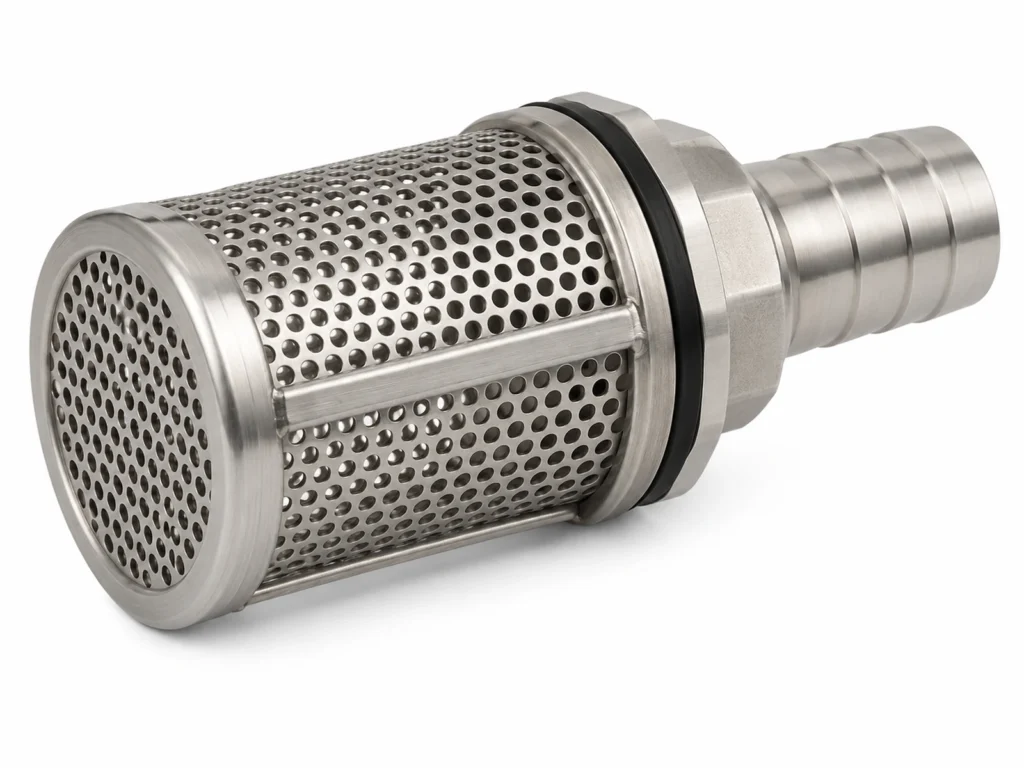
- Fuel & gas systems: last-chance screens in valves, regulators and injectors.
- Consumer appliances: coffee machine, shaver and humidifier discs with exact flow.
- Electronics: vent discs and EMI-shielded apertures.
Ordering Photo-Etched Precision Filter Disc in 304 Stainless Steel
- Hole size vs thickness: Etched holes are normally at least the sheet thickness; thinner foil allows smaller holes.
- Pattern: Any hole shape, pitch and keep-out zone — supply a DXF so the tool matches your part exactly.
- Material: SS304/316L, nickel, copper or titanium foil from 0.03 to 0.5 mm.
Mistakes to Avoid with Photo-Etched Precision Filter Disc
- Asking for holes smaller than the foil thickness on a thick part.
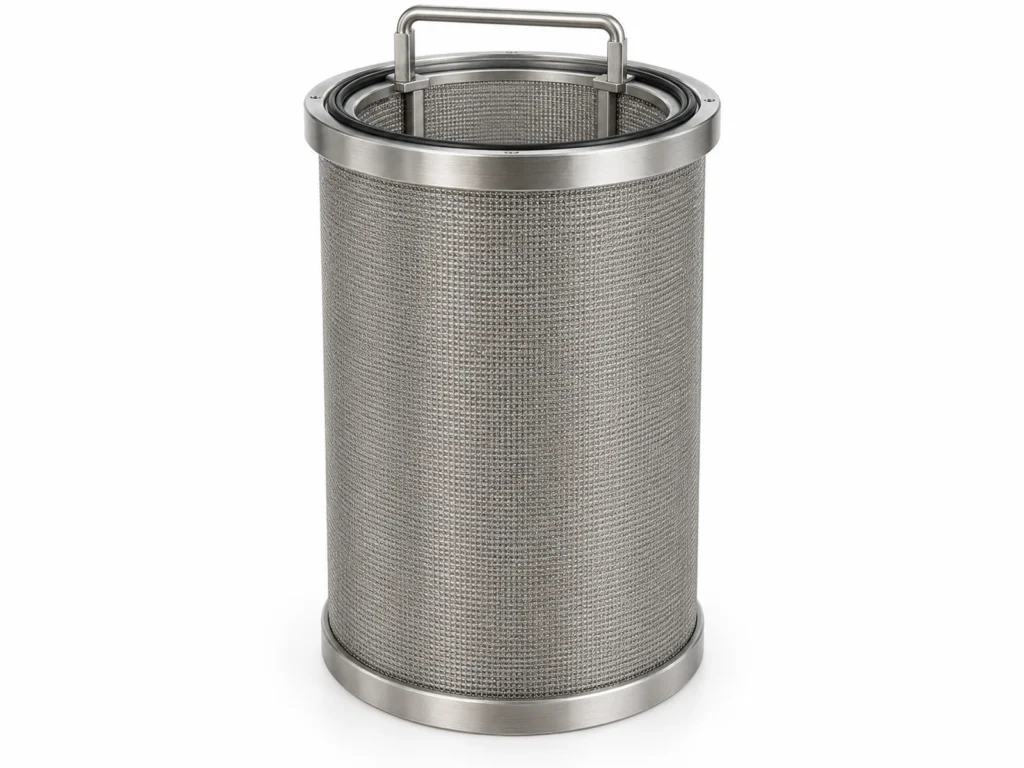
- Using an etched disc where the pressure drop needs a woven or sintered layer behind it for support.