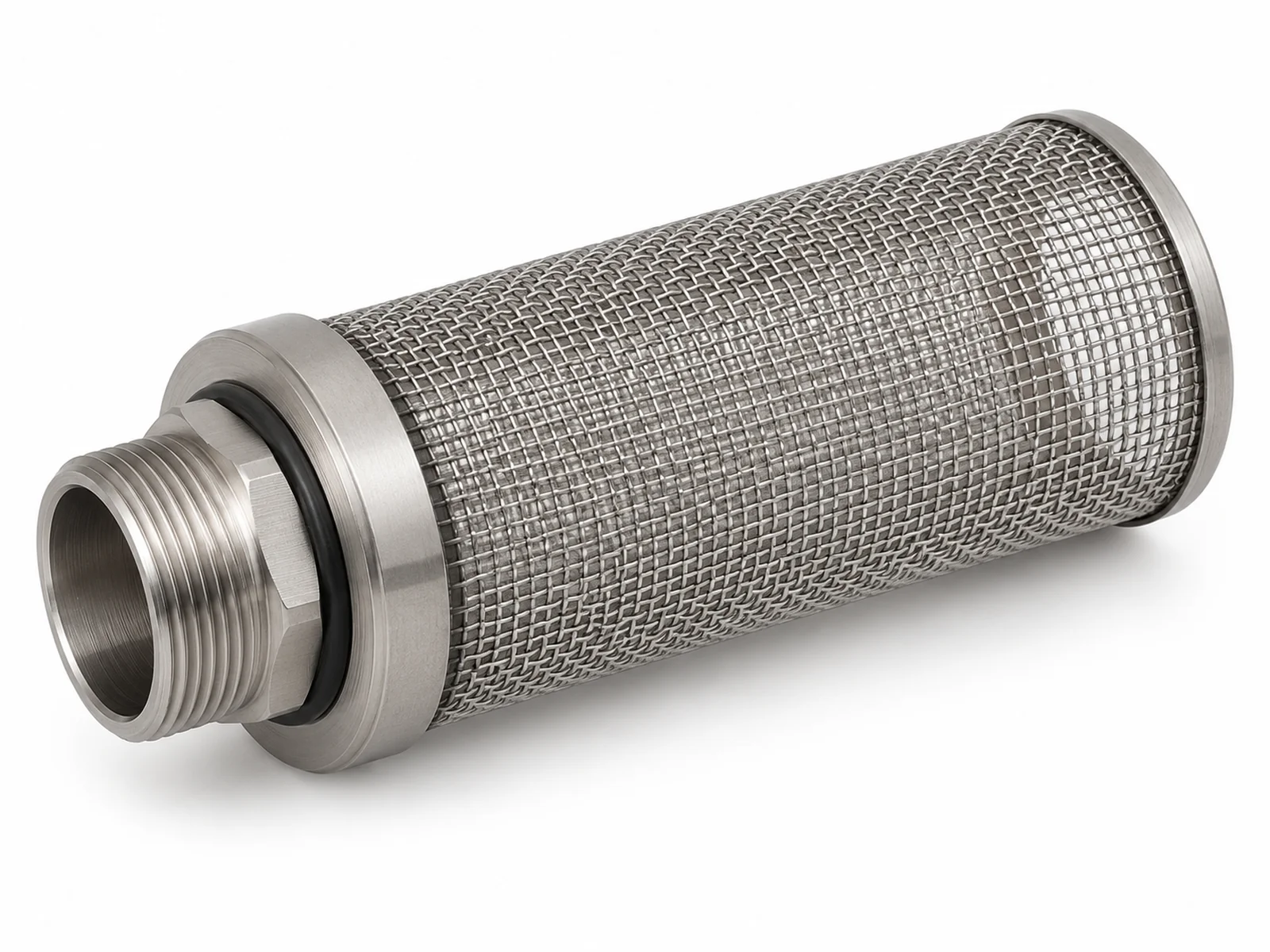
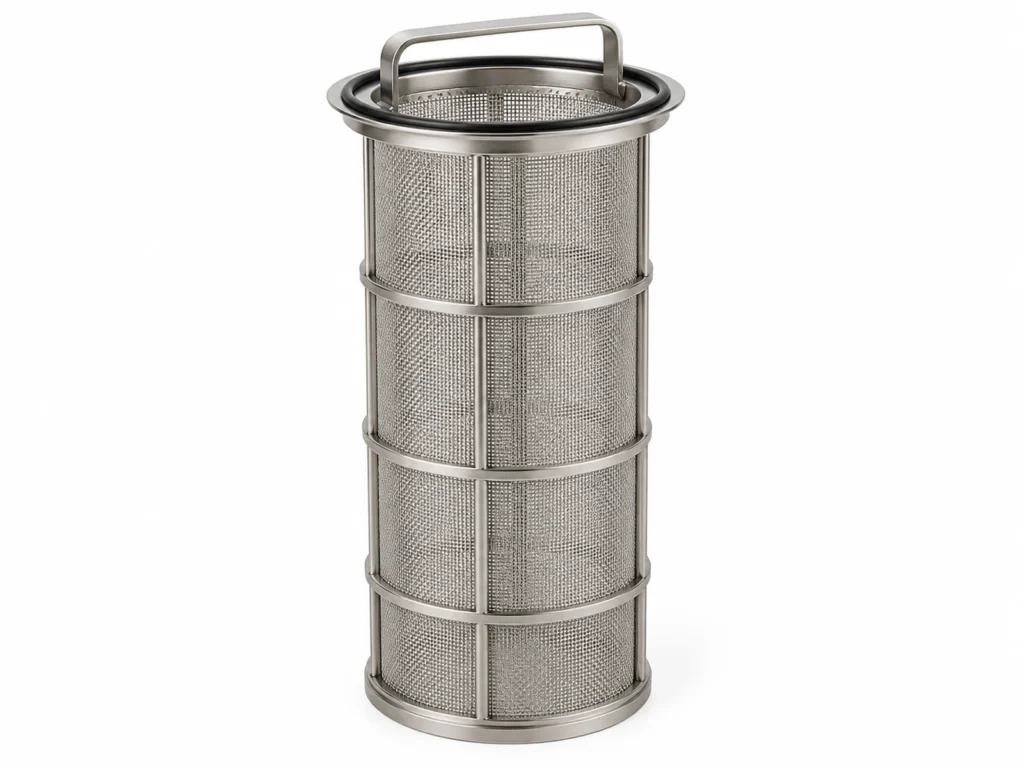
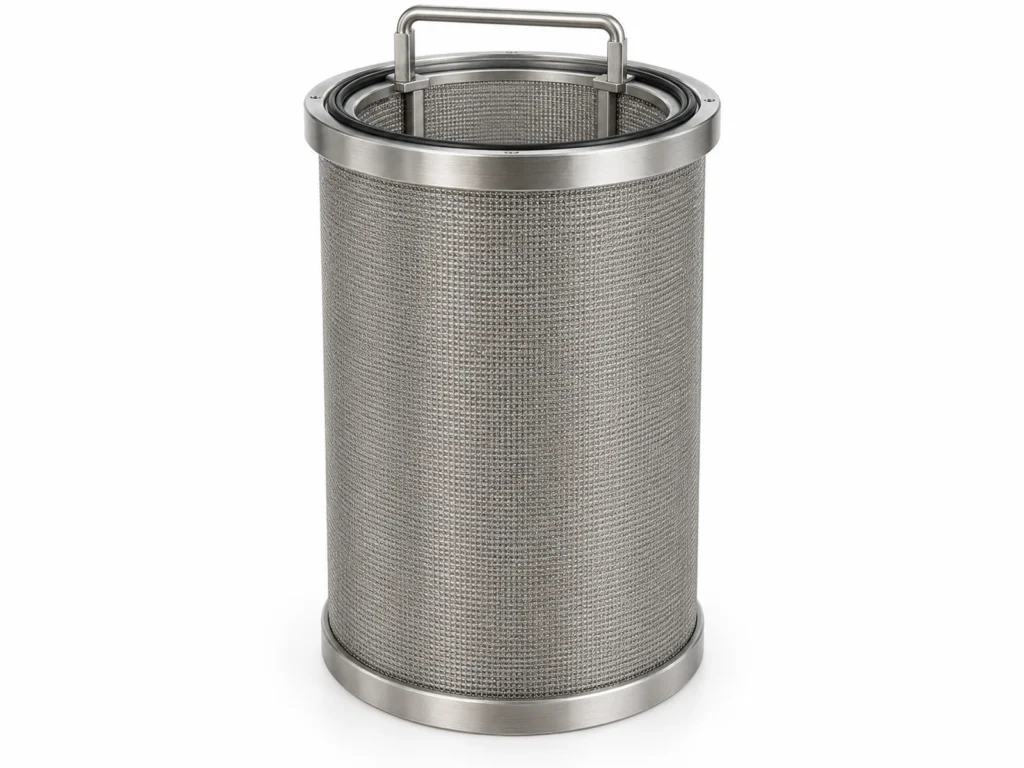
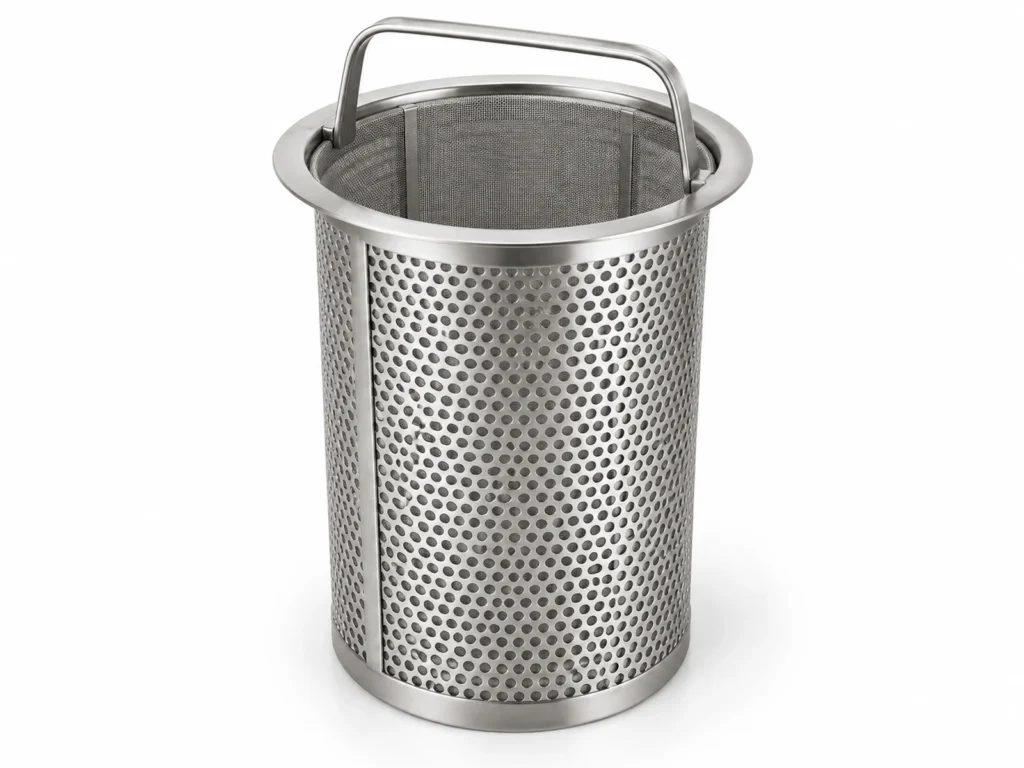
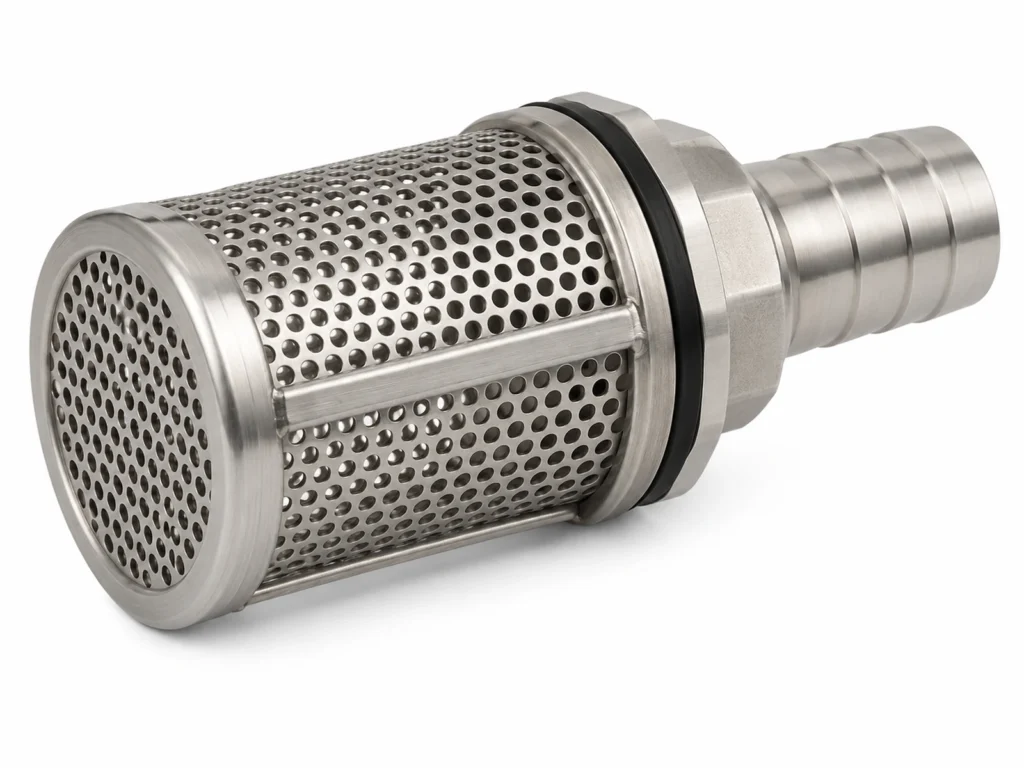
Hydraulic Tank Suction Strainer in 304 Stainless Steel (AISI 304 (1.4301)) is used for protecting hydraulic pumps from large particles at the tank outlet with a threaded wire mesh suction strainer that sits below the oil level. The alloy gives good general corrosion resistance in atmosphere and fresh water and is essentially non-magnetic (annealed), with a practical service limit of approx. +450 °C continuous.
Alloy Properties
| Grade designation | AISI 304 (1.4301) |
|---|
| Magnetic response | Essentially non-magnetic (annealed) |
|---|
| Service temperature | approx. +450 °C continuous |
|---|
| Corrosion characteristic | Good general corrosion resistance in atmosphere and fresh water |
|---|
Specifications of Hydraulic Tank Suction Strainer Available in 304 Stainless Steel
| Size | Outer diameter (mm) | Length (mm) | Micron rating (u00b5m) | Thread | Bypass (bar) |
|---|
| 3/4 in | 60 | 110 | 149 | 3/4 NPT | 0.2 |
| 1 1/4 in | 80 | 150 | 149 | 1 1/4 NPT | 0.2 |
| 2 in | 110 | 220 | 74 | 2 NPT | 0.2 |
| 3 in | 140 | 300 | 149 | 3 NPT | None |
Where 304 Stainless Steel Hydraulic Tank Suction Strainer Is Used
- Mobile hydraulics: tractors, loaders and cranes.
- Industrial power units: press and machine-tool hydraulics.
- Lubrication systems: gear-box and turbine lube pumps.
- Fuel transfer: tank outlet screens.
Ordering Hydraulic Tank Suction Strainer in 304 Stainless Steel
- Thread & flow: Match the pump suction port; size by flow so pressure drop stays below about 0.1 bar.
- Rating: 74 or 149 µm (100 or 200 mesh) to protect the pump without cavitation.
- Bypass: A 0.2 bar bypass valve protects the pump if the strainer clogs.
Mistakes to Avoid with Hydraulic Tank Suction Strainer
- Choosing a finer rating than the pump can tolerate, causing cavitation.
- Mounting too close to the tank bottom, where sludge collects.