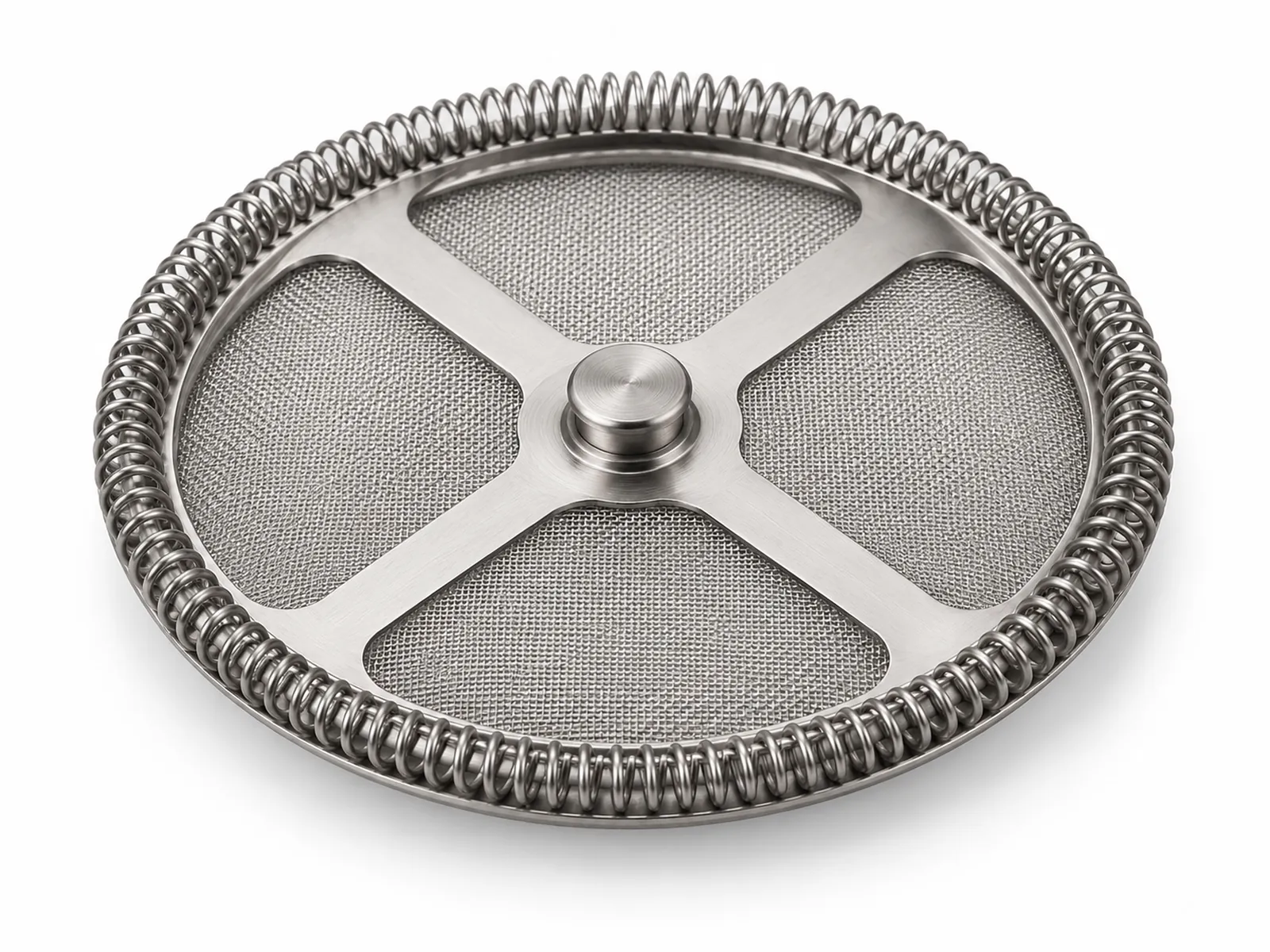
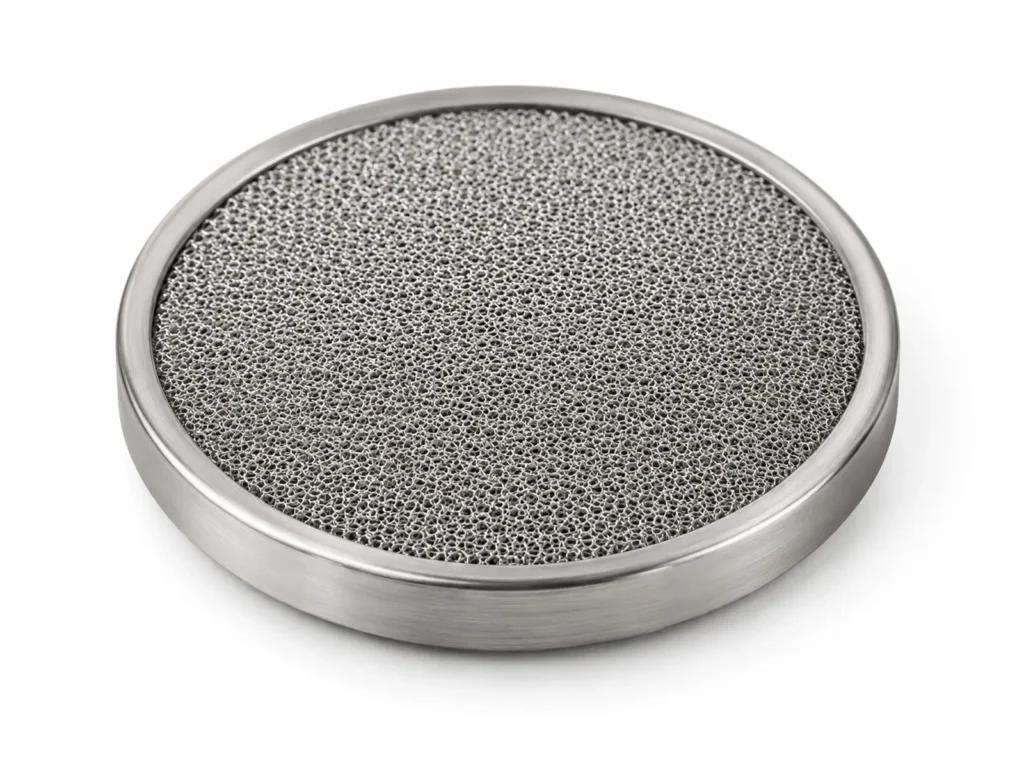
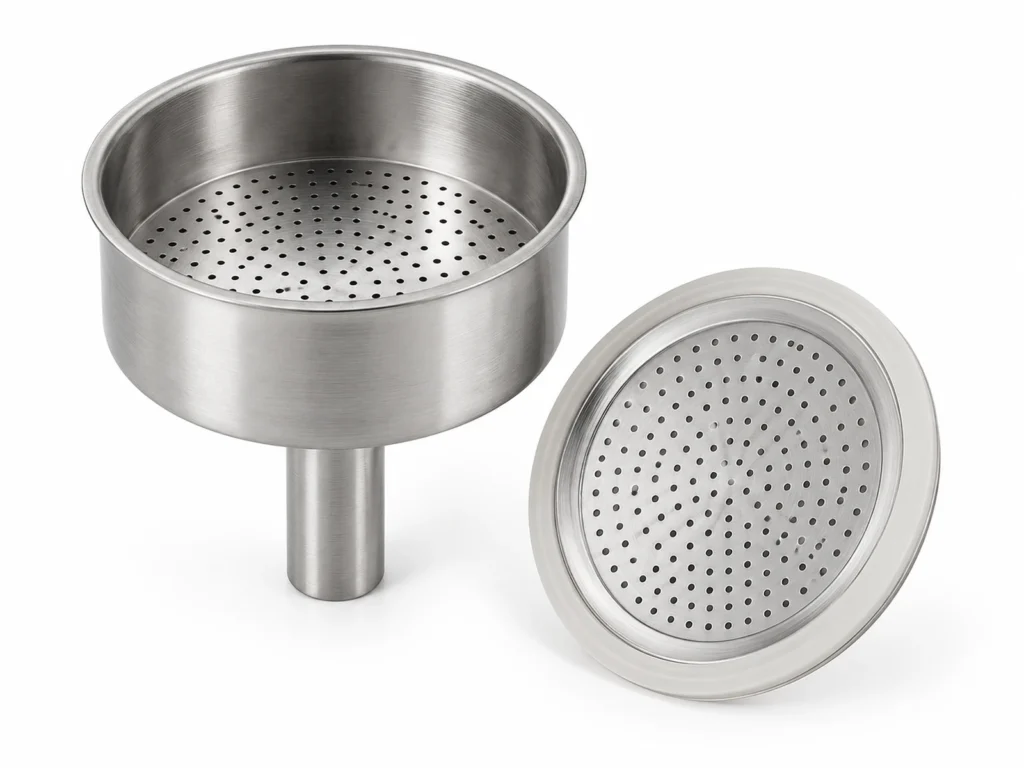
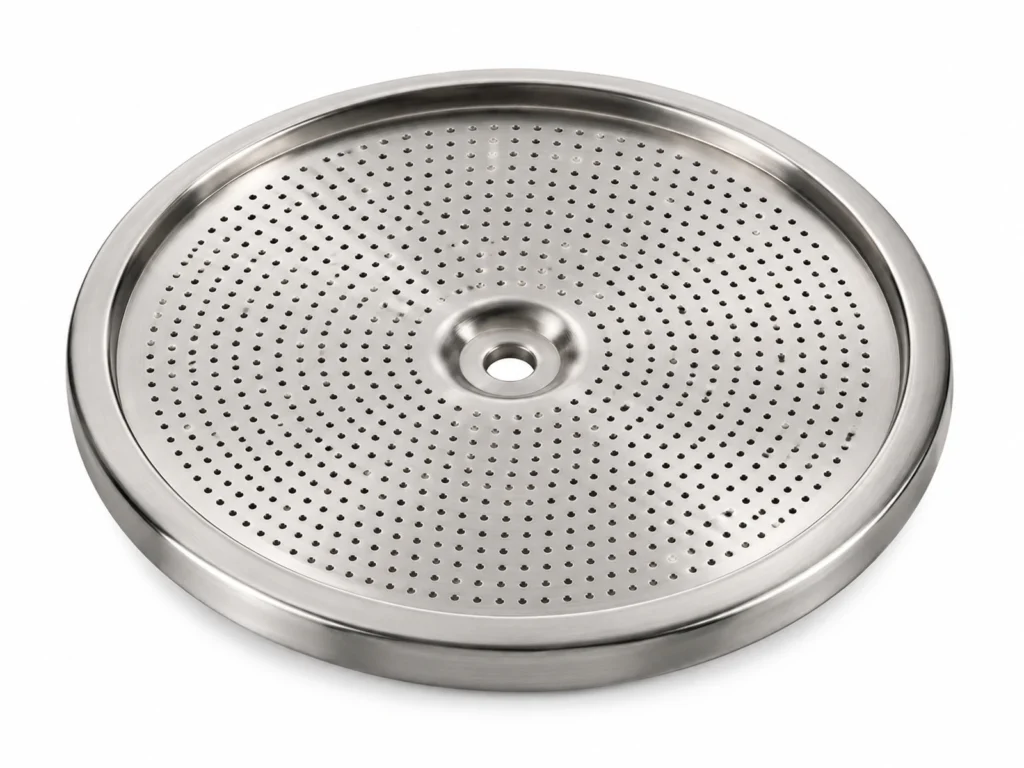
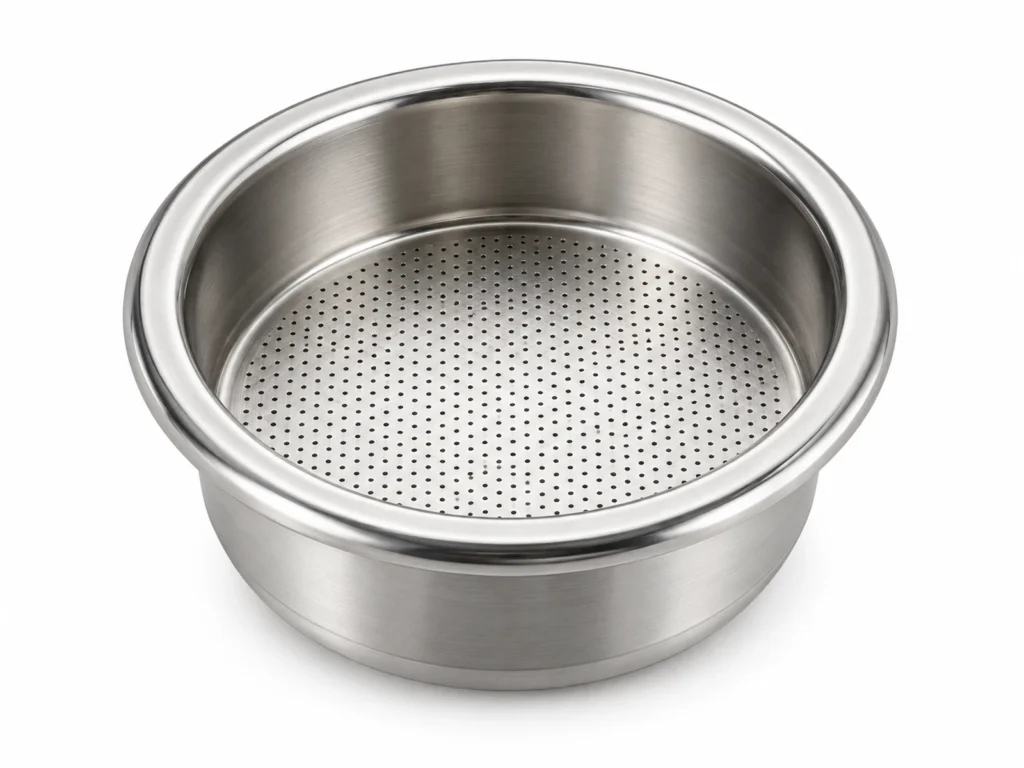
French Press Filter Screen in 304 Stainless Steel (AISI 304 (1.4301)) is used for separating grounds from coffee in a French press plunger with a spring-edged mesh disc that seals against the carafe wall. The alloy gives good general corrosion resistance in atmosphere and fresh water and is essentially non-magnetic (annealed), with a practical service limit of approx. +450 °C continuous.
Alloy Properties
| Grade designation | AISI 304 (1.4301) |
|---|
| Magnetic response | Essentially non-magnetic (annealed) |
|---|
| Service temperature | approx. +450 °C continuous |
|---|
| Corrosion characteristic | Good general corrosion resistance in atmosphere and fresh water |
|---|
Specifications of French Press Filter Screen Available in 304 Stainless Steel
| Size | Diameter (mm) | Mesh | Micron rating (u00b5m) | Spring | Center hole (mm) |
|---|
| 3 cup / 350 ml | 76 | 100-Mesh | 154 | Coil spring rim | 4.0 |
| 8 cup / 1 L | 95 | 100-Mesh | 154 | Coil spring rim | 4.0 |
| 12 cup / 1.5 L | 105 | 120-Mesh | 122 | Coil spring rim | 4.5 |
Where 304 Stainless Steel French Press Filter Screen Is Used
- Cookware OEMs: plunger assemblies for glass and stainless French presses.
- Replacement parts retailers: spare screens that restore a press with a torn mesh.
- Hotel & catering: large 1.5 L presses for table service.
- Tea press makers: plungers for loose-leaf tea presses.
Ordering French Press Filter Screen in 304 Stainless Steel
- Diameter: Measure the carafe inner diameter; the spring rim must press lightly against the wall.
- Mesh: 100-mesh is the standard; 120-mesh gives a cleaner cup at a slower plunge.
- Center hole: Match the rod and nut diameter of the plunger assembly.
Mistakes to Avoid with French Press Filter Screen
- Ordering by the press capacity name instead of the measured inner diameter — brands differ.
- Pressing too hard and fast, which bends the screen and lets grounds bypass.