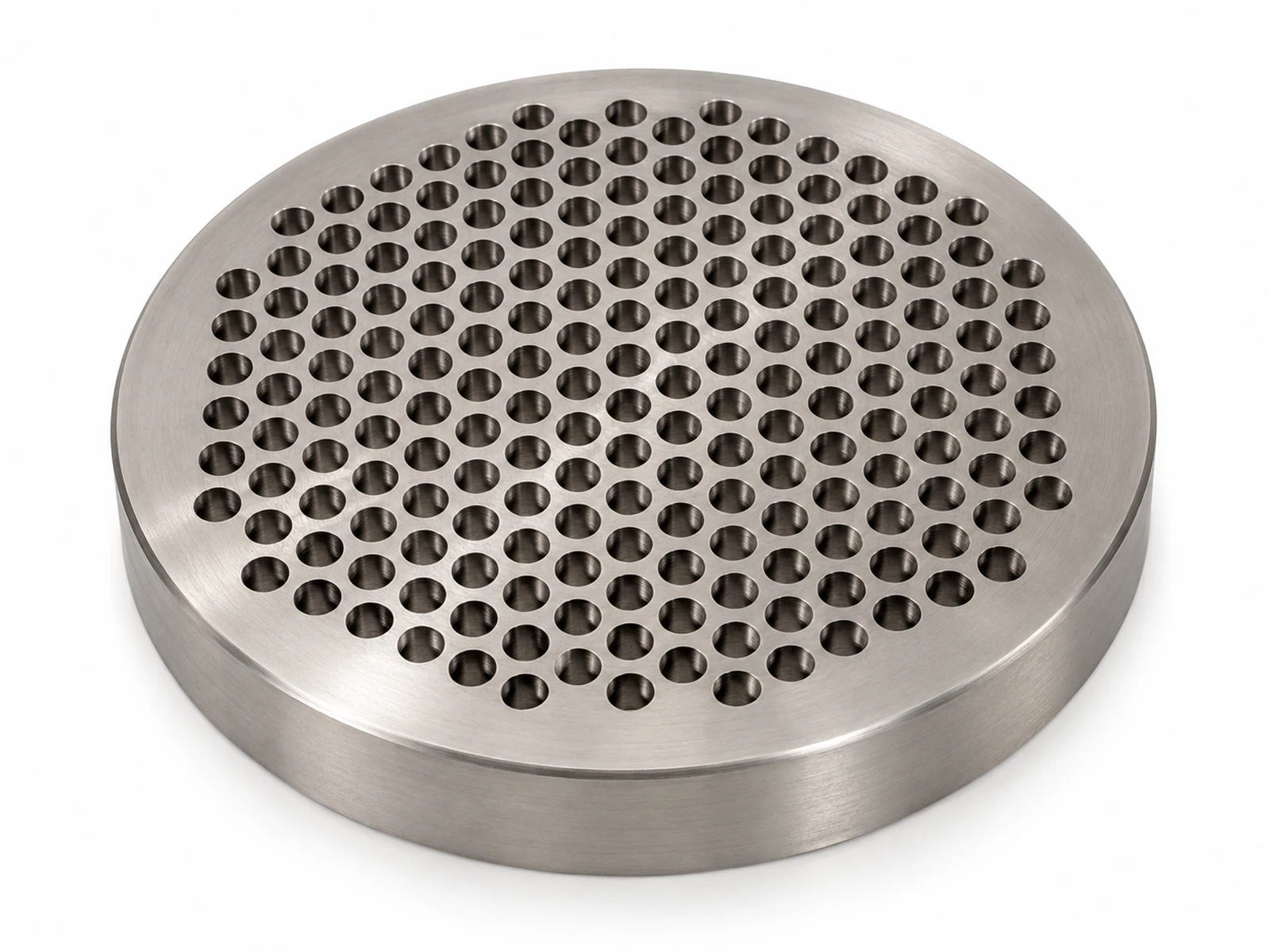
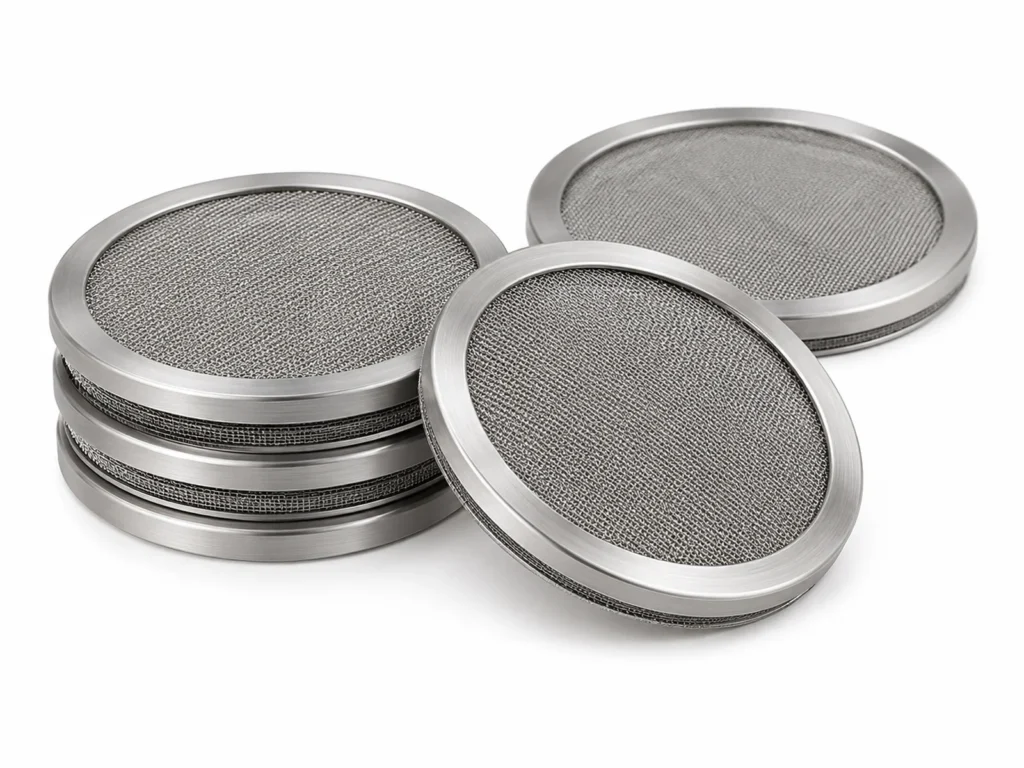
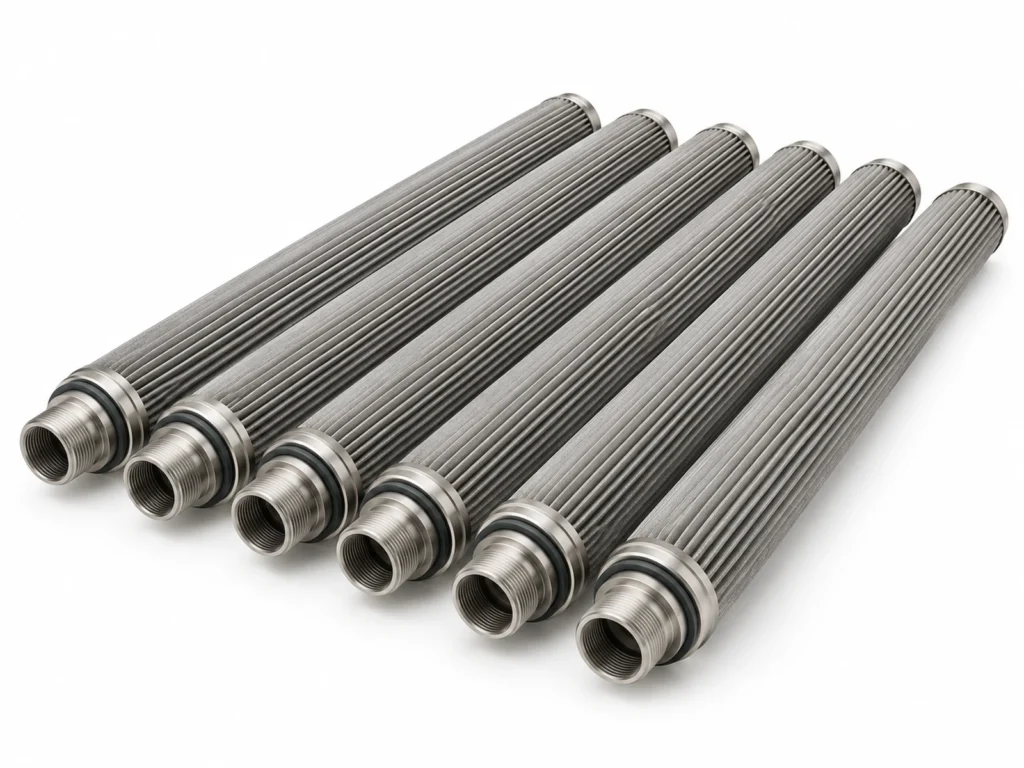
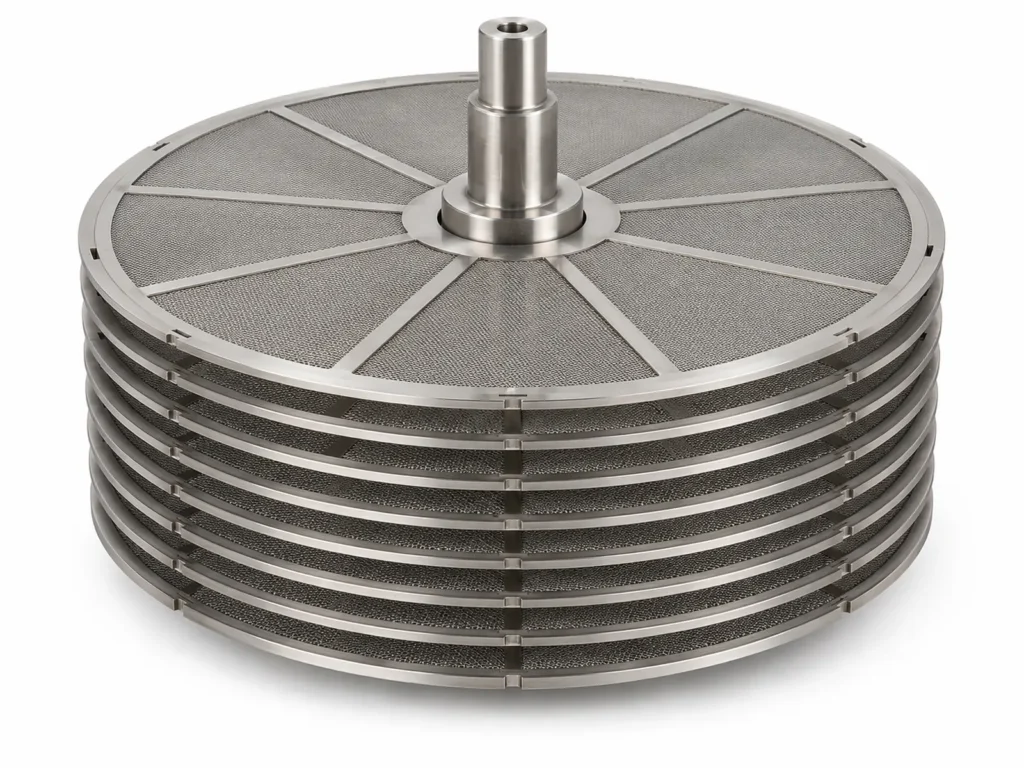
Extruder Breaker Plate in 304 Stainless Steel (AISI 304 (1.4301)) is used for supporting the screen pack against melt pressure at the extruder head while straightening the melt flow through a thick perforated steel plate. The alloy gives good general corrosion resistance in atmosphere and fresh water and is essentially non-magnetic (annealed), with a practical service limit of approx. +450 °C continuous.
Alloy Properties
| Grade designation | AISI 304 (1.4301) |
|---|
| Magnetic response | Essentially non-magnetic (annealed) |
|---|
| Service temperature | approx. +450 °C continuous |
|---|
| Corrosion characteristic | Good general corrosion resistance in atmosphere and fresh water |
|---|
Specifications of Extruder Breaker Plate Available in 304 Stainless Steel
| Size | Plate diameter (mm) | Thickness (mm) | Hole diameter (mm) | Hole count | Hole rings | Material |
|---|
| u00d845 extruder | 60 | 15 | 3.0 | 130 | 5 | 1.2316 stainless tool steel |
| u00d865 extruder | 85 | 20 | 4.0 | 180 | 6 | 1.2316 stainless tool steel |
| u00d890 extruder | 115 | 25 | 4.5 | 260 | 7 | 1.2316 stainless tool steel |
| u00d8120 extruder | 150 | 30 | 5.0 | 380 | 8 | 1.2316 stainless tool steel |
Where 304 Stainless Steel Extruder Breaker Plate Is Used
- Pipe & profile extrusion: breaker plates behind screen packs.
- Film & sheet lines: plates in screen changers.
- Compounding & recycling: heavy plates for contaminated melts.
- Rubber extrusion: strainer plates.
Ordering Extruder Breaker Plate in 304 Stainless Steel
- Diameter & seat: Match the barrel bore, adapter recess and seal design.
- Holes: Hole size, pitch and chamfers set pressure drop and flow.
- Material: Hardened stainless tool steel or nitrided steel for wear and corrosion.
Mistakes to Avoid with Extruder Breaker Plate
- Running without a screen pack, so the melt is not filtered.
- Reusing a plate with eroded or cracked holes.