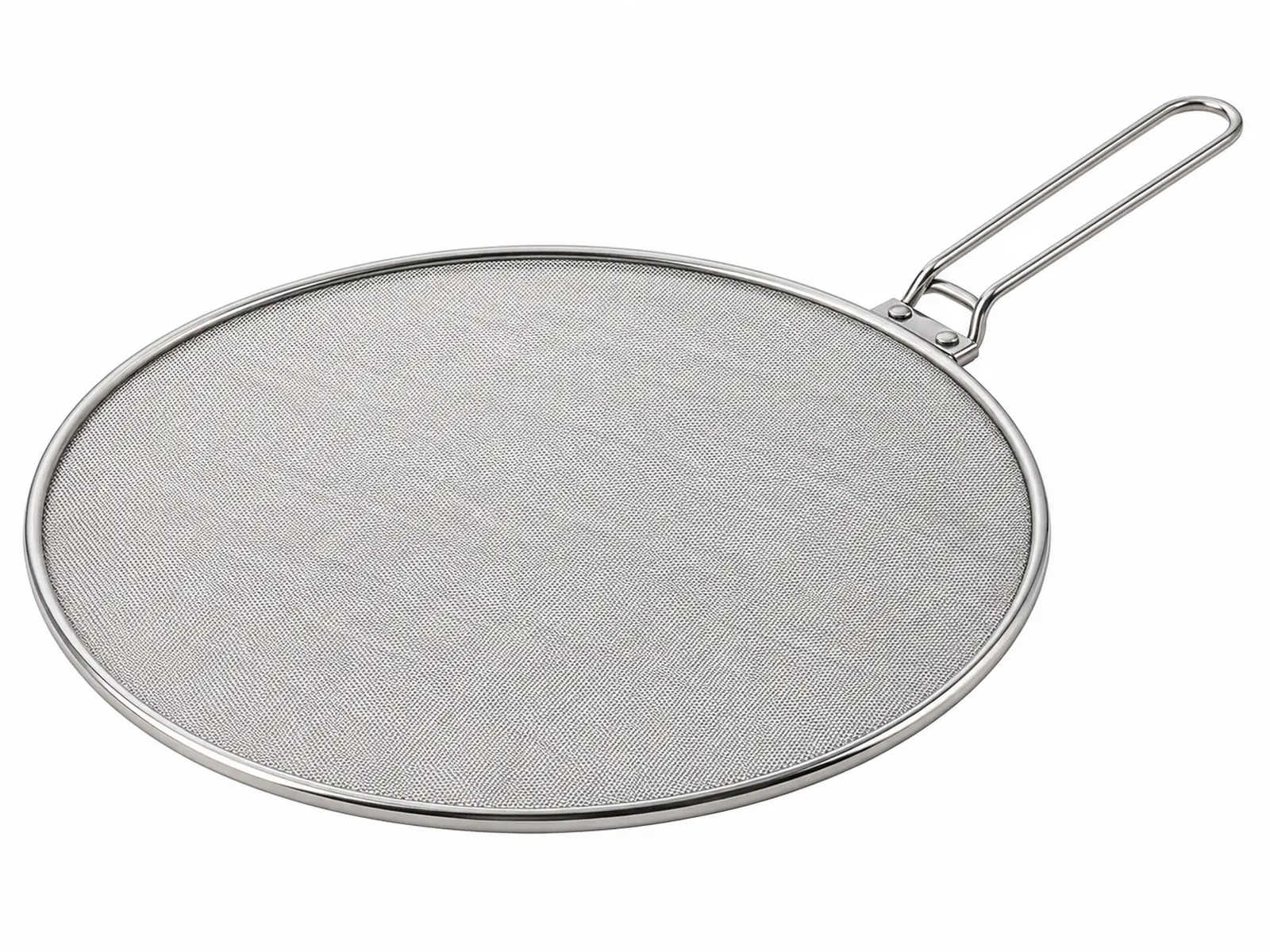
Oil Splatter Screen is selected when an assembly or process calls for covering an open frying pan so hot oil droplets are caught by fine mesh while steam still escapes and food keeps searing. This application guide to the FDA 21 CFR / EU 1935/2004 food contact type covers concrete end-uses, the specification checklist, correct installation, and where an alternative mesh or filter medium performs better.
Typical Applications for Oil Splatter Screen
Where Oil Splatter Screen is specified and bought:
- Cookware brands: splatter guards packed with skillet and wok sets as a value-add accessory.
- Home kitchens: frying bacon, fish and steaks without coating the hob and backsplash.
- Commercial griddle stations: large-diameter guards that sit on rondeaus and sauté pans.
- Outdoor & camp cooking: lightweight guards for cast-iron skillets over a burner or fire.
How to Specify Oil Splatter Screen for Your Application
- Diameter: Choose 1–2 cm larger than the widest pan rim so the guard rests on the lip rather than dropping in.
- Mesh count: 60-mesh stops nearly all droplets with free venting; 80-mesh also stops fine oil mist but fogs faster.
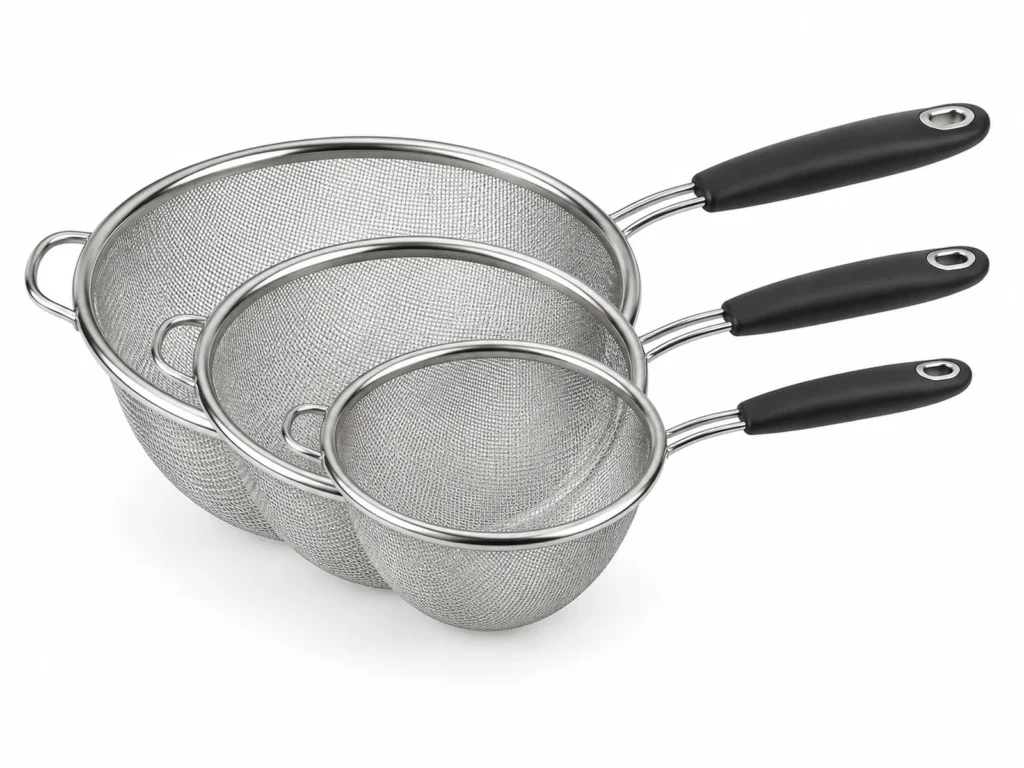
- Rim & handle: A rolled stainless rim with three feet lets the hot guard stand on a counter; a folding handle stores flat.
- Standard: Quote FDA 21 CFR / EU 1935/2004 food contact and the size designation from the table on the product page, plus any value you changed in the technical drawing.
Handling & Installation Practice
- Lay the screen on the pan right after the food goes in, when splatter is worst, and lift it toward you so steam vents away.
- Soak in hot water with dish detergent, then brush; polymerized oil on fine mesh comes off far easier while soft.
Common Selection Mistakes with Oil Splatter Screen
- Buying a guard smaller than the pan; it falls in and bends the mesh.
- Grabbing a stainless handle bare-handed after long frying — specify a silicone sleeve where users expect a cool grip.
Where Oil Splatter Screen Is Not the Right Choice
Not a cooking lid: it will not trap heat for braising or keep liquid from reducing, and it does not stop deep-fryer boil-over.