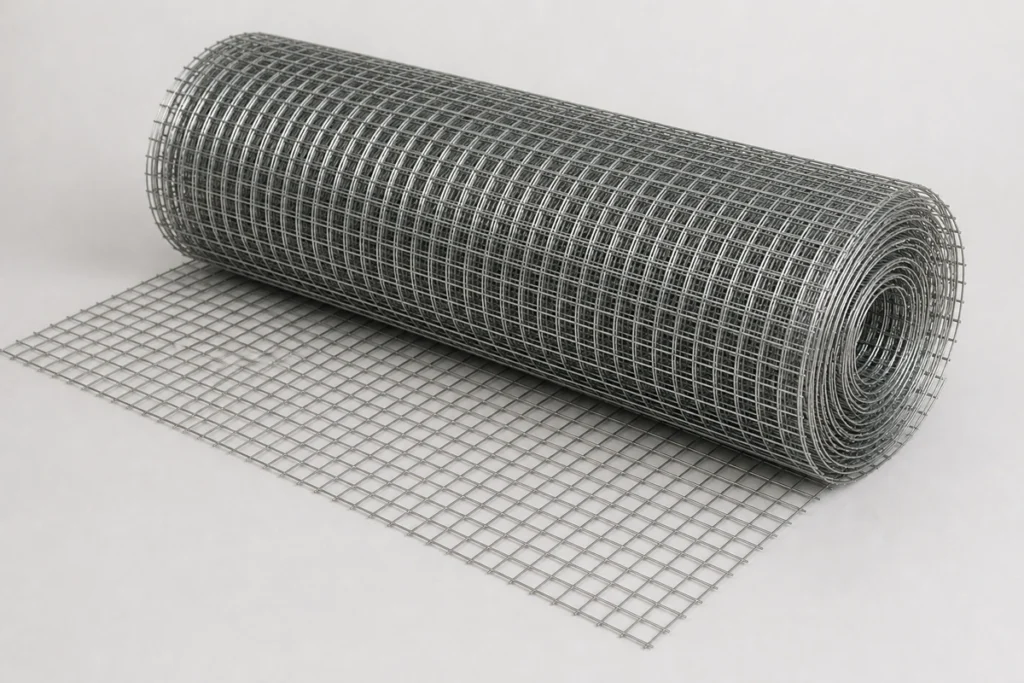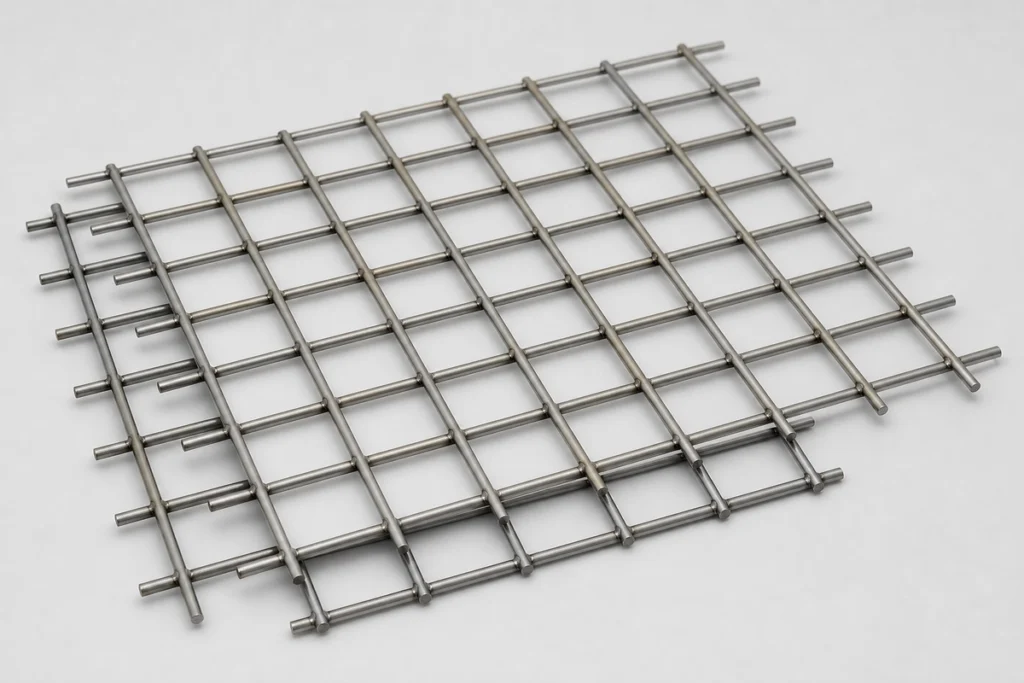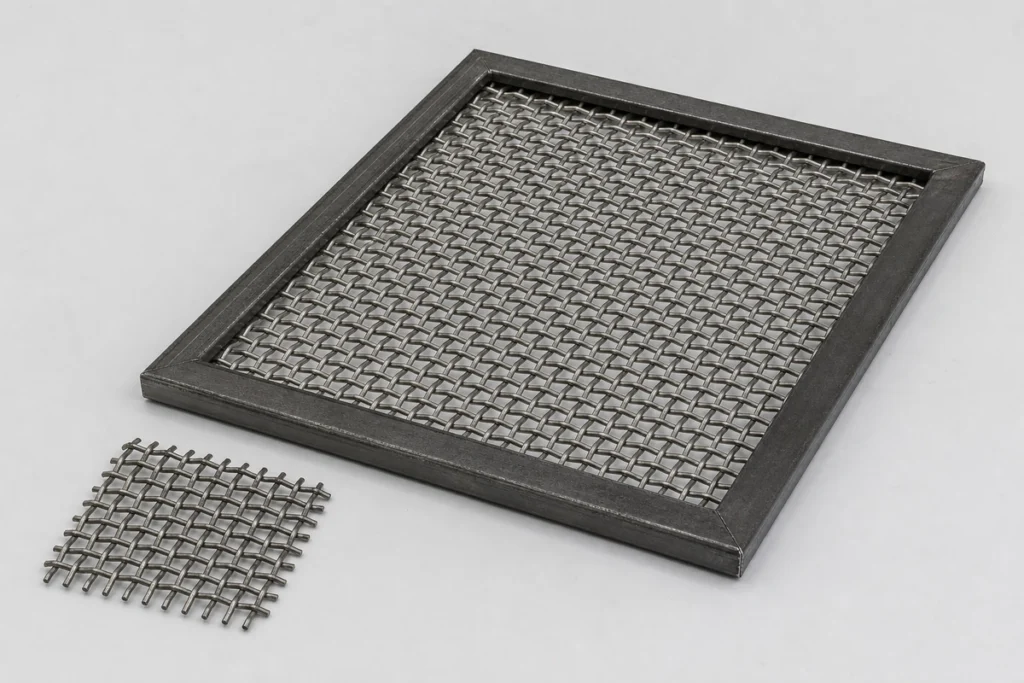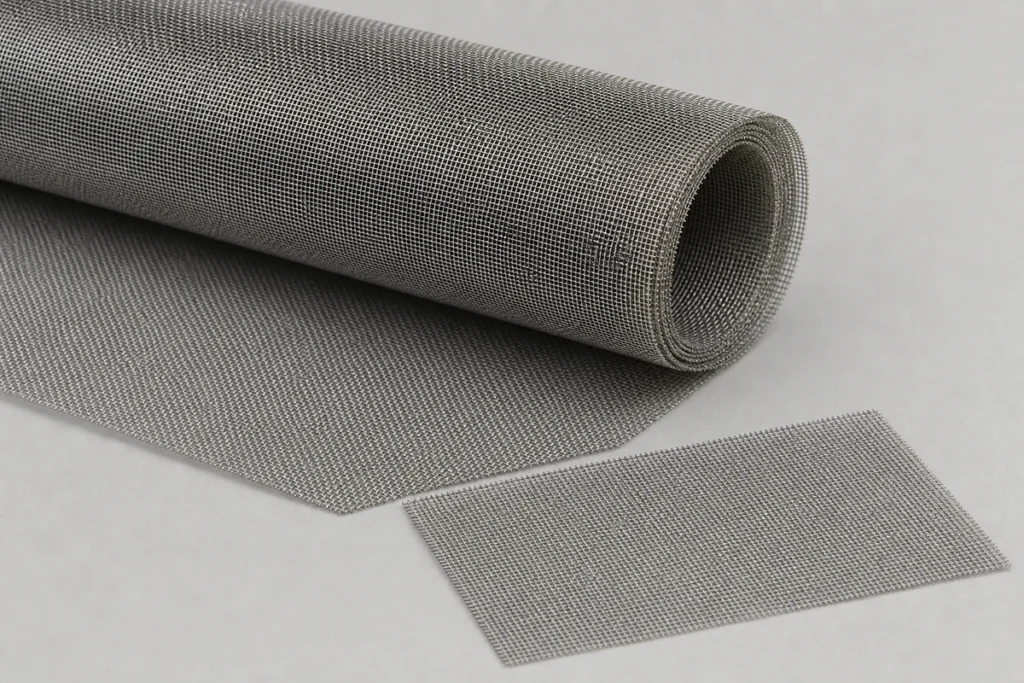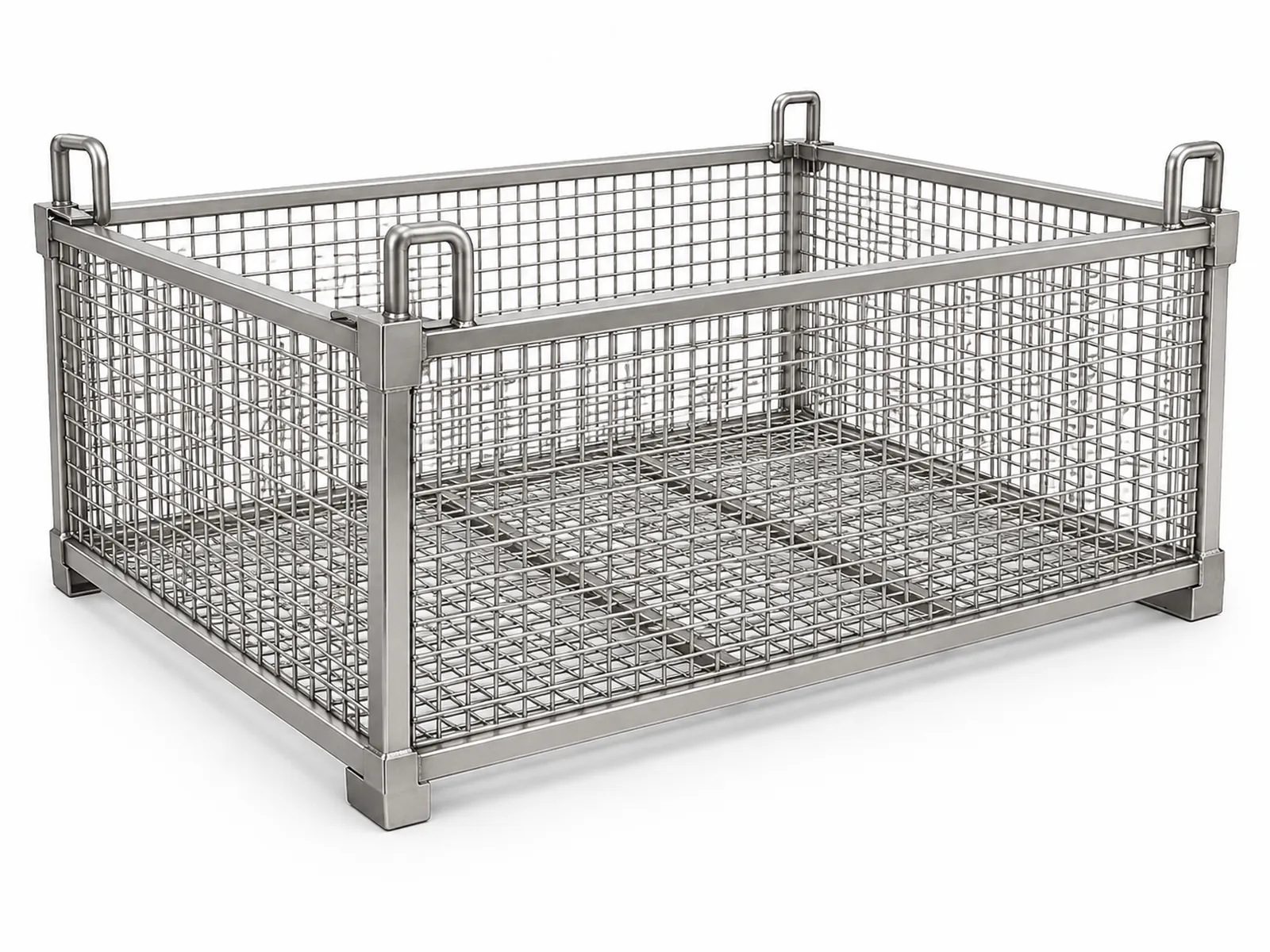
Application guide for Industrial Wire Mesh Basket to Custom to drawing (DIN 1/1 tray grid). The core duty of the type is holding machined, stamped and cast parts through washing, degreasing, heat treatment, dip coating and storage in welded wire or expanded metal baskets built to the line. The typical industries, the how-to-specify checklist, handling practice and the exclusion cases are set out below.
Typical Applications for Industrial Wire Mesh Basket
Where Industrial Wire Mesh Basket is specified and bought:
- Automotive & machining: parts-washing and degreasing baskets that fit washer chambers.
- Heat treatment shops: baskets for hardening, carburizing and annealing furnaces.
- Surface finishing: pickling, passivation, dip coating and plating baskets.
- Warehousing & logistics: stackable wire mesh baskets for small parts.
How to Specify Industrial Wire Mesh Basket for Your Application
- Size & load: Give inner dimensions, stacking height and maximum payload at operating temperature.
- Mesh & wire: Opening smaller than the smallest part; heavier wire and frame rods for furnace work.
- Alloy: SS304 for washing to 800 °C; 310S or Inconel 600 for furnaces above 900 °C.
- Standard: Quote Custom to drawing (DIN 1/1 tray grid) and the size designation from the table on the product page, plus any value you changed in the technical drawing.
Handling & Installation Practice
- Load heat-treat baskets evenly and below the rated hot load; strength falls sharply with temperature.
- Inspect welds and corners regularly — cracked joints release parts into the washer or quench tank.
Common Selection Mistakes with Industrial Wire Mesh Basket
- Choosing a mesh opening larger than small fasteners or pins, which fall through.
- Running SS304 baskets above 900 °C, where they scale and distort quickly.
Where Industrial Wire Mesh Basket Is Not the Right Choice
Not a medical sterilization basket — those need electropolished DIN-size trays.