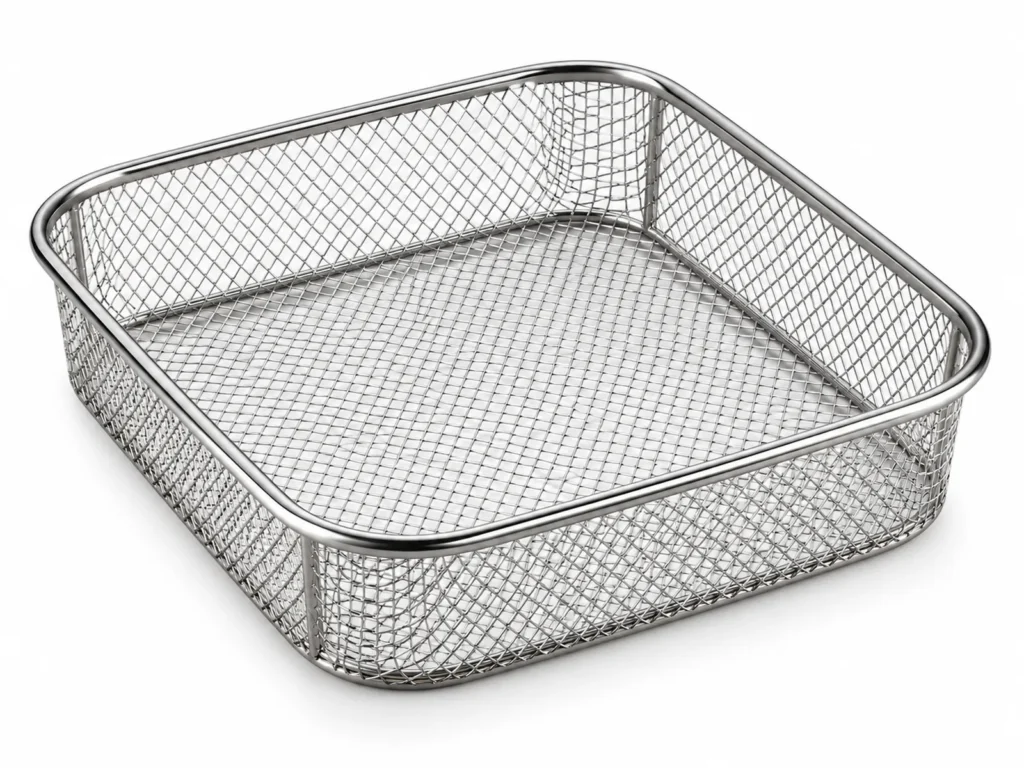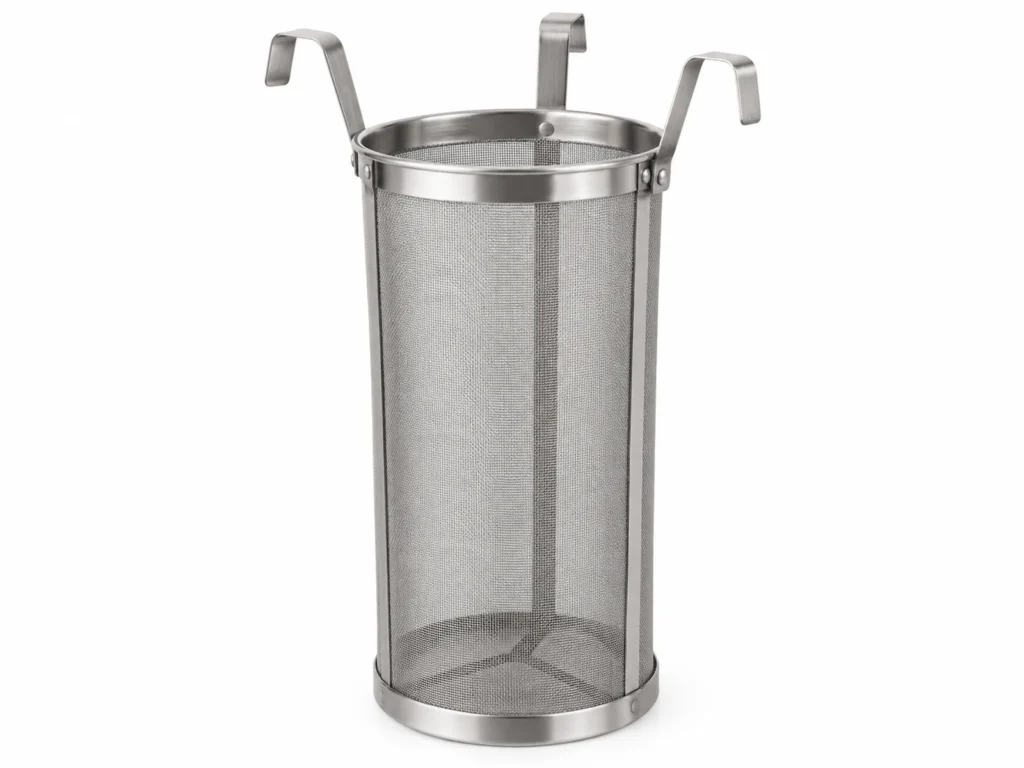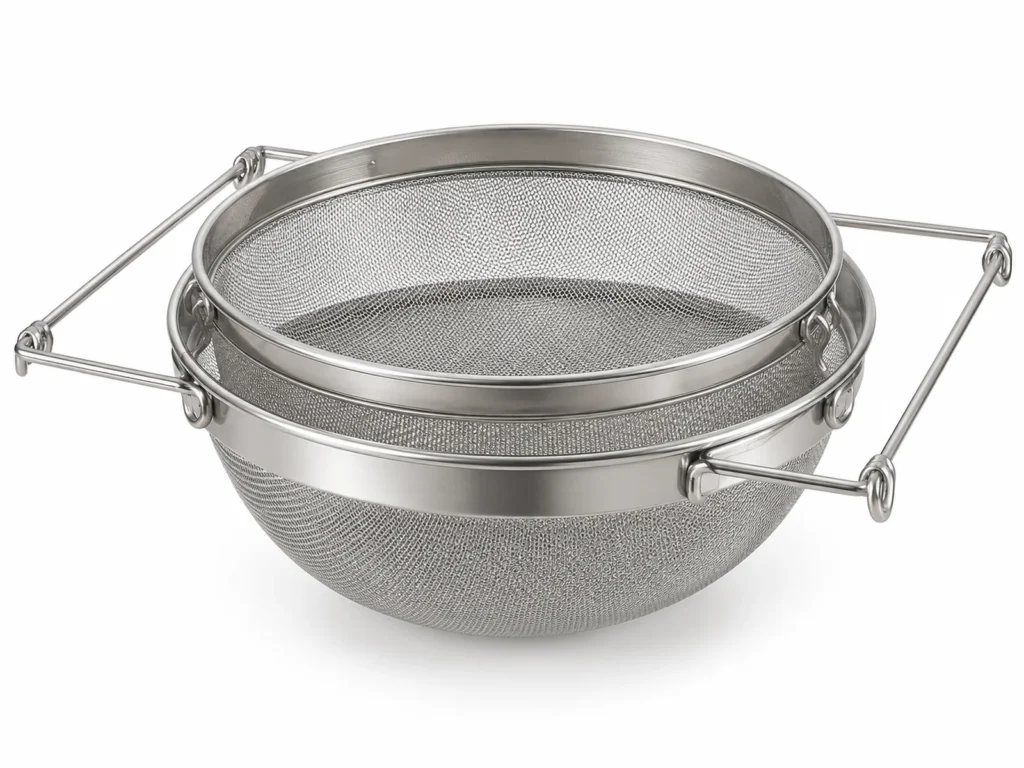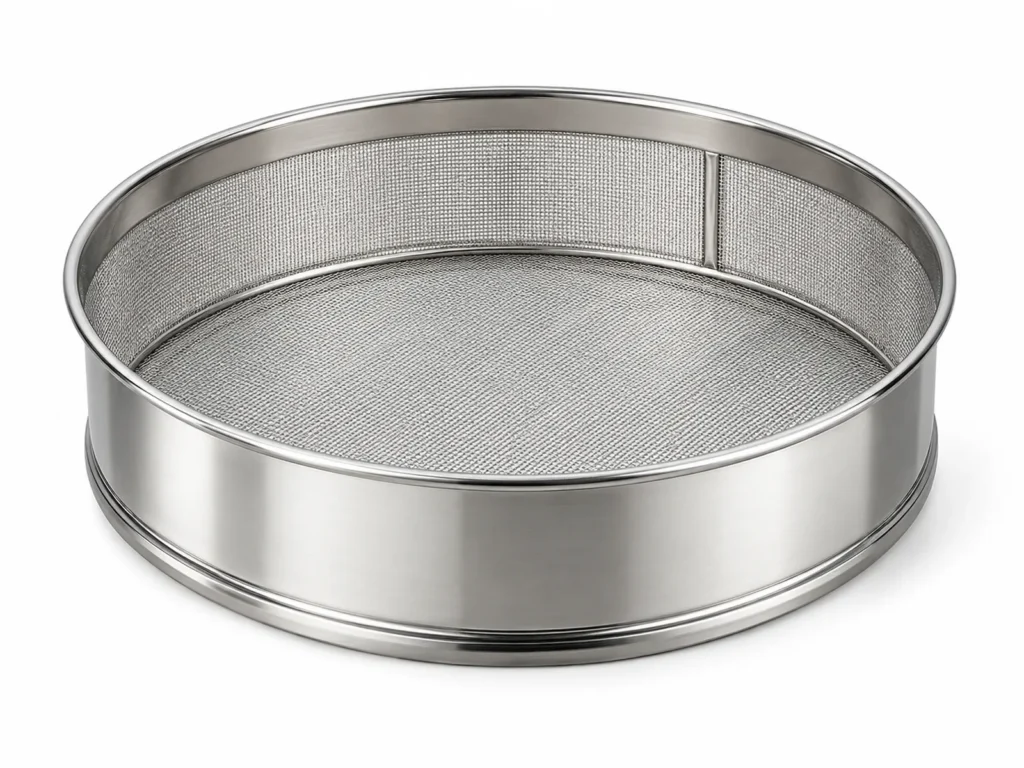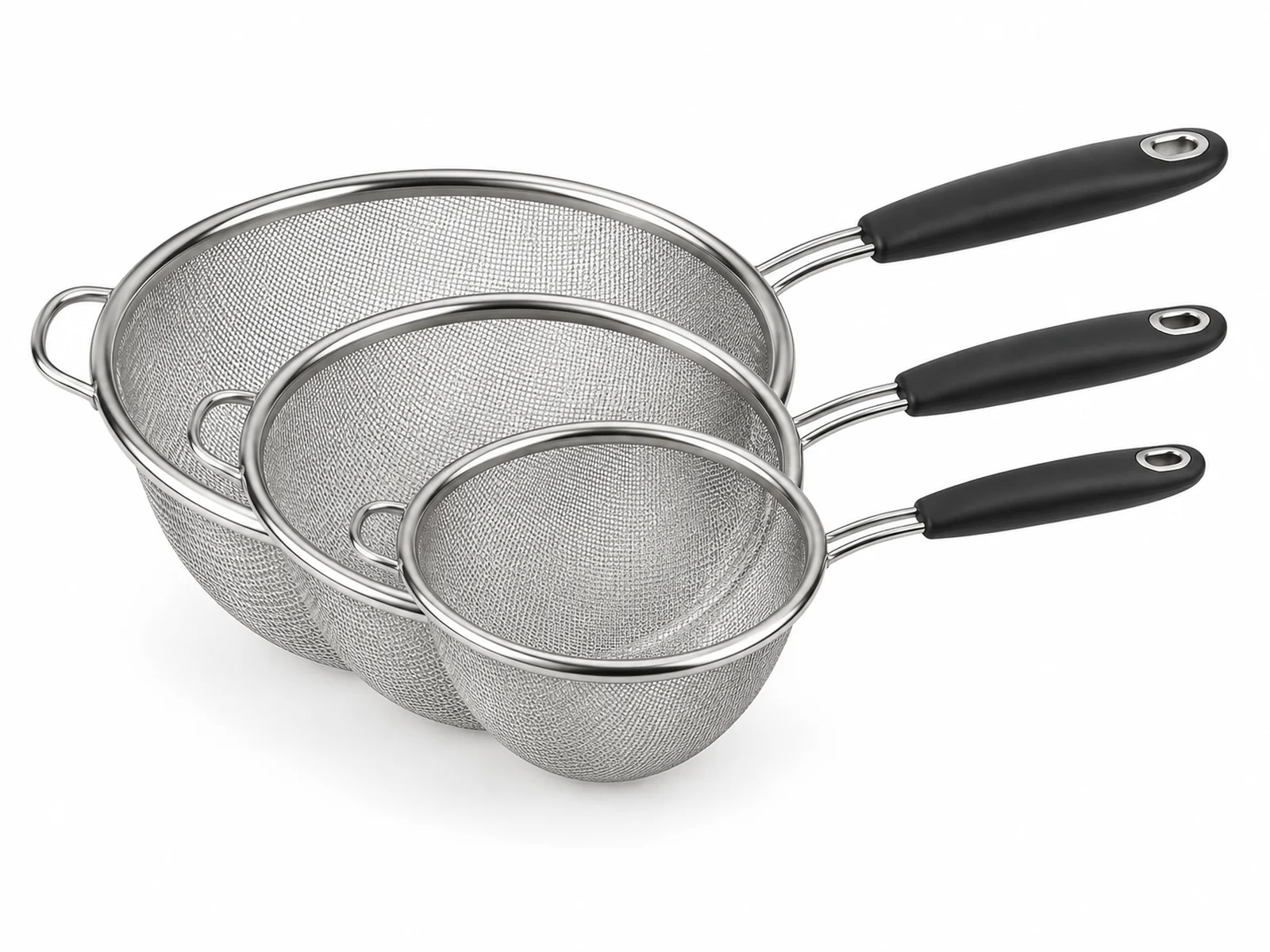
Fine Mesh Kitchen Sieve & Strainer is selected when an assembly or process calls for rinsing grains, draining small batches, dusting and pressing sauces through a hand-held woven stainless bowl or conical chinois. This application guide to the FDA 21 CFR / EU 1935/2004 food contact type covers concrete end-uses, the specification checklist, correct installation, and where an alternative mesh or filter medium performs better.
Typical Applications for Fine Mesh Kitchen Sieve & Strainer
Where Fine Mesh Kitchen Sieve & Strainer is specified and bought:
- Cookware brands: nested sets of three sieves for retail.
- Restaurant kitchens: chinois for stocks, consommé and silky sauces.
- Bakeries & pastry kitchens: sifting and dusting small quantities.
- Catering: rinsing rice, quinoa and pulses in bulk.
How to Specify Fine Mesh Kitchen Sieve & Strainer for Your Application
- Diameter: 8 cm for tea and dusting, 14 cm for general prep, 20 cm for draining and stock.
- Mesh: 40-mesh for rinsing grains; 60-mesh chinois for custards and purées.
- Handle & ear: Riveted handle plus a pot ear lets the sieve rest across a pan hands-free.
- Standard: Quote FDA 21 CFR / EU 1935/2004 food contact and the size designation from the table on the product page, plus any value you changed in the technical drawing.
Handling & Installation Practice
- Tap the rim against your palm, not the sink edge, to clear the mesh without denting it.
- Back-rinse right after starchy foods; dried starch glues the weave shut.
Common Selection Mistakes with Fine Mesh Kitchen Sieve & Strainer
- Pressing hard with a metal spoon, which stretches the weave and tears it from the rim.
- Choosing 30-mesh for quinoa, which slips straight through.
Where Fine Mesh Kitchen Sieve & Strainer Is Not the Right Choice
Not a colander for large pasta batches or heavy potatoes; the fine weave dents under weight.