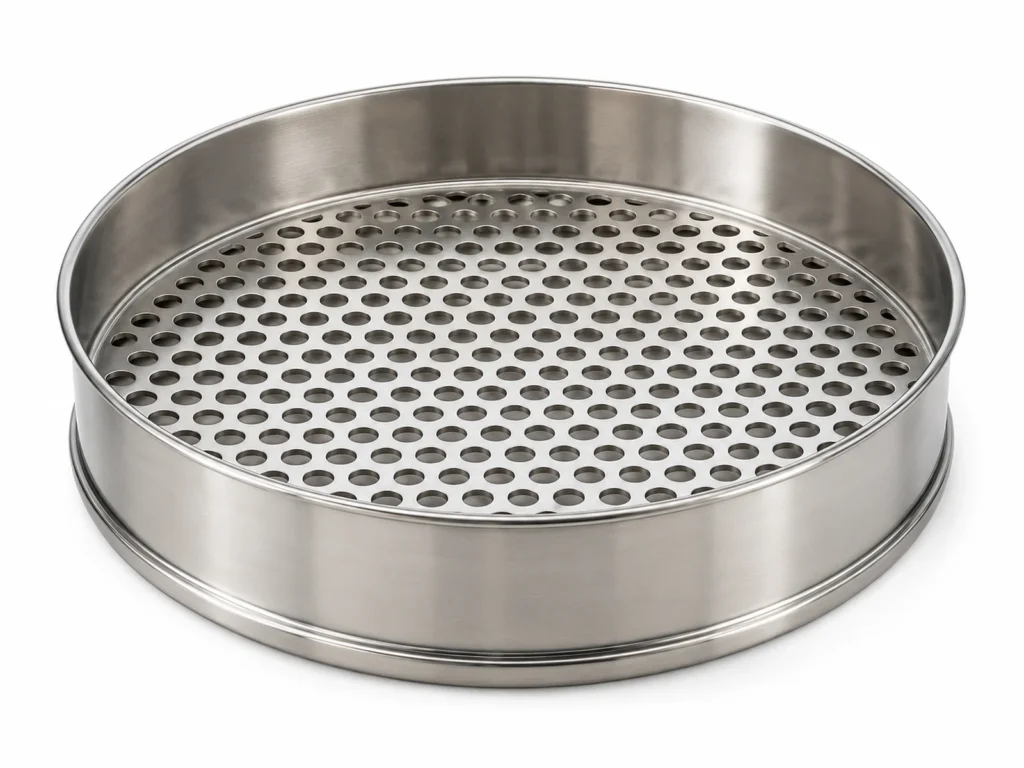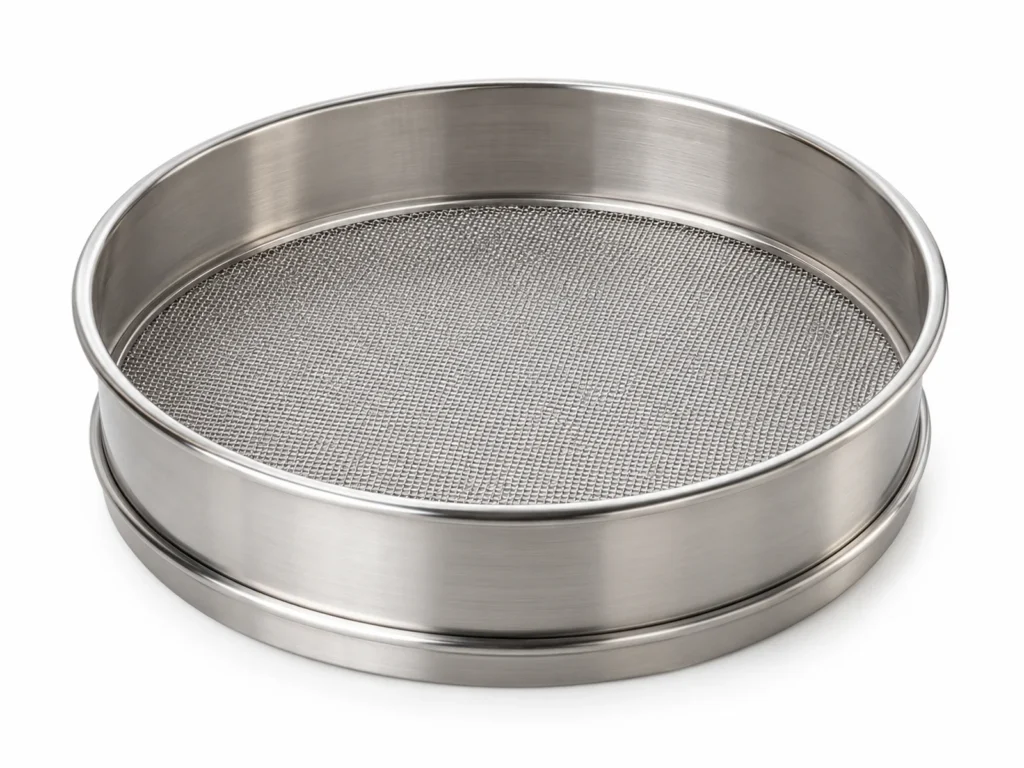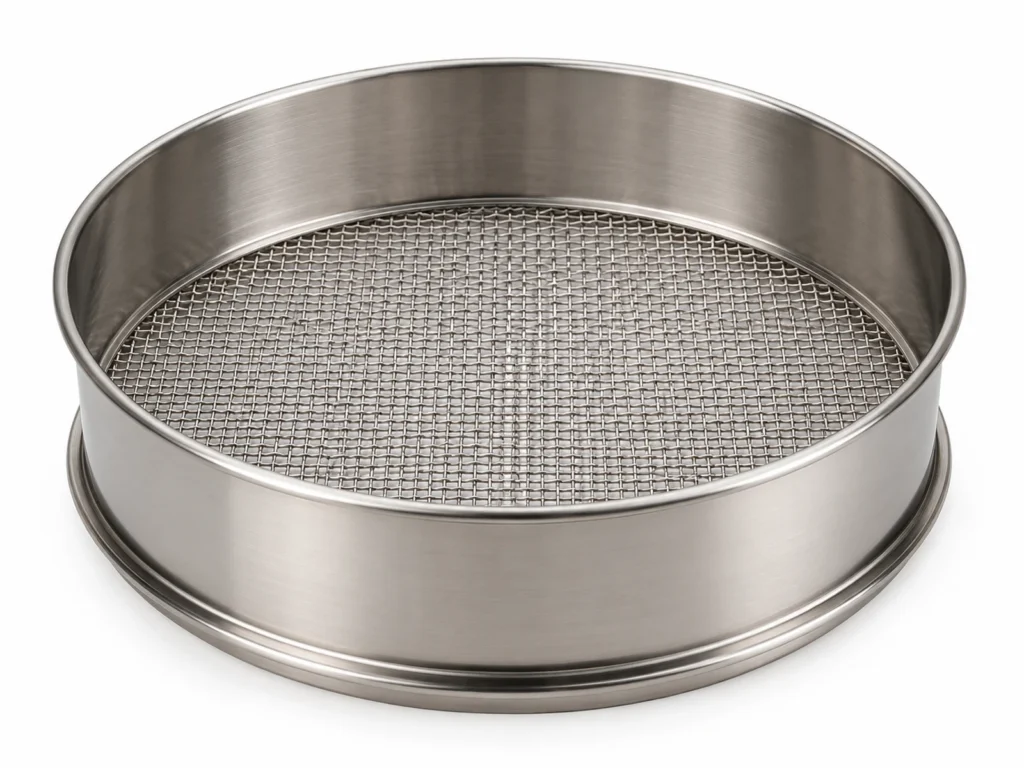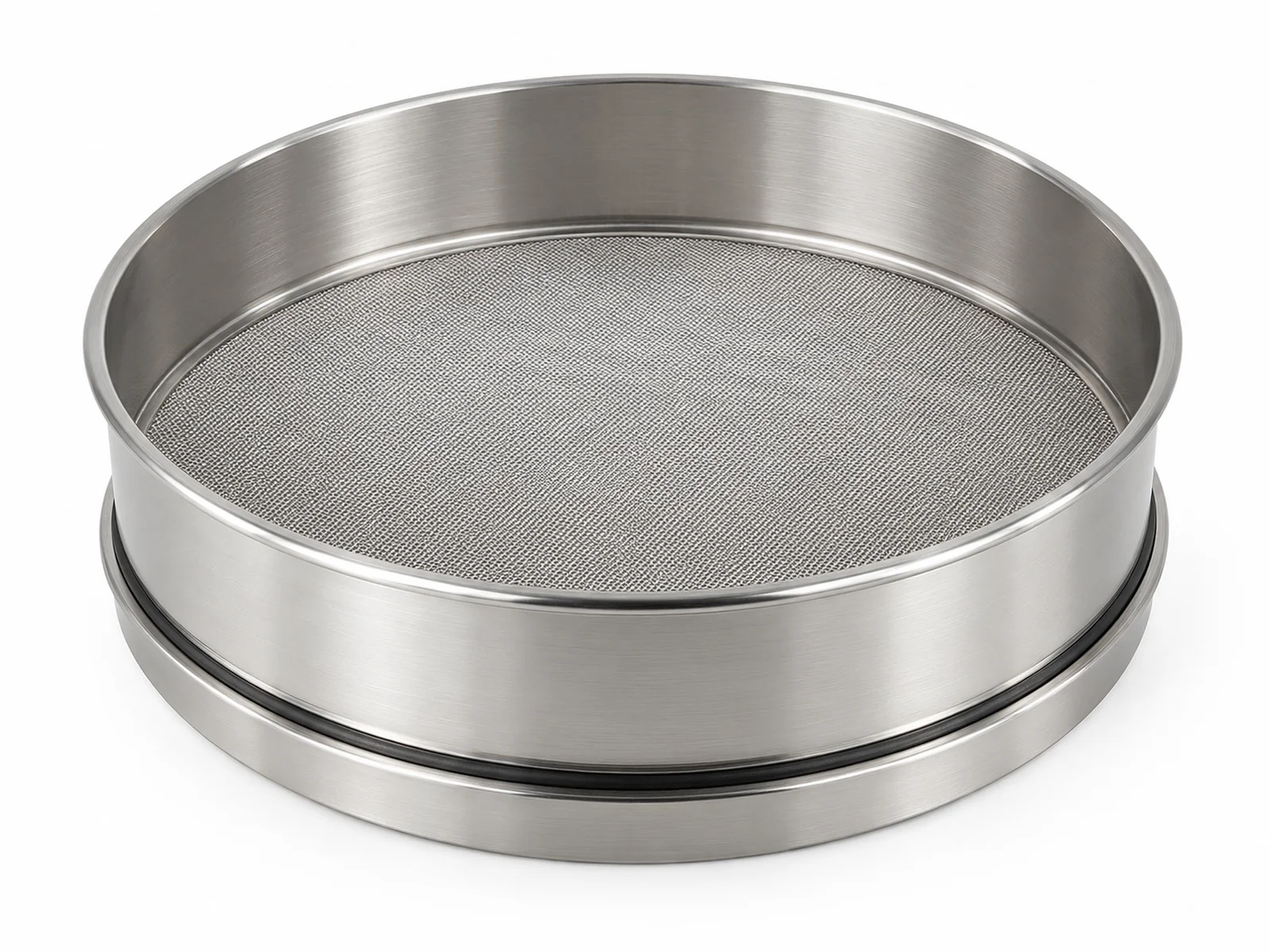
Air Jet Sieve is selected when an assembly or process calls for measuring the fine fraction of powders below 100 µm on air jet sieving machines, where a rotating slit nozzle blows the powder off the sieve while a vacuum pulls the fines through. This application guide to the ISO 3310-1 / DIN 66165 type covers concrete end-uses, the specification checklist, correct installation, and where an alternative mesh or filter medium performs better.
Typical Applications for Air Jet Sieve
Where Air Jet Sieve is specified and bought:
- Cement & building materials: fineness testing to EN 196-6 and ASTM methods.
- Pharmaceutical QC: particle-size checks on APIs and excipients.
- Food powders: flour, starch and milk powder fineness.
- Pigments & toners: oversize checks on fine powders.
How to Specify Air Jet Sieve for Your Application
- Aperture: 20–90 µm cloth to ISO 3310-1.
- Frame: 200 mm frame with the air-jet sealing face that fits the machine.
- Certificate: Inspection or calibration certificate for audited labs.
- Standard: Quote ISO 3310-1 / DIN 66165 and the size designation from the table on the product page, plus any value you changed in the technical drawing.
Handling & Installation Practice
- Weigh samples precisely and run for the time set by the method.
- Clean ultrasonically after use and dry flat.
Common Selection Mistakes with Air Jet Sieve
- Using a standard test sieve frame that does not seal on the air-jet machine.
- Overloading the sieve with sample.
Where Air Jet Sieve Is Not the Right Choice
Not for coarse samples above about 200 µm, where shaker sieving is quicker.