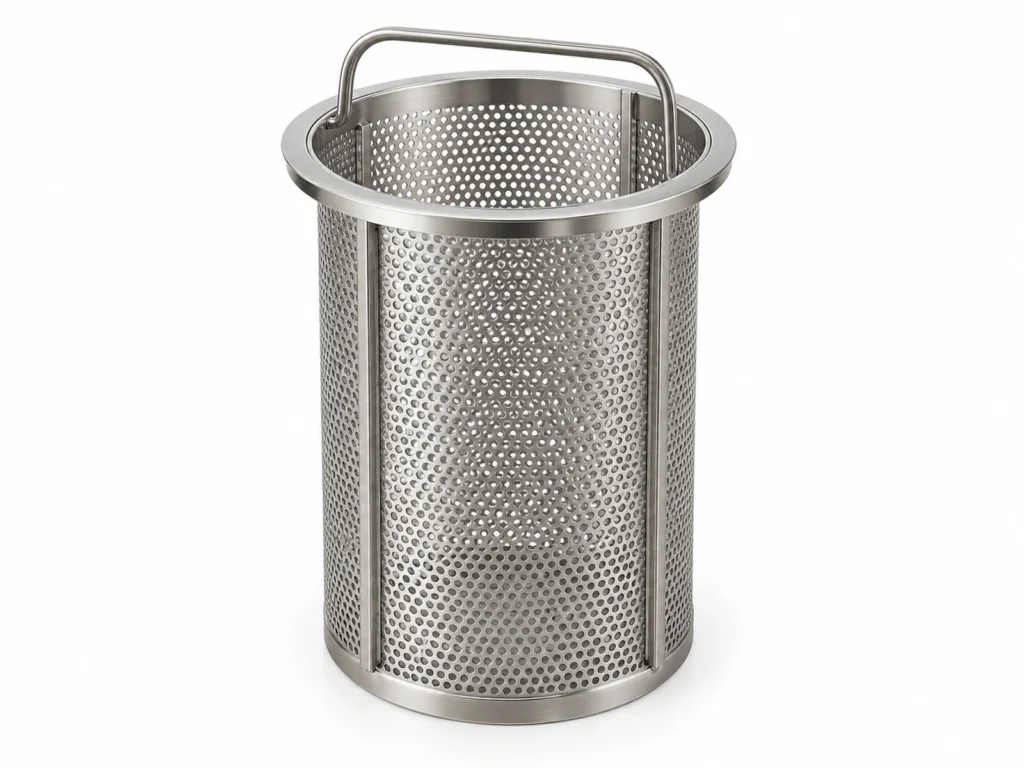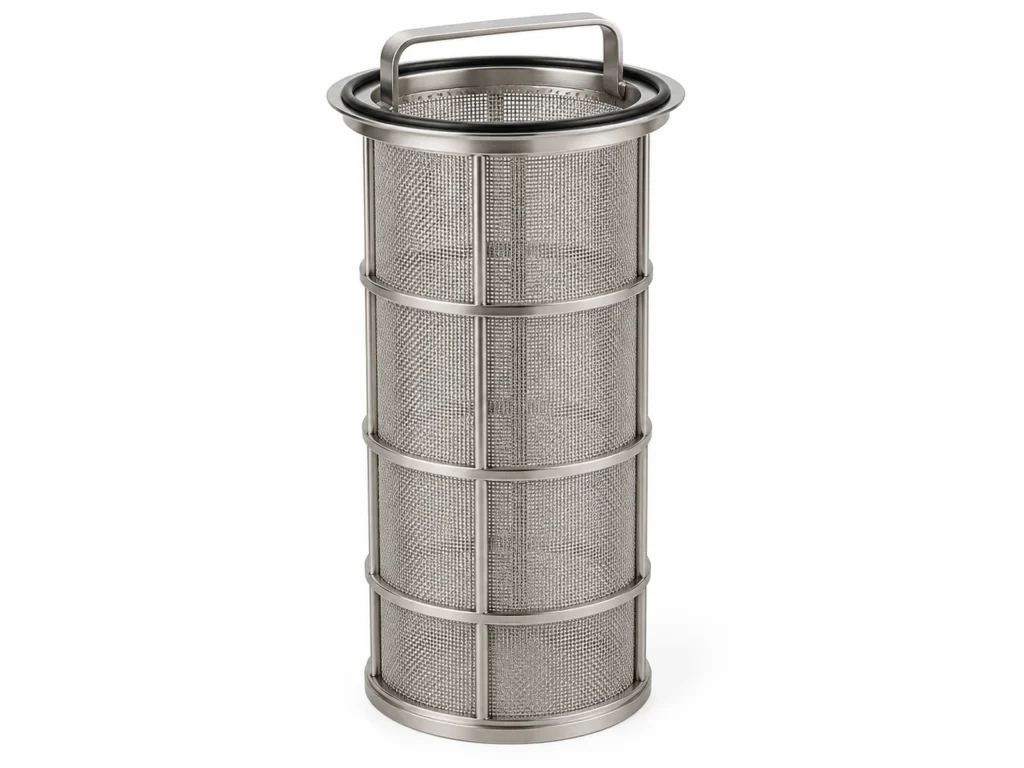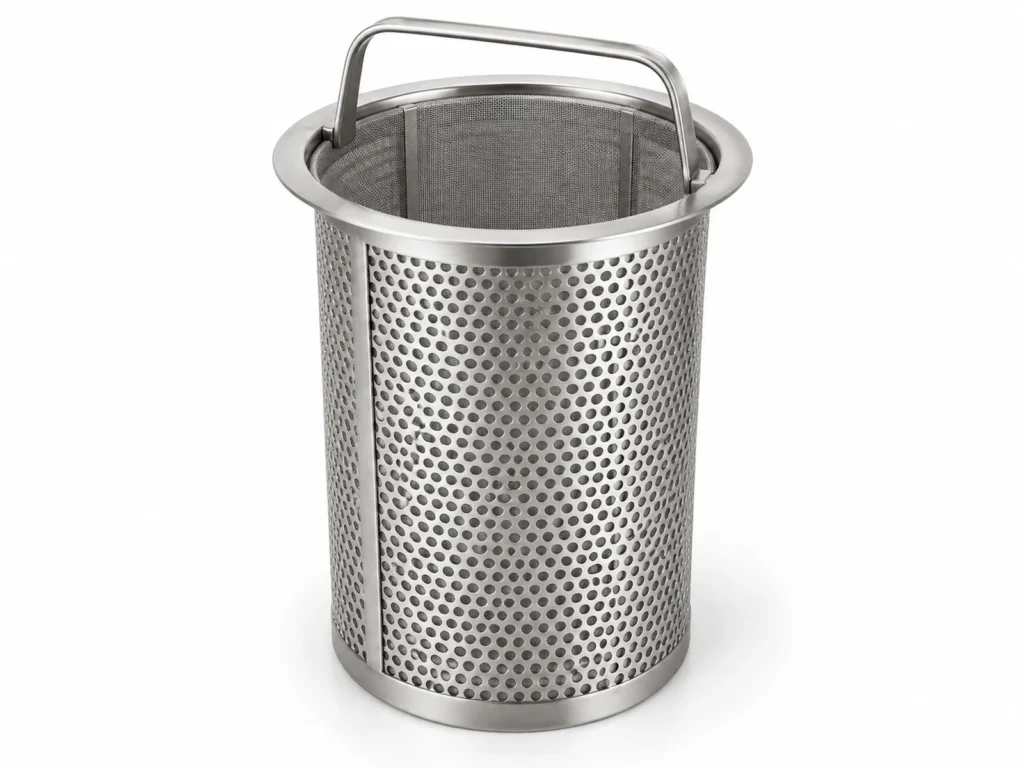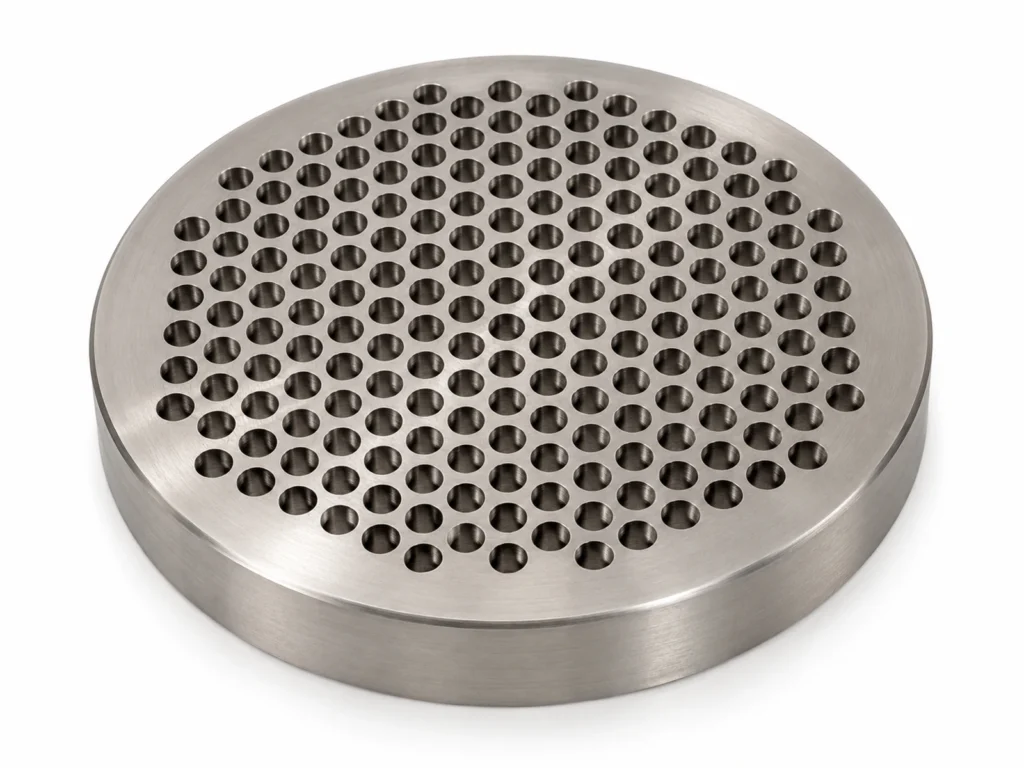
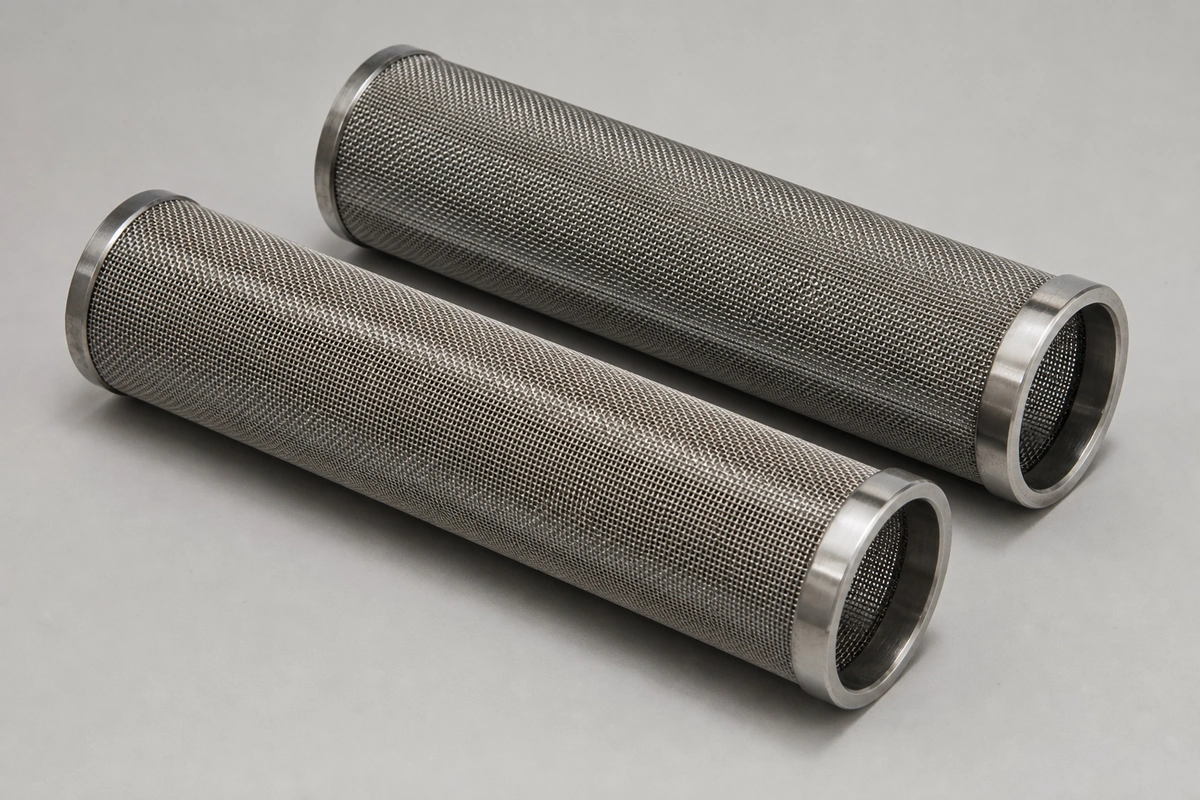
316L Stainless Steel y-strainer screens is stocked to Y-strainer OEM replacement. The alloy provides superior resistance, including chlorides, brines, food CIP and mild acids and is essentially non-magnetic; the practical service limit is approx. +550 °C continuous. Property data, alloy comparison and the specification table follow.
Why Choose 316L Stainless Steel for Y-Strainer Screens
The default filtration and process-industry grade. For y-strainer screens, this matters when superior resistance, including chlorides, brines, food CIP and mild acids is the controlling requirement.
Alloy Properties
| Grade designation | AISI 316L (1.4404) |
|---|---|
| Magnetic response | Essentially non-magnetic |
| Service temperature | approx. +550 °C continuous |
| Corrosion characteristic | Superior resistance, including chlorides, brines, food CIP and mild acids |
Cleaning & Compatibility
Stainless y-strainer screens can be cleaned by backflush, ultrasonic bath, steam and most CIP chemistry. Two cautions: (1) avoid extended contact with hydrochloric acid or hypochlorite sanitizers, which pit even 316; (2) where the mesh contacts carbon steel during fabrication or service, iron pick-up can rust-stain the surface — specify passivation after fabrication.
Comparable Alloys
Below 316L sits 304 (general purpose, lower cost). Above it: duplex 2205 (strength + chloride resistance), 904L and Hastelloy C-276 (hot chlorides, sulfuric), Monel 400 (HF, seawater), titanium (chlorides at minimum weight) for y-strainer screens.
Specifications of Y-Strainer Screens Available in 316L Stainless Steel
| Nominal pipe size | Screen mesh | Material | Style | Reference standard |
|---|---|---|---|---|
| DN15 (1/2 in) | 20-Mesh | SS304 / SS316 | Cylindrical insert | Y-strainer replacement |
| DN25 (1 in) | 20-Mesh / 40-Mesh | SS304 / SS316 | Cylindrical insert | Y-strainer replacement |
| DN50 (2 in) | 20-Mesh / 40-Mesh | SS304 / SS316 | Cylindrical insert | Y-strainer replacement |
| DN80 (3 in) | 20-Mesh / 40-Mesh | SS304 / SS316 | Cylindrical insert | Y-strainer replacement |
| DN100 (4 in) | 10-Mesh to 40-Mesh | SS304 / SS316 | Cylindrical insert | Y-strainer replacement |
Where 316L Stainless Steel Y-Strainer Screens Is Used
- HVAC & water: chiller, boiler and condenser Y-strainers.
- Steam systems: steam trap and control valve protection.
- Process plants: chemical and solvent lines.
- Fuel & oil: burner and transfer pump lines.
Ordering Y-Strainer Screens in 316L Stainless Steel
- Body size & make: Screen OD and length must match the Y-strainer body exactly.
- Perforation & mesh: Perforated screen, with a mesh liner (20–100 mesh) for finer straining.
- Material: SS304 or SS316 for most fluids; Monel for sea water.
Mistakes to Avoid with Y-Strainer Screens
- Ordering a screen by pipe size alone when different body makes vary.
- Fitting too fine a liner on steam lines, which blinds with scale.