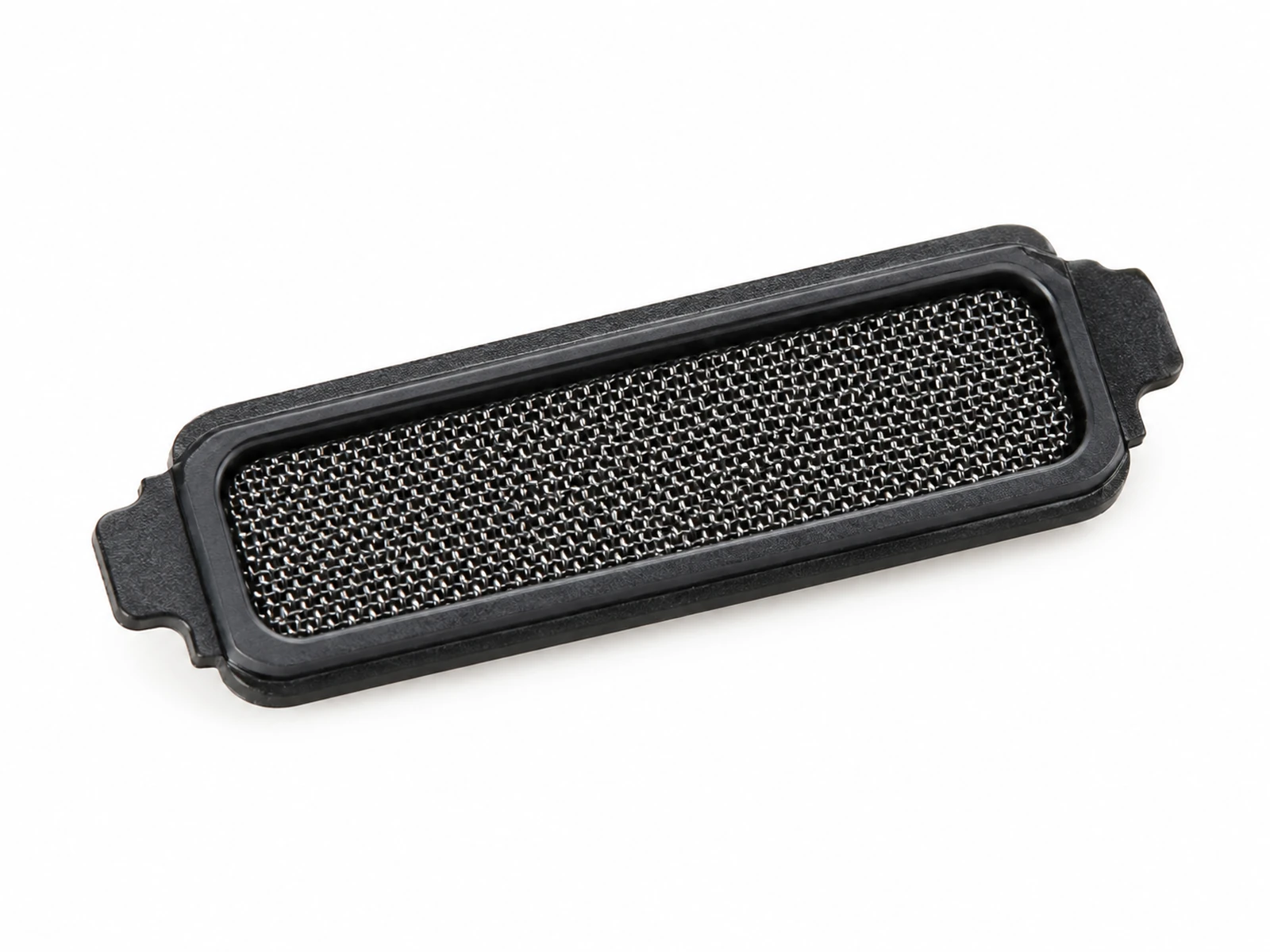
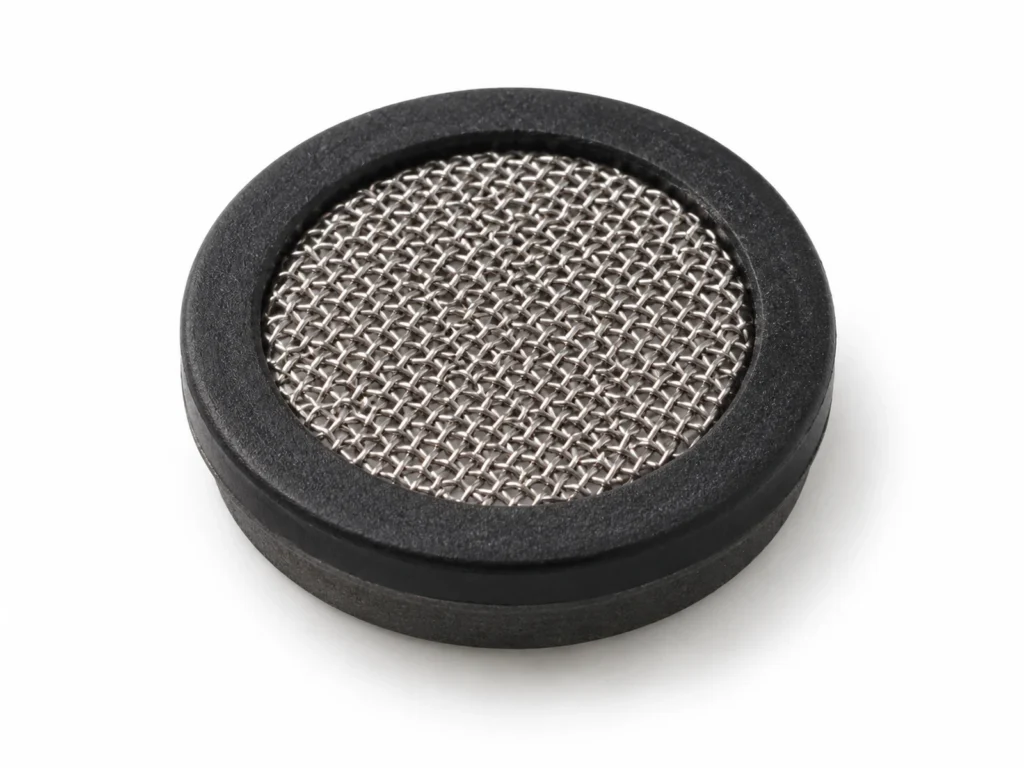
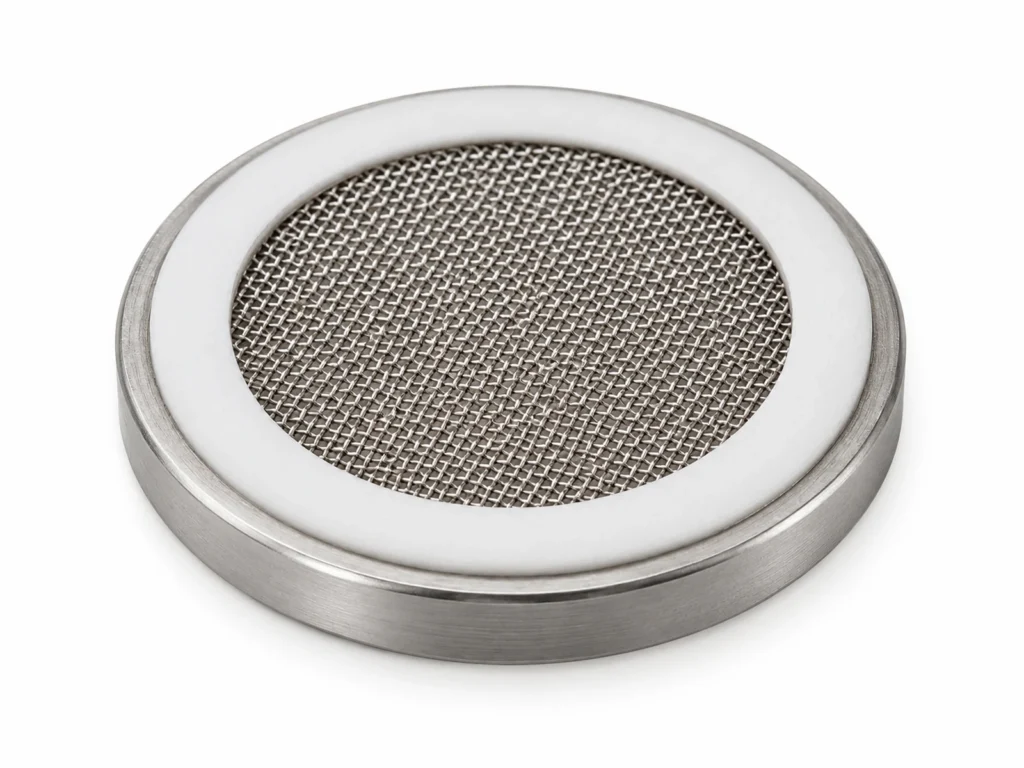
Smartphone Speaker & Receiver Dust Mesh in 316L Stainless Steel (AISI 316L (1.4404)) is used for sealing smartphone receiver and loudspeaker openings against dust and water while passing sound with a controlled acoustic resistance. The alloy gives superior resistance, including chlorides, brines, food CIP and mild acids and is essentially non-magnetic, with a practical service limit of approx. +550 °C continuous.
Alloy Properties
| Grade designation | AISI 316L (1.4404) |
|---|
| Magnetic response | Essentially non-magnetic |
|---|
| Service temperature | approx. +550 °C continuous |
|---|
| Corrosion characteristic | Superior resistance, including chlorides, brines, food CIP and mild acids |
|---|
Specifications of Smartphone Speaker & Receiver Dust Mesh Available in 316L Stainless Steel
| Part | Length (mm) | Width (mm) | Thickness (mm) | Hole diameter (mm) | Open area (%) | Acoustic resistance (MKS Rayl) |
|---|
| Receiver slot | 12.0 | 1.6 | 0.05 | 0.035 | 18 | 160 |
| Bottom speaker | 16.0 | 3.0 | 0.05 | 0.045 | 22 | 120 |
| Stereo speaker | 20.0 | 2.4 | 0.06 | 0.045 | 22 | 120 |
| Tablet speaker | 28.0 | 4.0 | 0.08 | 0.060 | 28 | 80 |
Where 316L Stainless Steel Smartphone Speaker & Receiver Dust Mesh Is Used
- Smartphone OEMs: die-cut meshes behind receiver slots and bottom speaker grilles.
- Tablet & laptop makers: larger speaker meshes tuned for bass response.
- Repair parts suppliers: adhesive-backed replacement meshes for screen and housing repairs.
- Rugged device makers: IP68 designs combining mesh with a hydrophobic membrane.
Ordering Smartphone Speaker & Receiver Dust Mesh in 316L Stainless Steel
- Acoustic resistance: Specify MKS Rayl, not only hole size; it sets how much the mesh damps high frequencies.
- Die-cut shape: Length, width and corner radius must clear the speaker port with a 0.3–0.5 mm adhesive land.
- Adhesive: Double-sided pressure-sensitive adhesive rated for drop and heat-cycle testing.
Mistakes to Avoid with Smartphone Speaker & Receiver Dust Mesh
- Choosing the finest mesh available, which muffles the speaker and fails acoustic tuning.
- Omitting the adhesive land, so glue squeezes into the open area and changes resistance.