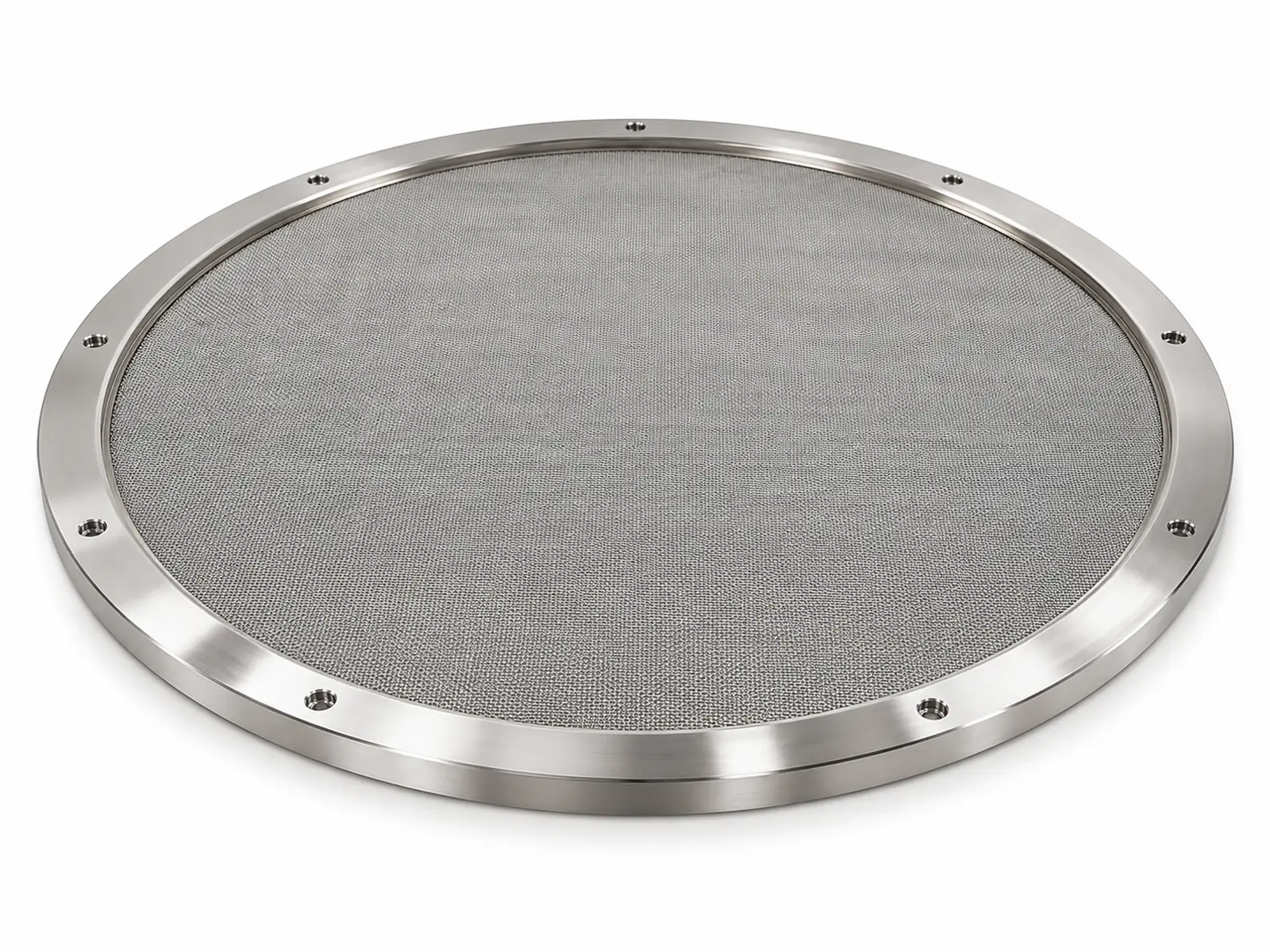
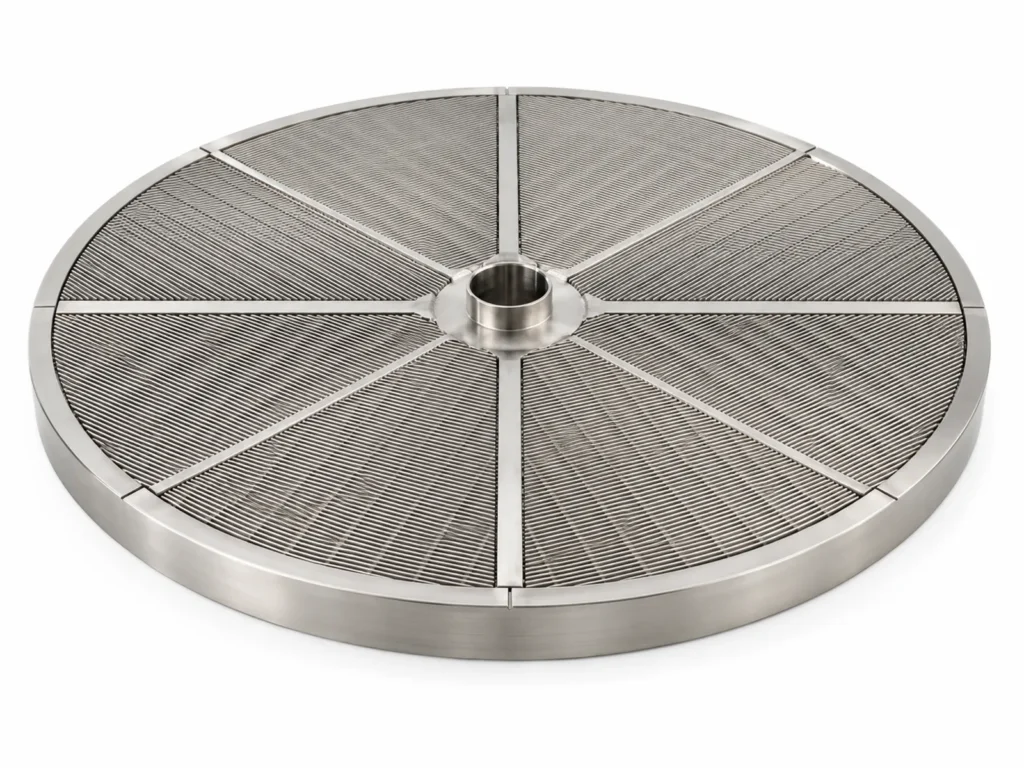
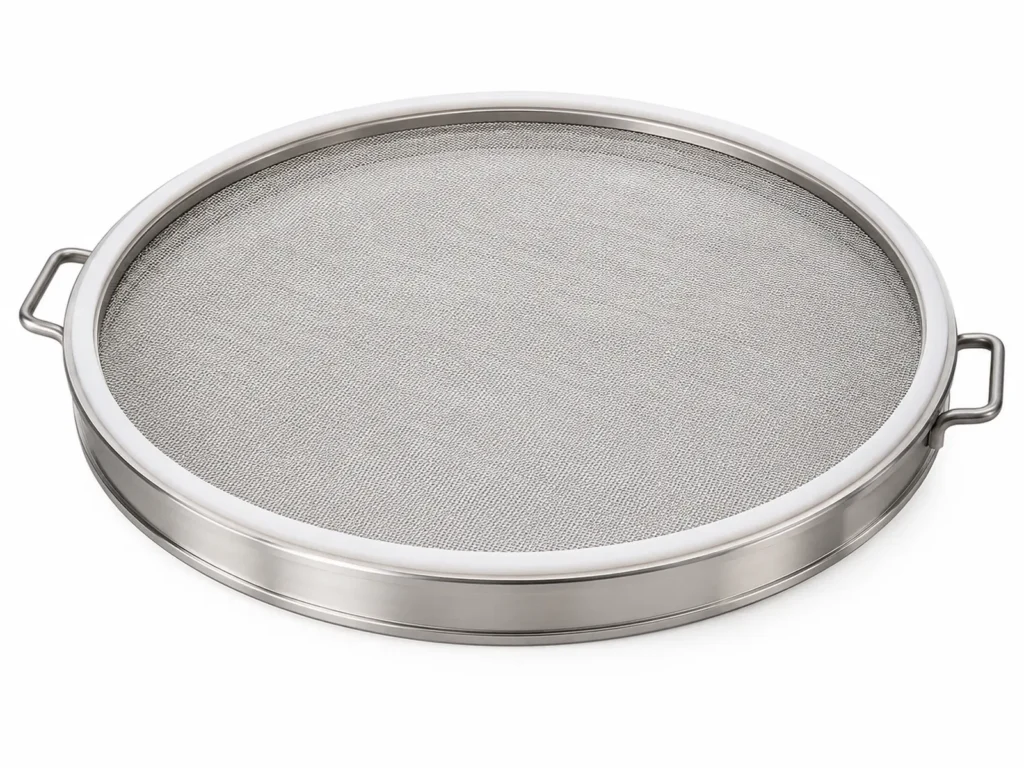
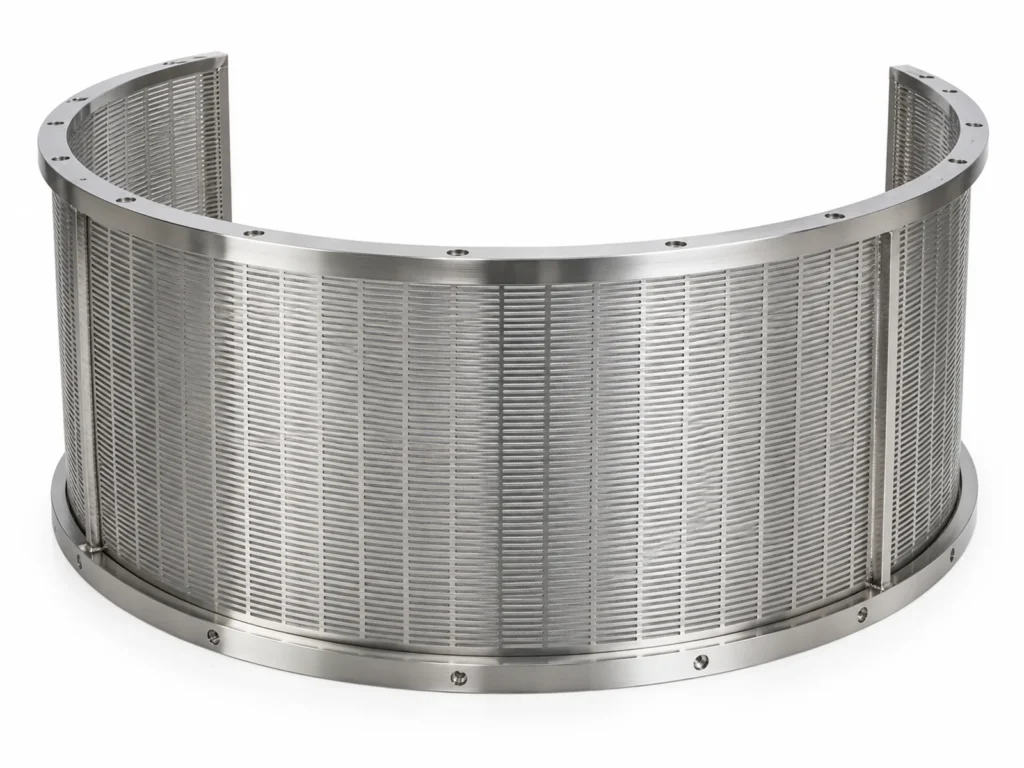
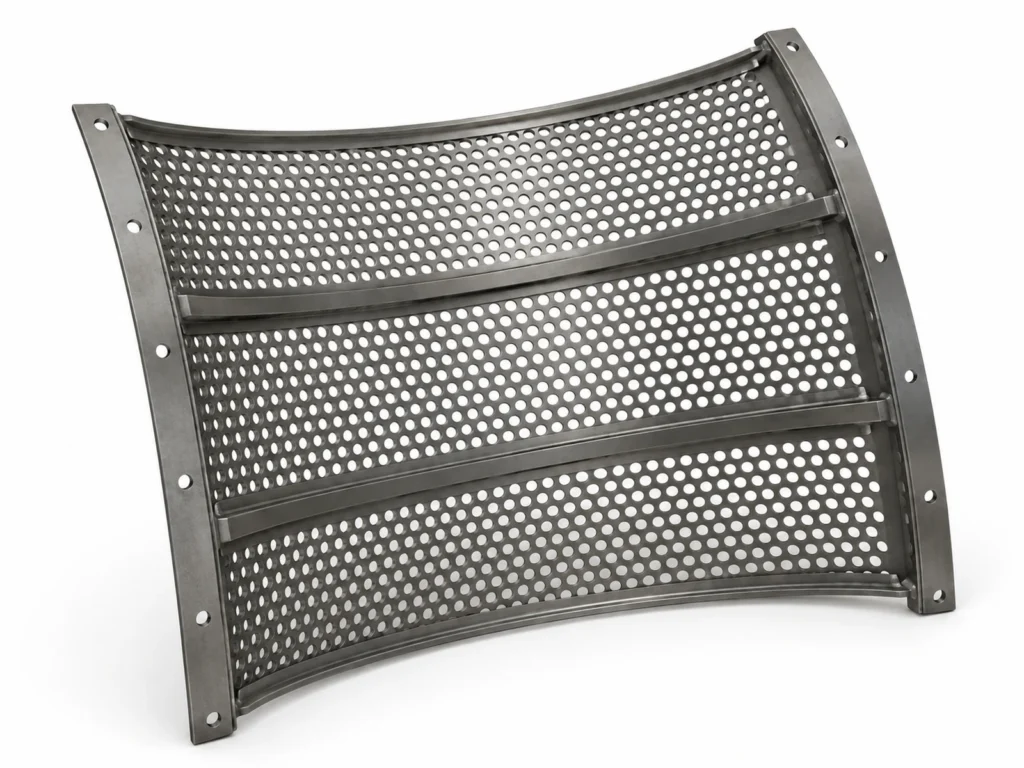
Fluid Bed Dryer Filter Screen in 316L Stainless Steel (AISI 316L (1.4404)) is used for holding product in fluid bed dryers and granulators while drying air passes up through a fine dutch-weave or sintered stainless screen. The alloy gives superior resistance, including chlorides, brines, food CIP and mild acids and is essentially non-magnetic, with a practical service limit of approx. +550 °C continuous.
Alloy Properties
| Grade designation | AISI 316L (1.4404) |
|---|
| Magnetic response | Essentially non-magnetic |
|---|
| Service temperature | approx. +550 °C continuous |
|---|
| Corrosion characteristic | Superior resistance, including chlorides, brines, food CIP and mild acids |
|---|
Specifications of Fluid Bed Dryer Filter Screen Available in 316L Stainless Steel
| Size | Diameter (mm) | Micron rating (u00b5m) | Media | Frame |
|---|
| FBD 60 kg | 700 | 40 | Dutch weave SS316L | Gasketed ring |
| FBD 120 kg | 1000 | 40 | Dutch weave SS316L | Gasketed ring |
| FBD 300 kg | 1400 | 60 | 5-layer sintered SS316L | Welded ring |
Where 316L Stainless Steel Fluid Bed Dryer Filter Screen Is Used
- Pharmaceutical granulation: fluid bed dryer and granulator product bowls.
- Food powders: instant coffee, milk and flavor agglomeration.
- Chemicals: drying of crystalline products.
- Agrochemicals: granule coating and drying.
Ordering Fluid Bed Dryer Filter Screen in 316L Stainless Steel
- Bowl size: Diameter matched to the dryer model and batch size.
- Micron rating: 25–100 µm so fines stay in the bed while air flows freely.
- Construction: Dutch weave on a support grid, or rigid five-layer sintered mesh welded into a ring.
Mistakes to Avoid with Fluid Bed Dryer Filter Screen
- Using too coarse a screen, losing fines into the plenum.
- Flexible woven screens without support, which sag and crack at the ring.