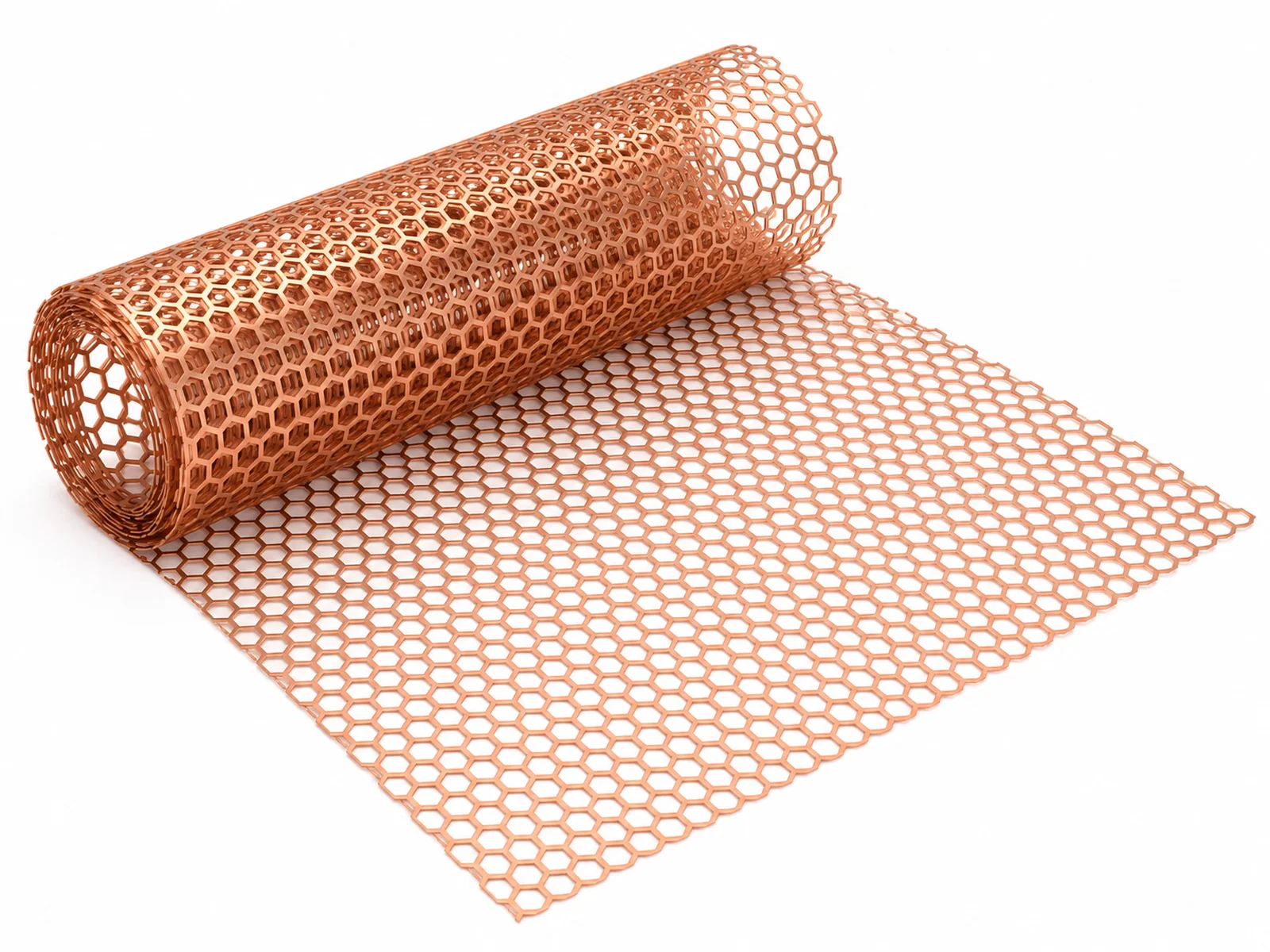
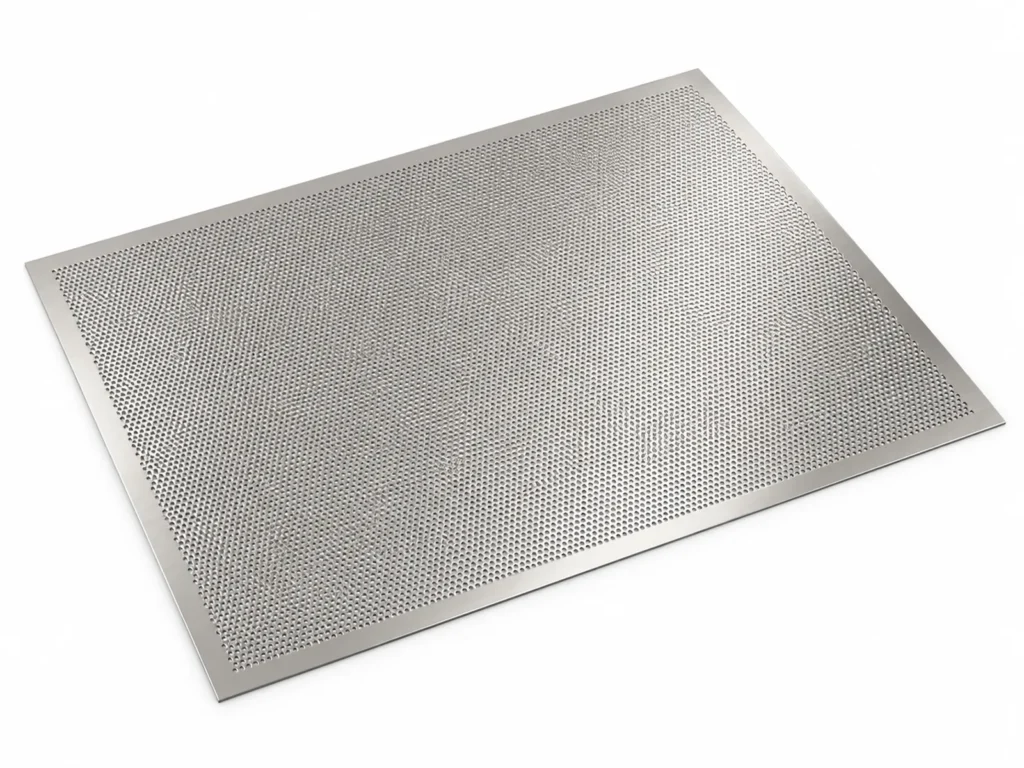
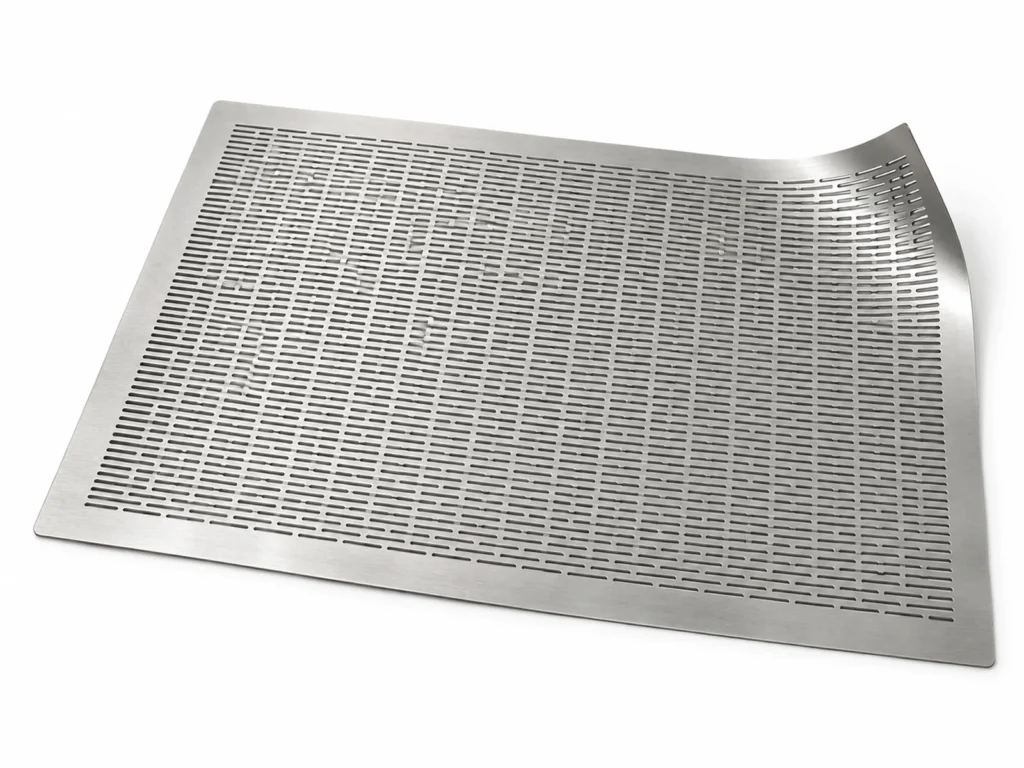
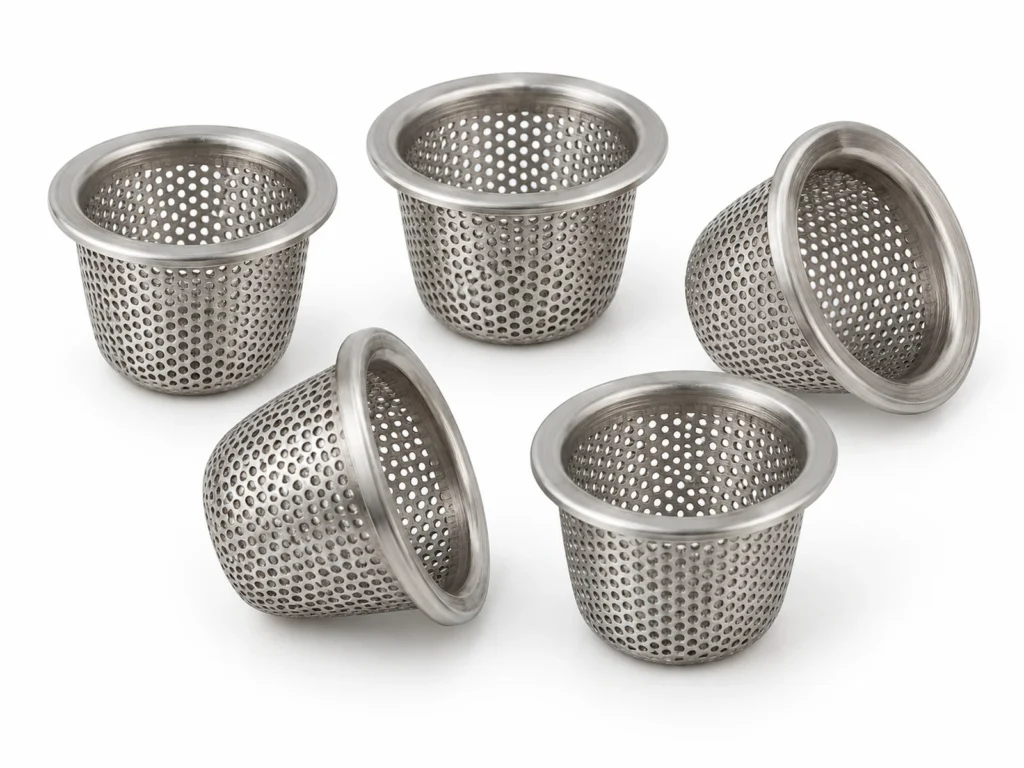
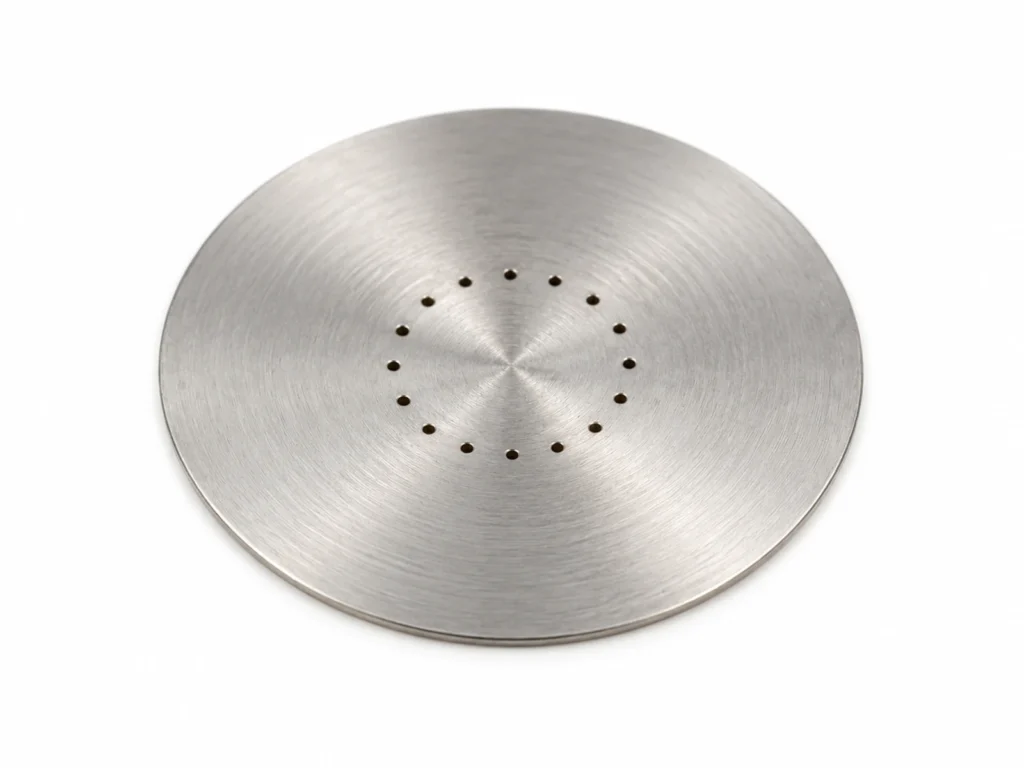
Etched Hexagonal Shielding Mesh in 304 Stainless Steel (AISI 304 (1.4301)) is used for shielding electronics from EMI and protecting vents and windows with ultra-thin etched hexagonal mesh that keeps 80–90 % open area for airflow and visibility. The alloy gives good general corrosion resistance in atmosphere and fresh water and is essentially non-magnetic (annealed), with a practical service limit of approx. +450 °C continuous.
Alloy Properties
| Grade designation | AISI 304 (1.4301) |
|---|
| Magnetic response | Essentially non-magnetic (annealed) |
|---|
| Service temperature | approx. +450 °C continuous |
|---|
| Corrosion characteristic | Good general corrosion resistance in atmosphere and fresh water |
|---|
Specifications of Etched Hexagonal Shielding Mesh Available in 304 Stainless Steel
| Size | Hole diameter (mm) | Pitch (mm) | Thickness (mm) | Open area (%) | Material |
|---|
| Hex 0.5 / bar 0.05 | 0.50 | 0.55 | 0.05 | 83 | Copper |
| Hex 1.0 / bar 0.08 | 1.00 | 1.08 | 0.08 | 86 | Nickel silver |
| Hex 2.0 / bar 0.10 | 2.00 | 2.10 | 0.10 | 90 | SS304 |
Where 304 Stainless Steel Etched Hexagonal Shielding Mesh Is Used
- Electronics enclosures: EMI-shielded ventilation and display windows.
- Aerospace & defense: lightweight shielded apertures.
- Medical imaging: shielded viewing windows.
- Consumer devices: shielded speaker and vent openings.
Ordering Etched Hexagonal Shielding Mesh in 304 Stainless Steel
- Cell size & bar width: Smaller cells shield higher frequencies; thin bars keep open area high.
- Material: Copper or nickel silver for conductivity; SS304 for strength.
- Plating: Tin or nickel plating for solderability and corrosion protection.
Mistakes to Avoid with Etched Hexagonal Shielding Mesh
- Leaving unbonded edges that leak RF.
- Choosing cells too large for the frequency.