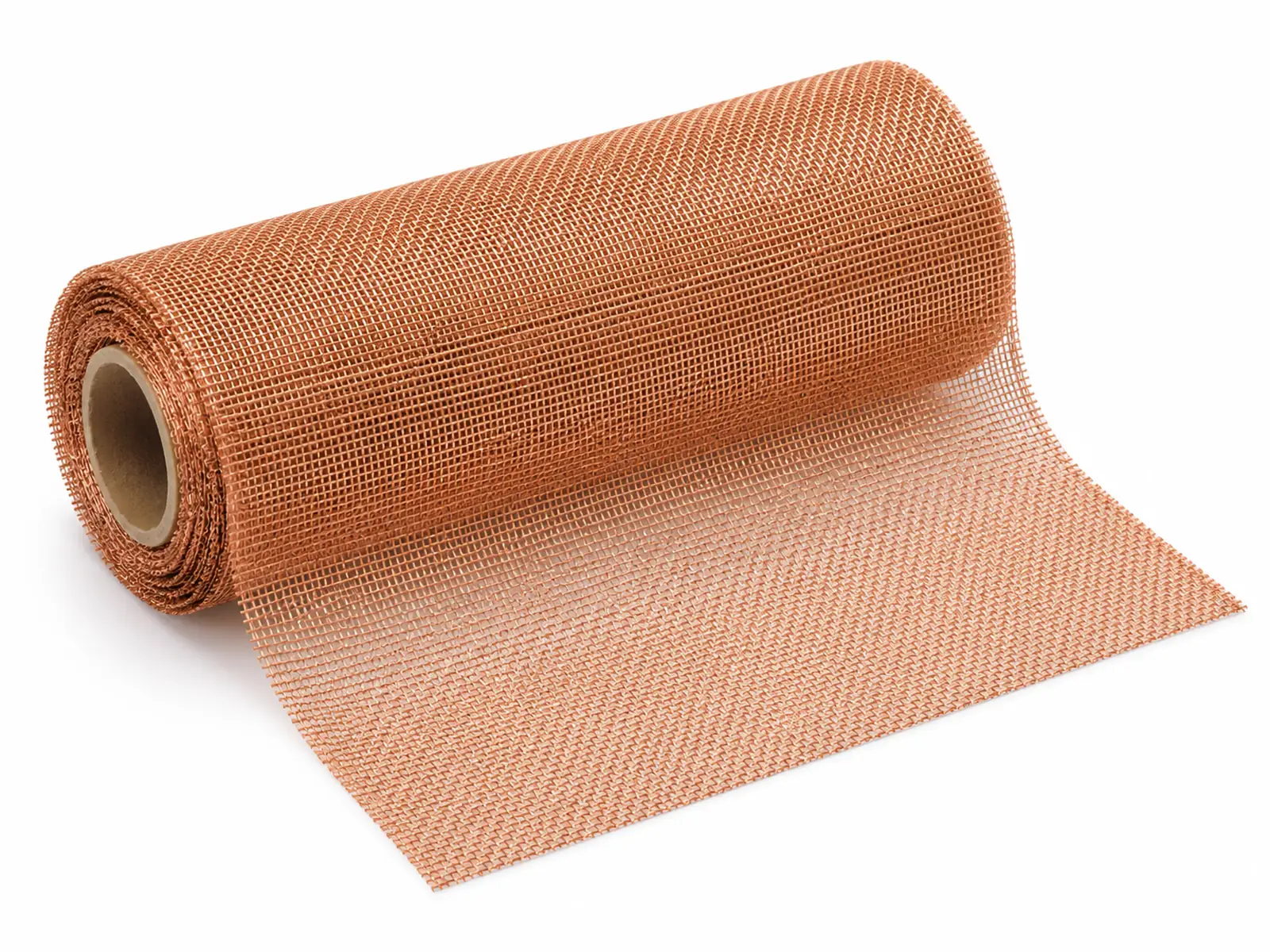
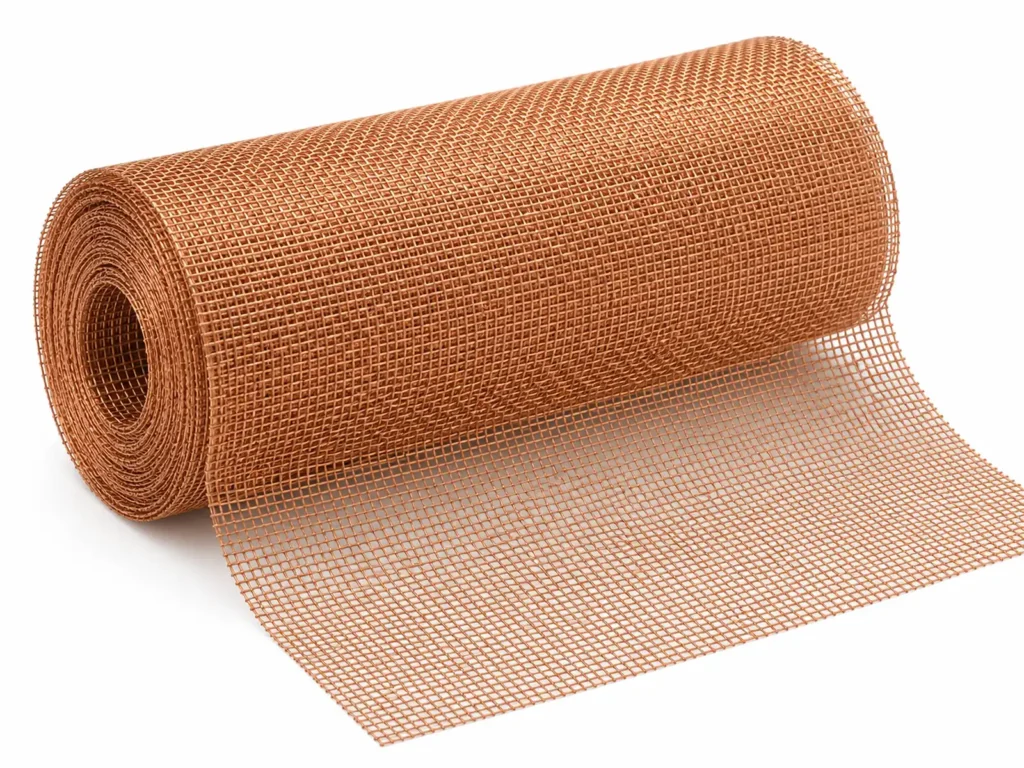
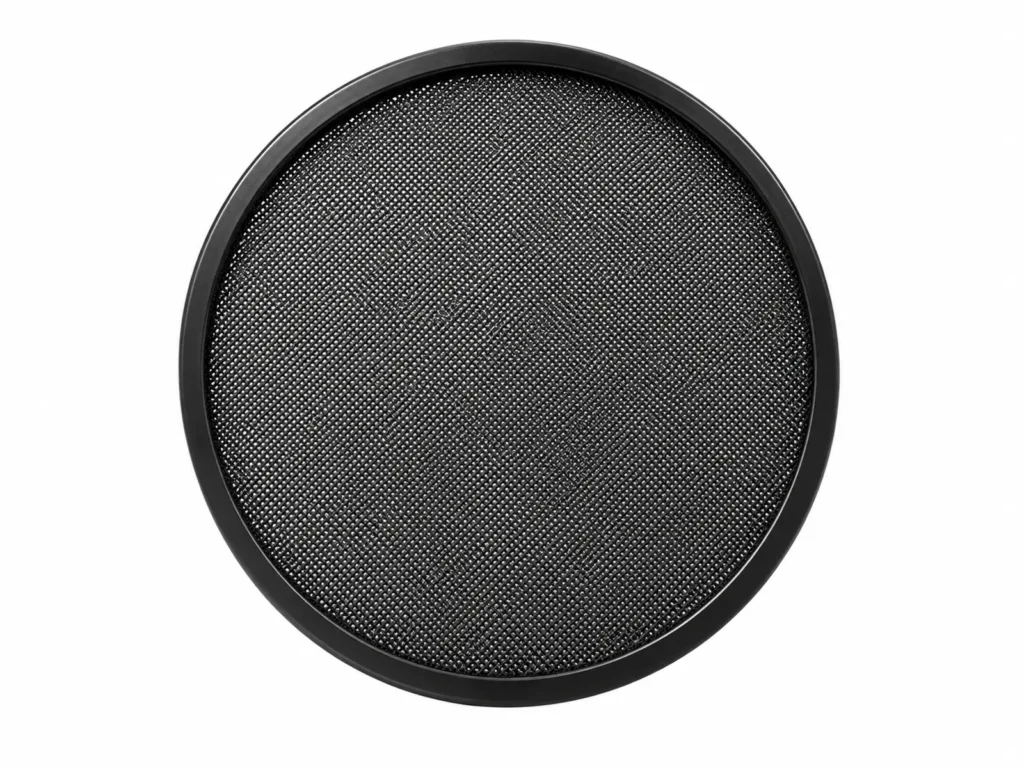
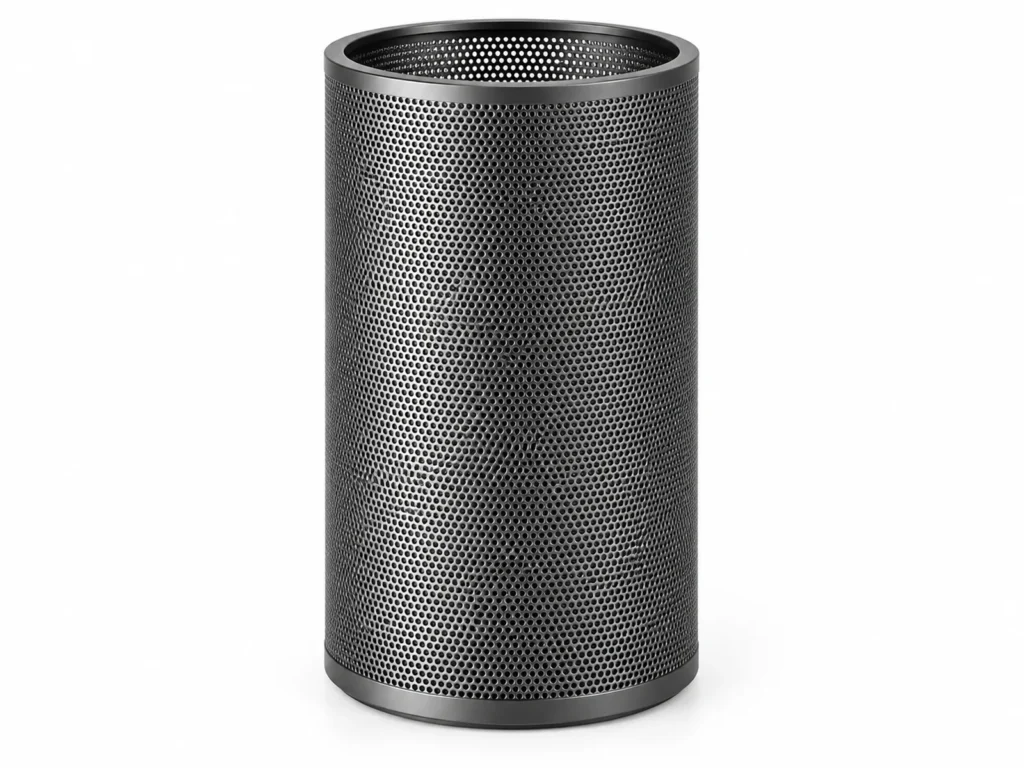
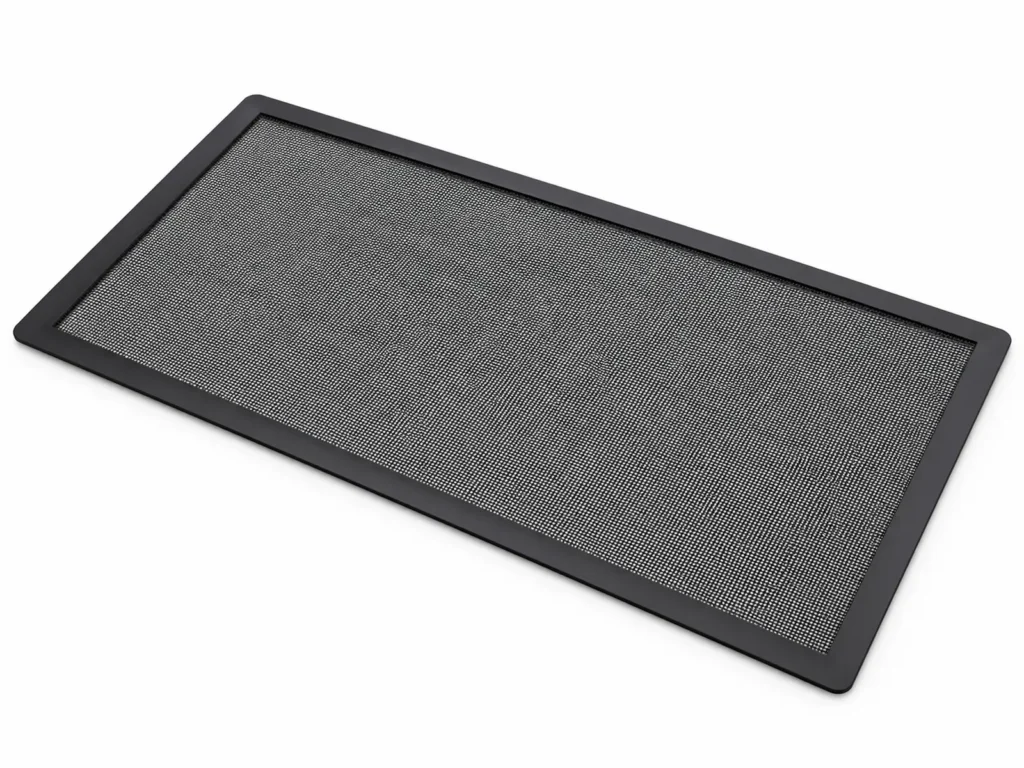
EMI / RFI Shielding Mesh in Pure Copper (C11000) is used for attenuating electromagnetic and radio-frequency interference through vents, windows and enclosures while still passing air and light. The alloy gives good atmospheric resistance with a stable patina; outstanding conductivity and is non-magnetic, with a practical service limit of approx. +200 °C.
Alloy Properties
| Grade designation | C11000 |
|---|
| Magnetic response | Non-magnetic |
|---|
| Service temperature | approx. +200 °C |
|---|
| Corrosion characteristic | Good atmospheric resistance with a stable patina; outstanding conductivity |
|---|
Specifications of EMI / RFI Shielding Mesh Available in Pure Copper
| Mesh count | Wire diameter (mm) | Aperture (mm) | Open area (%) | Material | Shielding @ 1 GHz (dB) |
|---|
| 22-Mesh | 0.115 | 1.040 | 81 | Copper | 50 |
| 60-Mesh | 0.110 | 0.313 | 55 | Copper | 65 |
| 100-Mesh | 0.110 | 0.144 | 32 | Phosphor bronze | 75 |
| 100-Mesh Monel | 0.110 | 0.144 | 32 | Monel 400 | 75 |
| 145-Mesh | 0.056 | 0.119 | 46 | SS304 | 70 |
Where Pure Copper EMI / RFI Shielding Mesh Is Used
- Electronics enclosures: ventilation panels and display windows in shielded cabinets.
- EMC test chambers & Faraday cages: wall, door and window shielding.
- Medical imaging rooms: MRI and RF-shielded room viewing windows.
- Defense & aerospace: shielded avionics and radar enclosures to MIL specifications.
Ordering EMI / RFI Shielding Mesh in Pure Copper
- Frequency range: Finer mesh and thicker wire raise attenuation at higher frequencies; state the band to be shielded.
- Conductivity & corrosion: Copper and phosphor bronze conduct best; Monel 400 and stainless resist corrosion in marine or outdoor use.
- Bonding: Specify a continuous, low-resistance perimeter bond — the mesh only works when grounded all round.
Mistakes to Avoid with EMI / RFI Shielding Mesh
- Leaving gaps or spot fixings along the edge, which act as slot antennas and leak RF.
- Pairing copper mesh with an aluminum frame without plating, which corrodes galvanically.