Skip to content

Knitted Wire Mesh · ASME sizing practice · Application guide

What Is Demister Pads (Mist Eliminators) Used For?

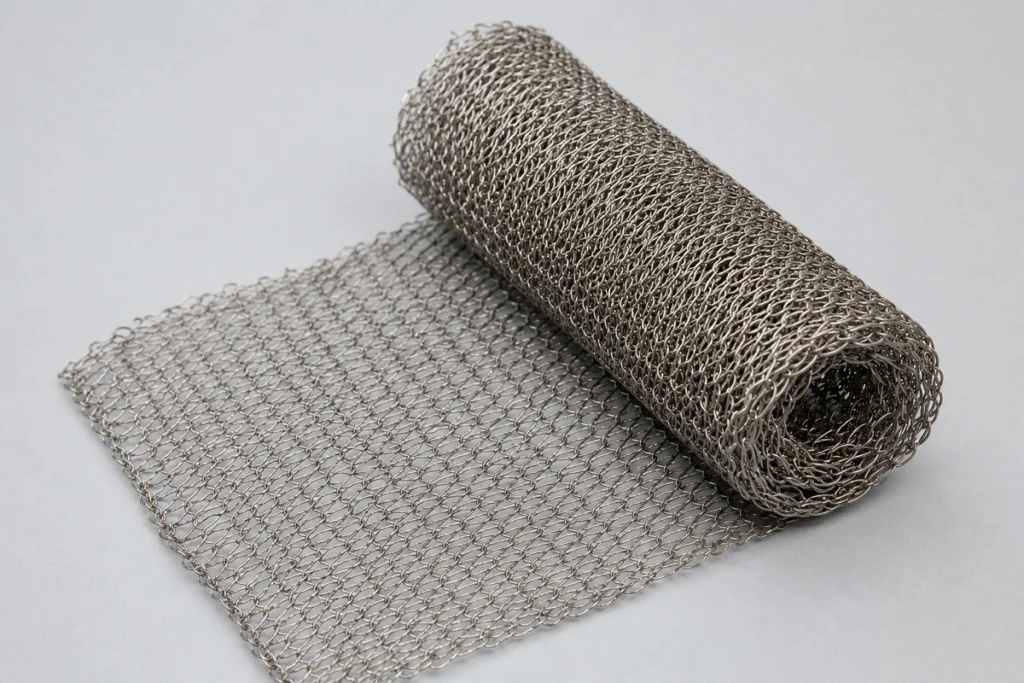
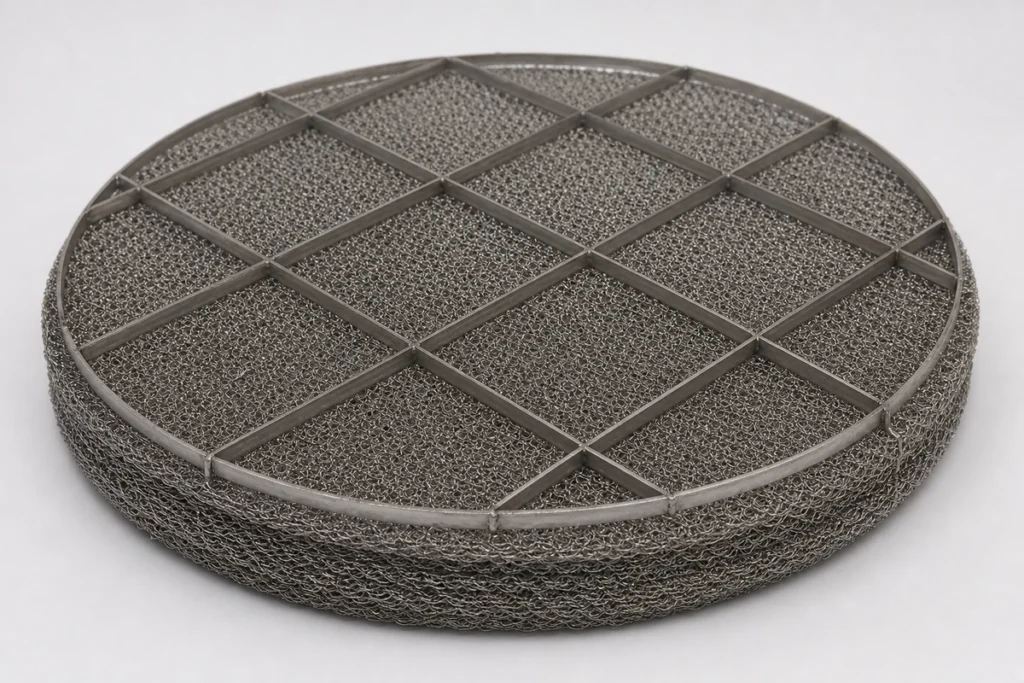
The primary duty of Demister Pads (Mist Eliminators) is removing entrained droplets from gas streams in separators, scrubbers and columns. Below: the sectors that specify it in volume, the checklist used to select the right mesh and alloy for the application, handling notes, and the known limits of the type.

Typical Applications for Demister Pads (Mist Eliminators)

The most common settings where this is specified:

  • EMI/RFI shielding: gaskets and Faraday-cage mesh.
  • Automotive: exhaust and airbag filtration, NVH cushioning.
  • Process vessels: entrainment separators.
  • Separators & scrubbers: mist elimination in columns, KO drums and scrubbers.
  • Evaporators: removing entrained droplets from vapour streams.

How to Specify Demister Pads (Mist Eliminators) for Your Application

  • Mesh count / micron rating: Match the aperture or micron rating to the smallest particle you must retain or pass. The table below lists mesh count, aperture and micron for each option — for woven cloth, specify the aperture or micron, not just the mesh count.
  • Density & wire: Choose the pad density and wire diameter for the separation efficiency and the allowable pressure drop.
  • Material / alloy: Select the alloy for the environment — 304 for general use, 316L for chlorides, food and chemicals, brass or copper for shielding, and Monel, Inconel or Hastelloy for marine, acid and high-temperature service.
  • Environment: For damp, coastal, chemical or high-temperature service move up to 316L or a nickel alloy; for dry indoor duty 304 or a coated steel is usually enough.
  • Standard: This product is supplied to ASME sizing practice. Quoting the standard on your order guarantees interchangeable dimensions and filtration data between suppliers.

Handling & Installation Practice

  • Install a demister pad with retaining grids top and bottom and the pad at its design density — over-compression raises pressure drop.
  • For EMI shielding or exhaust packing, pack to the specified density: too loose leaks, too tight cracks.

Common Selection Mistakes with Demister Pads (Mist Eliminators)

  • Under-sizing the demister pad area, so gas velocity exceeds the design limit and the pad re-entrains liquid.
  • Choosing the wrong density: too low lets mist through, too high floods and raises pressure drop.

Where Demister Pads (Mist Eliminators) Is Not the Right Choice

Not for solid-particle filtration — knitted mesh is for mist and vapour separation, shielding and cushioning, not for sieving.

Technical Drawing

Customize the parameters below — every spec field is editable, and the drawing redraws to match the values you choose. Changing the size will snap the other fields to that size's standard values; you can then override any individual value.

Sends the selected values to the quote form below.

Request a Quote

Set the size and options in the drawing above, then send the exact configuration straight to this form.

Request a Quotation

Specification
Business Information

Dimensions & Specifications (ASME sizing practice)

Pad density (kg/mu00b3)Thickness (mm)Wire diameter (mm)GradeReference standard
801000.28General purposeASME approx. sizing
1121000.28StandardASME approx. sizing
144100-1500.28High efficiencyASME approx. sizing
1921500.23High efficiencyASME approx. sizing
3001500.15Co-knit glass fiberASME approx. sizing

Frequently Asked Questions

What is Demister Pads (Mist Eliminators) used for?

Removing entrained droplets from gas streams in separators, scrubbers and columns. It is supplied to ASME sizing practice.

Which industries use Demister Pads (Mist Eliminators)?

It is commonly specified in industrial filtration & separation, oem & fabrication and maintenance & replacement (mro), among other sectors.

How do I choose the right Demister Pads (Mist Eliminators) for my duty?

Match the aperture or micron rating to the particle size, then the alloy to the environment and the construction (weave, pattern or element type) to the flow and pressure. The dimension and filtration table on this page lists each option.

How do Demister Pads (Mist Eliminators) (demister pads) work?

Gas passes through the knitted mesh while entrained droplets coalesce on the wire and drain away by gravity. Pad density, wire diameter and gas velocity set the separation efficiency.

Can I get a quote for Demister Pads (Mist Eliminators) in the mesh and material I need?

Yes. Use the technical drawing and quote form on this page to set the mesh, micron and alloy, then send the exact configuration to our team for pricing and lead time.